Content-Language" content="en-us">
|
section 5: parlours 1880s to 1920s images & photography: Jennifer McKendry © home page GALLERY of IMAGES 1 GALLERY OF IMAGES 2 GALLERY OF IMAGES 3 GALLERY OF IMAGES 4 GALLERY OF IMAGES 6 GALLERY_OF_IMAGES_7 GALLERY_OF_IMAGES_8 INDEX of GALLERY History of Dollhouses article THE PARLOUR including coal fireplaces, radiators & stoves
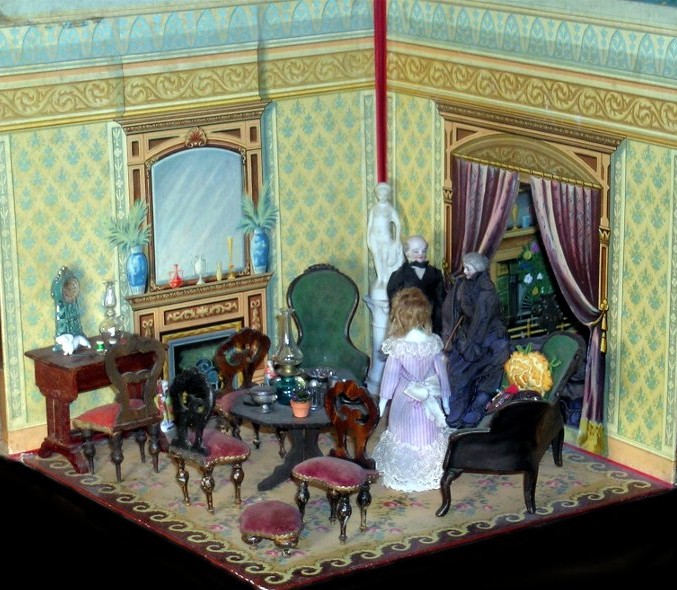
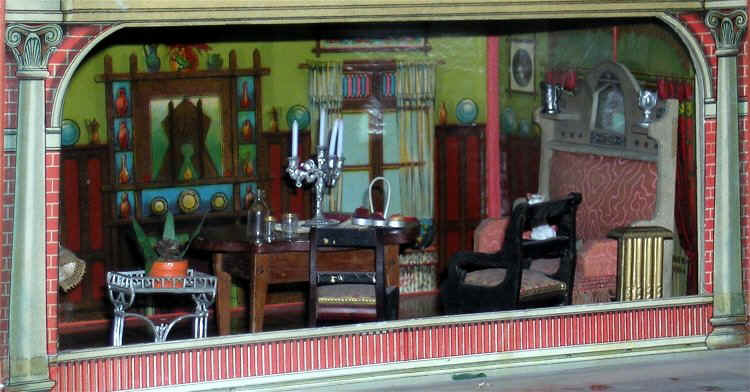
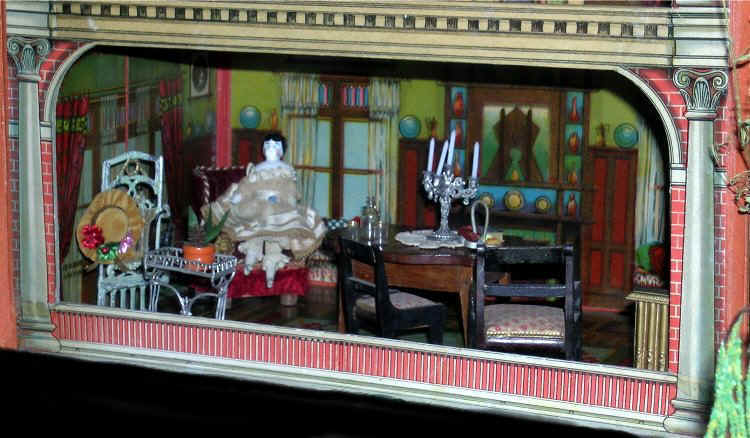
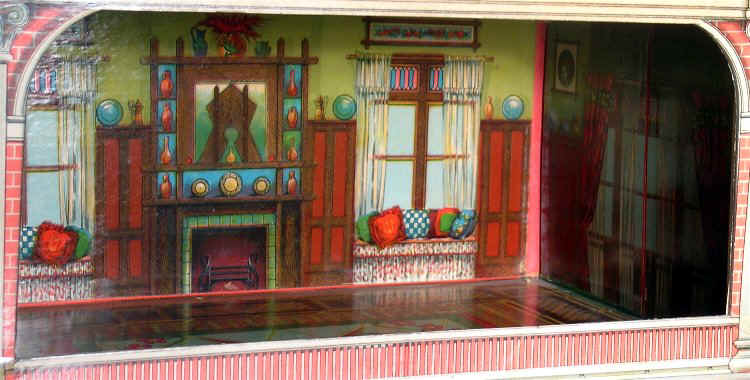
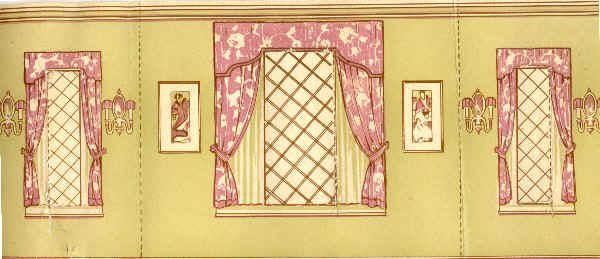
1894 the American firm McLoughlin produced a set of 4 rooms with lithographed walls showing the furnishings and decor enjoyed by the urban upper classes; the parlour - along with the dining room - was the most formal room; as the 19th century drew to a close, the parlour became increasingly congested with furniture and decorative objects; depending upon what fuels were available locally, lighting was by a combination of kerosene lamps, whale-oil lamps, candles and gas, plus electricity in some areas German
furnishings and people c1870s-c1900 plus a sofa and armchair by the American
firm of Stevens & Brown 1872
A splendid
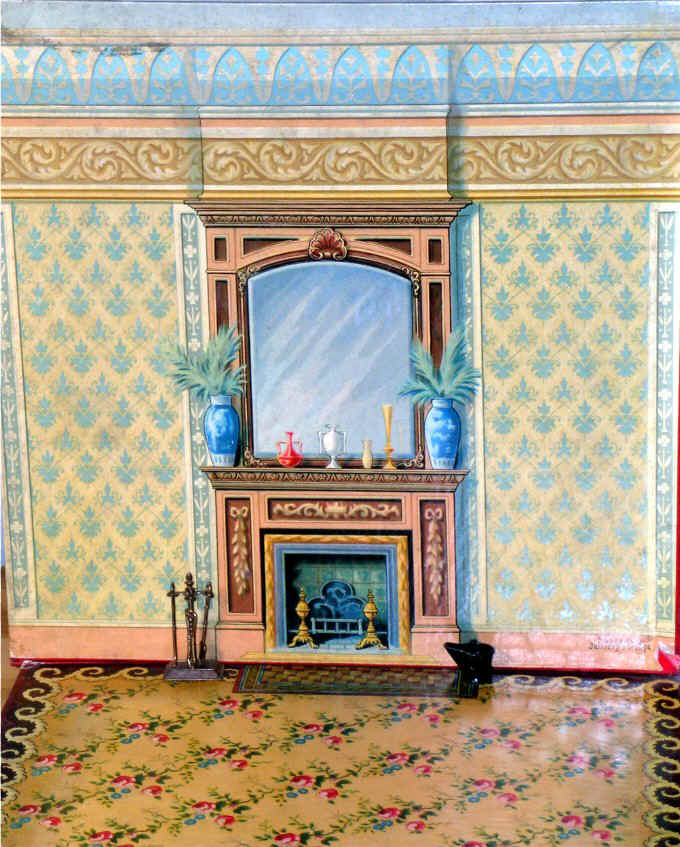
range of colours and textures was presented through relief work in the
plaster cornice, wallpaper, painted or varnished woodwork, mirrors, ceramic
tiles, brass and iron fireplace equipment, tropical plants, woven wool
carpets (here in a floral lattice design with a wave border) and ornamental
china; the actual opening of the fireplace was relatively small if burning
coal but the surround and overmantel were bold in
scale and yet often fussy in detailing; in most well-to-do houses of the
1890s in North America, furnaces provided the main heat source; Classical
Revival detailing
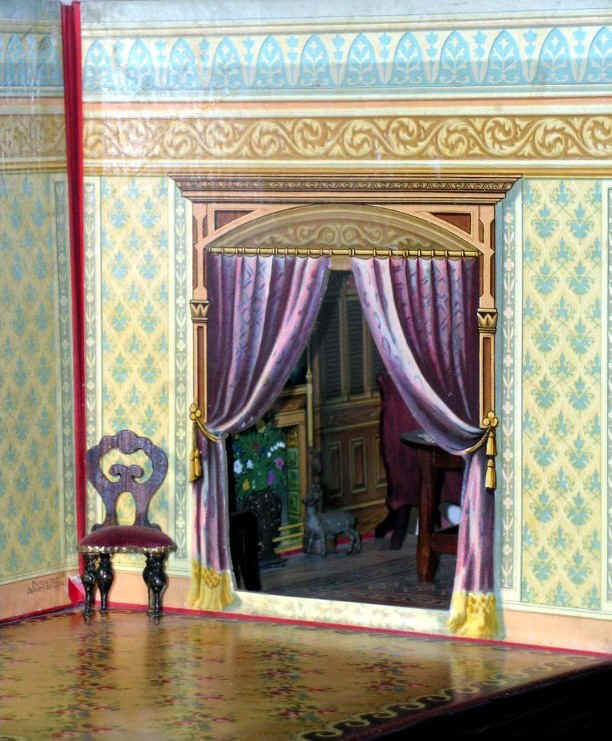
Heavy velvet
curtains with cords, brass tiebacks, rings and rods, as well as pronounced
fringes, sometimes acted both as a decoration and division between rooms:
here hung on a double archway leading to the dining room; in cold climates
during the winter season, they could be allowed to hang down for greater ease
in heating the room spaces or to allow privacy while servants cleared an
adjacent dining room after a meal; curtains added colour, texture and - with
the draped folds - elegance to the room's appearance (note:
the red tape was a practical way McLoughlin joined
and hinged the folding rooms)
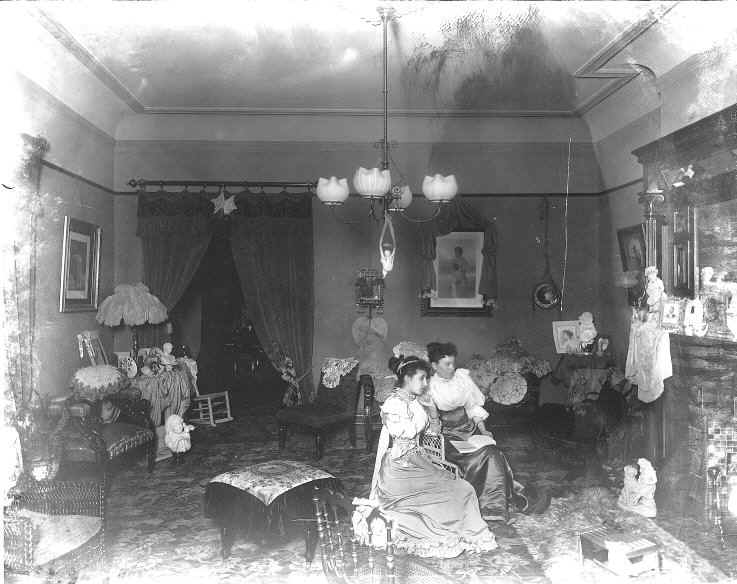
A drawing room of 1893 in Montreal, Canada, with a pair of curtains on a brass rod hung over a doorway (left background), gas chandelier and scounce, electric table lamp with fabric shade, doilies, decorative pillows and statuary, potted plants, floral carpet, picture rail, and overmantel with mirror and classical detailing (McCord Museum, Montreal)
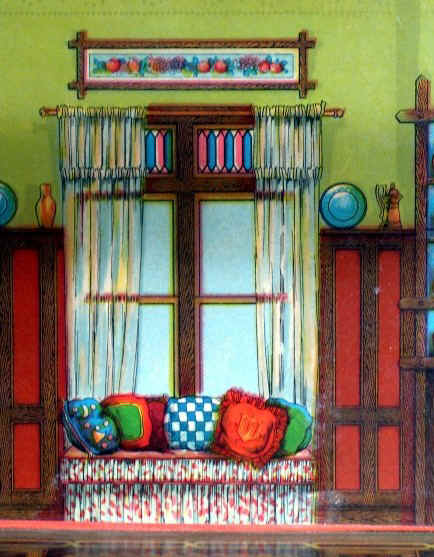
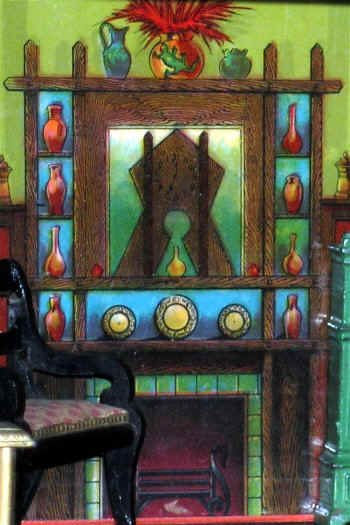
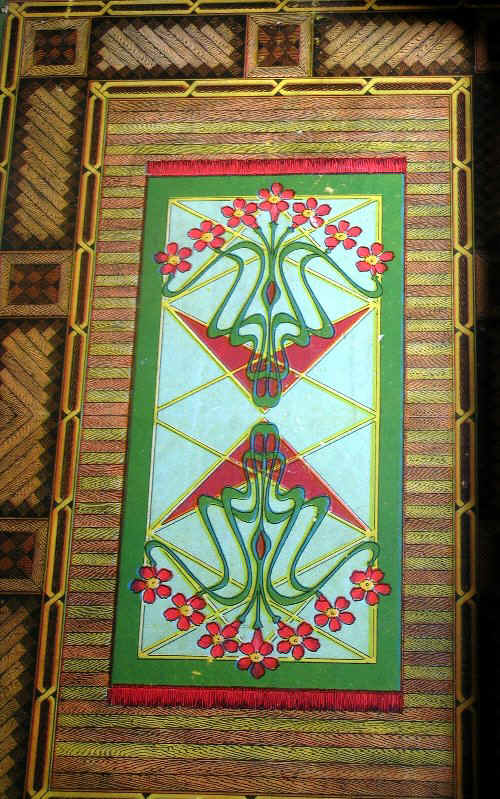
c1900 the parlour of McLoughlin's Garden
House has more up-to-date stylistic features than the parlour
of the folding rooms (which has lingering 1850s to '70s qualities because of
the formal Classicism); here there is an affinity for the Arts & Crafts
movement, as well as Art Nouveau particularly in the carpeting
German soft metal, upholstered and wood furnishings c1880s-c1910s
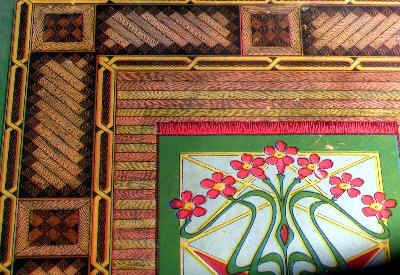
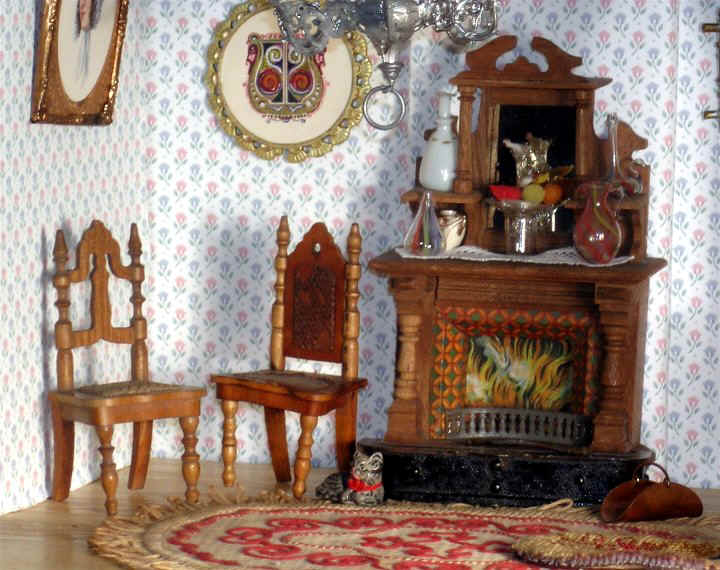
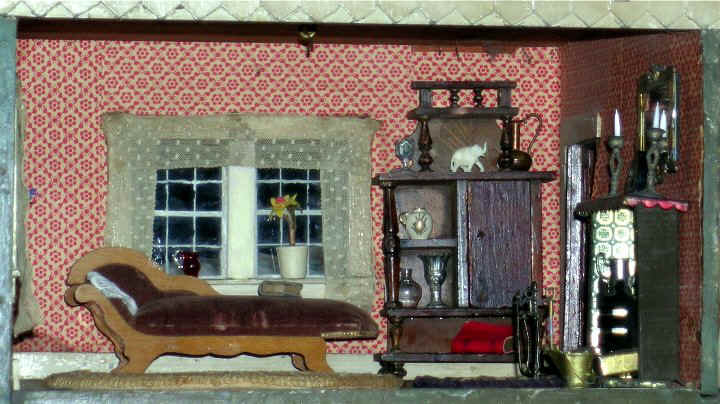
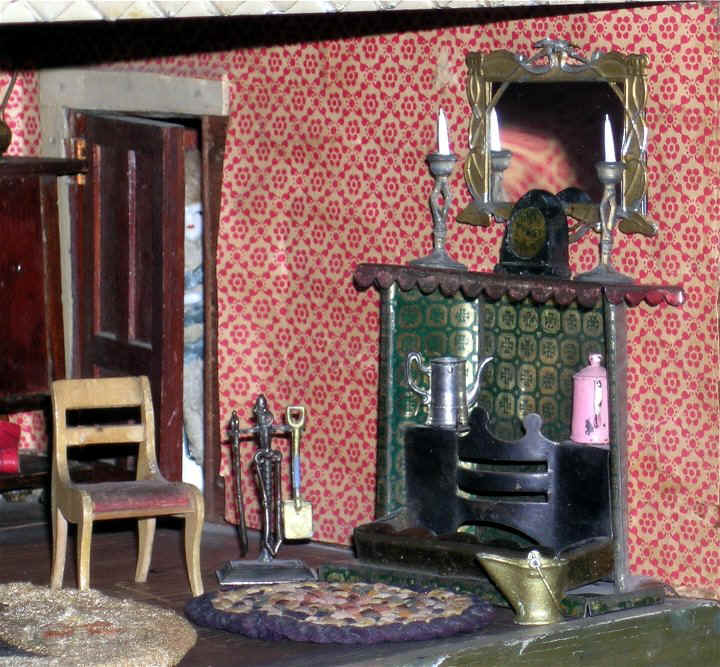
note the positioning of a very wide picture of fruit over the top of the window and the extensive use of ornamental pottery and metalwork; likely some pieces are Japanese in origin or Japonaiserie (derived from Japanese but made in Europe), as that was in vogue; the iron fire grate features uprights in the form of "S", the sinuous lines influenced by Art Nouveau -- the latter is seen even more clearly in the stylized flowers of the carpet, positioned in the centre of the handsome parquetry floor
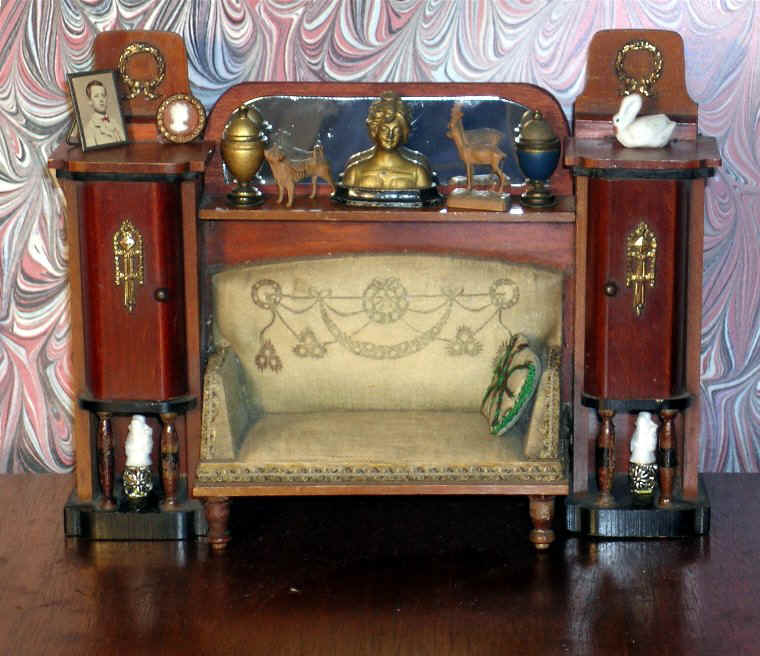
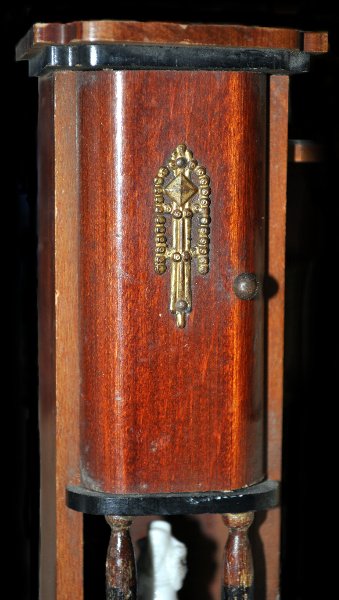
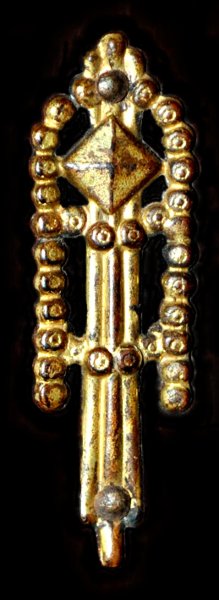
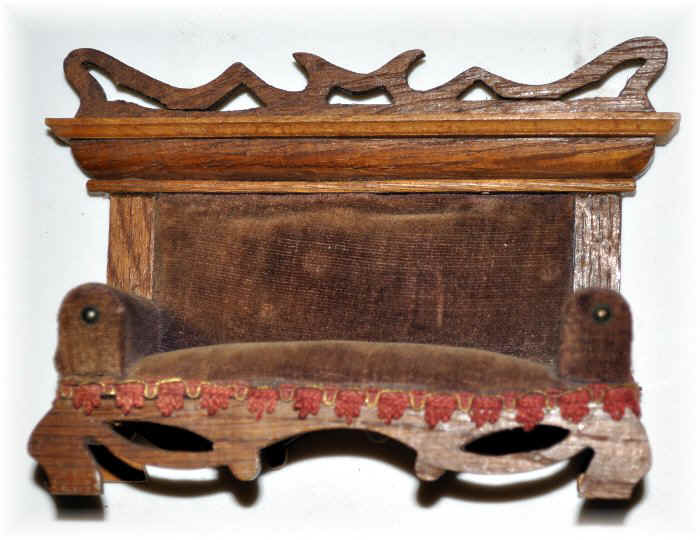
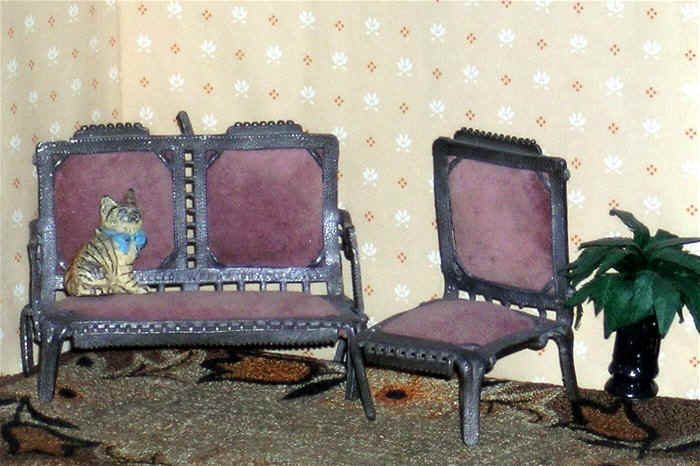
Although the metal mounts (see details below) and sofa pattern in this handsome cupboard-sofa have a classical aspect, the curved door fronts and general sinuous lines speak of an Art Nouveau influence. Possibly by Ependorfer & Nacke or Ernest Goldmann, Germany, c1900, in mahogany and ebony (mirror is a simplified replacement for the original form seen on right).
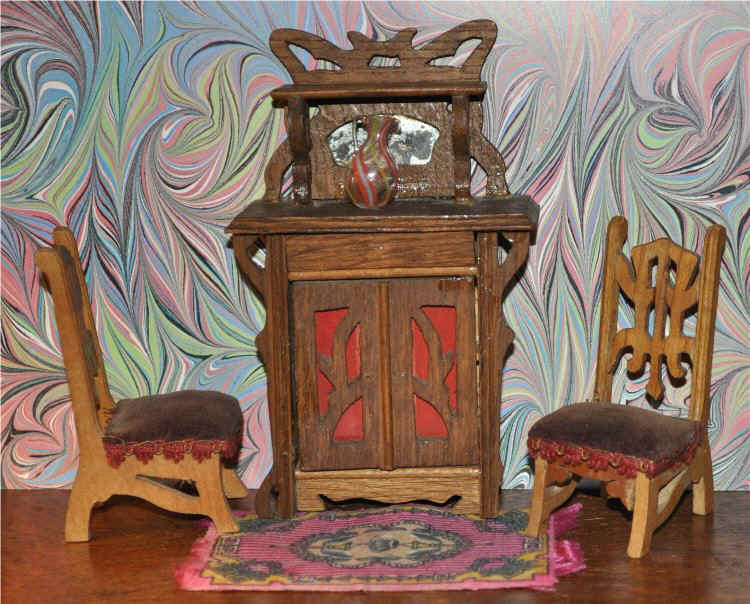
This set of oak furniture is pure Art Nouveau (discussed below). The maker is Emil Mende, 1910, Eppendorf, Erzgebirge, Germany.
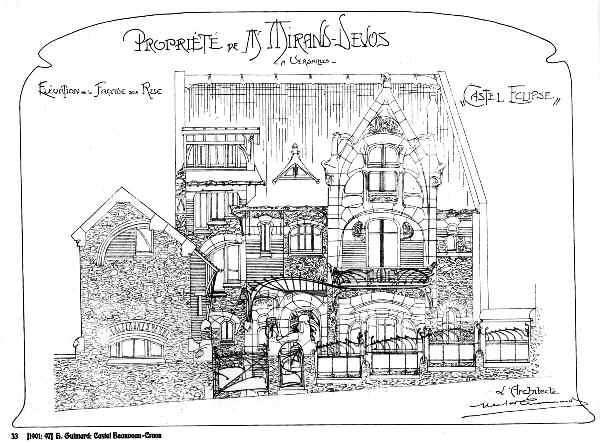
Art Nouveau (also known as Style Moderne and Jugendstil) strongly influenced European architecture and the decorative arts from c1888 to c1914, as seen here in a house by Hector Guimard in Versailles, France, from 1901, featuring asymmetry, attenuated foliage, vines, tendrils, curves and a lack of obvious historicism (although there may be late Gothic Revival and Rococo aspects). Metalwork particularly suited the fluidity of the style.
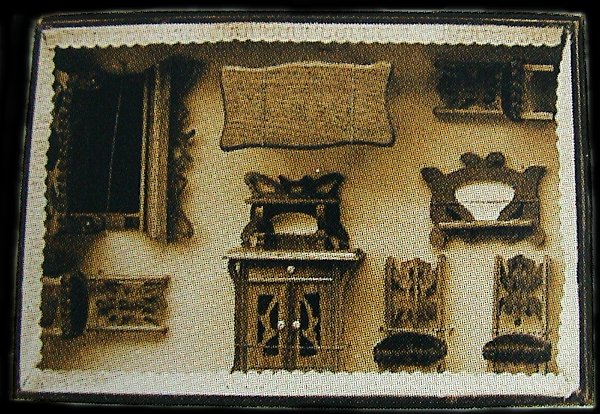
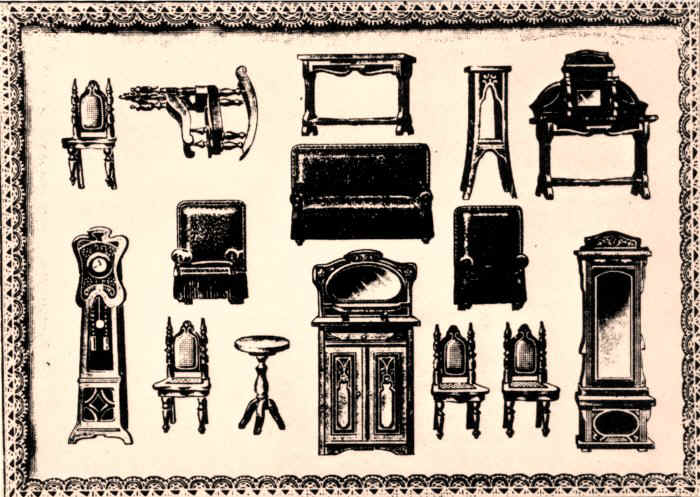
1914 this set of toy parlour
furniture by Gebrüder Schneegass
of Waltershausen,
Germany, has Art Nouveau ornament pressed into the wood; the set consisted of
"1 Vertikow [a chiffonier - centre of bottom
row], 1 Sofa, 2 Arm-Chairs, 4 Chairs, 1 Rocking-Chair, 1 Table, 1
Writing-Table
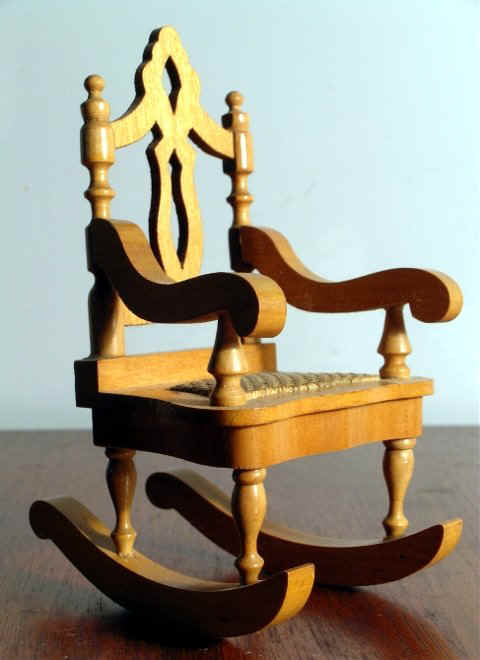
Rocker from the parlour set shown above
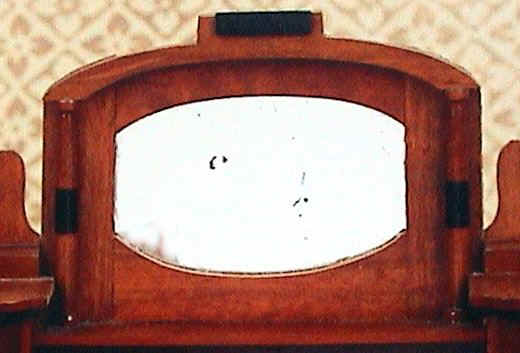
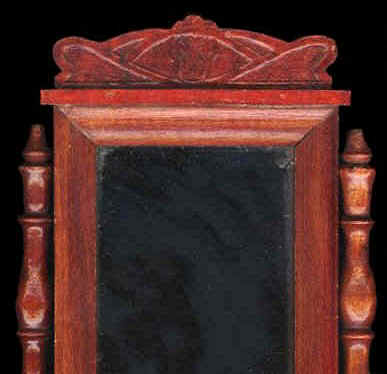
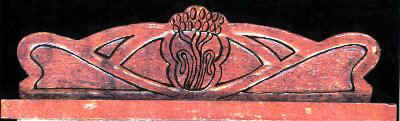
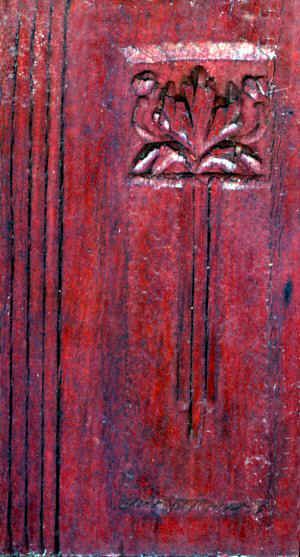
detail of a tall, free-standing mirror with pressed red wood design on top crest; reflecting Art Nouveau ideas, the sensuous vine-like lines interweave centering on a stylized flower (pattern touched-up for greater legibility in close detail); the effect is complemented by cutting the wood to follow the outer edge of the vine; horizontal band 2½" wide
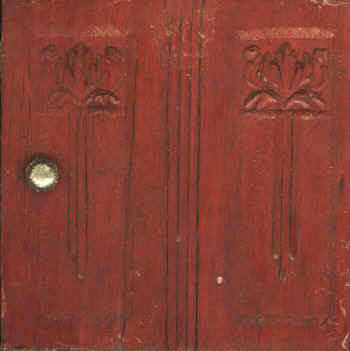
door from a chiffonier with vertical reeding in the centre and to each side a carved panel in Art Nouveau style with stylized flowers and leaves rising from three stems, the centre one being the longest; the door, which has a typical early metal knob, is just under 2 ½" square
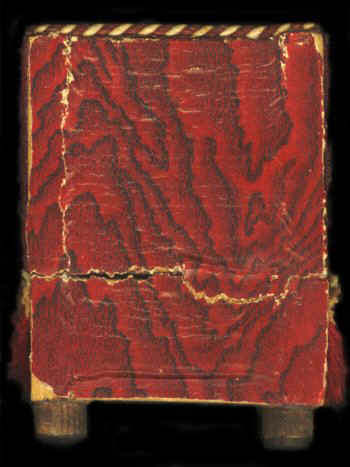
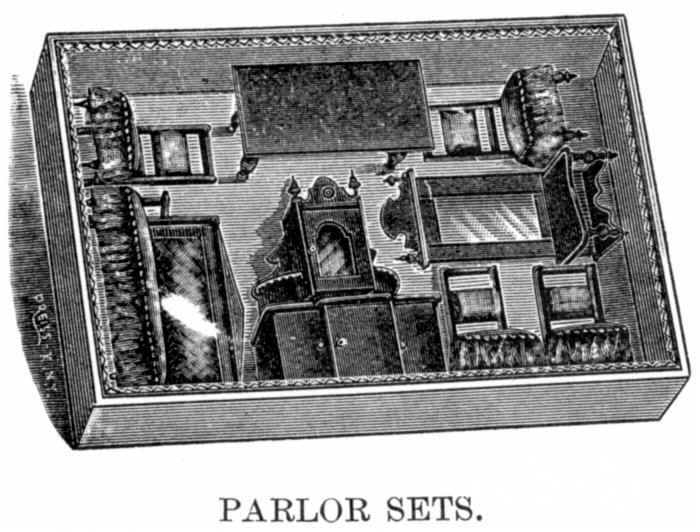
1893 parlour set sold in a
paper-covered wooden box by Carl Stirn, New York;
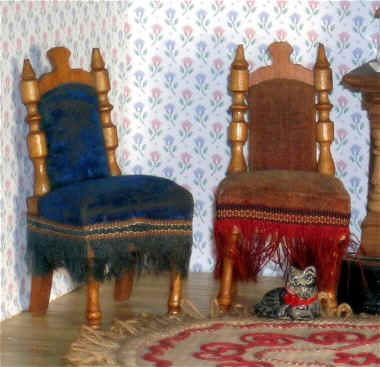
likely German in origin; note the chairs and sofa with thickly upholstered
seats decorated by long fringes and having turned legs -- the same features
are found on the sidechairs of the set of 1905 (illustrated
below),
even though the backs are different
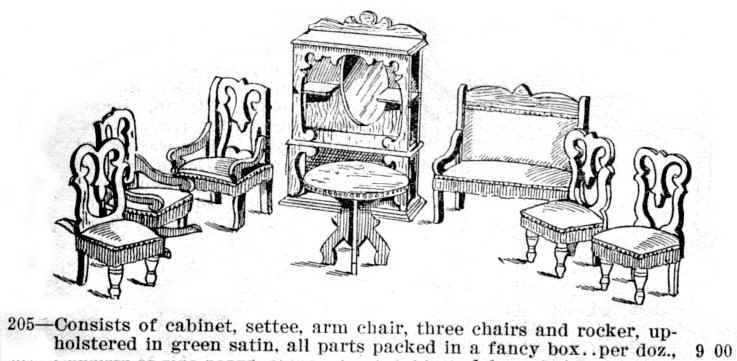
1905 parlour set from the Wiemann
& Muench catalogue, Milwaukee, Wisconsin; made
by Star Novelty Works,
Cincinnati, Ohio, USA (identified by Jacobs 1974); similar set sold by Macy's, N.Y. in 1910-11
c1910 Star Novelty Works, Cincinnati, Ohio; chaise lounge, 2 sidechairs in wood with a spectacular grain
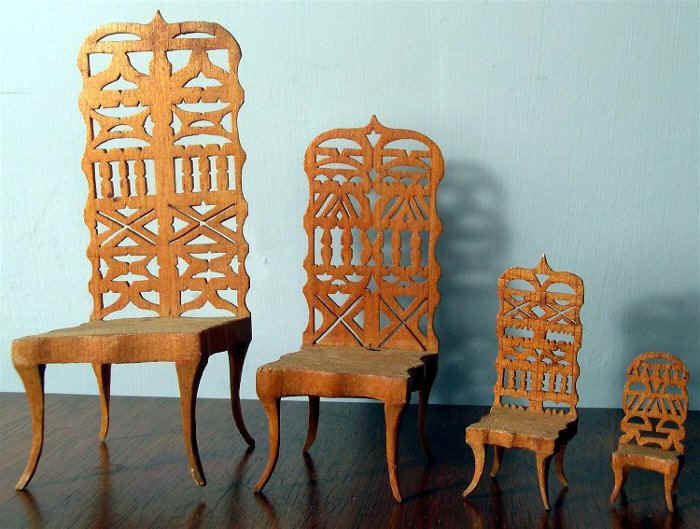
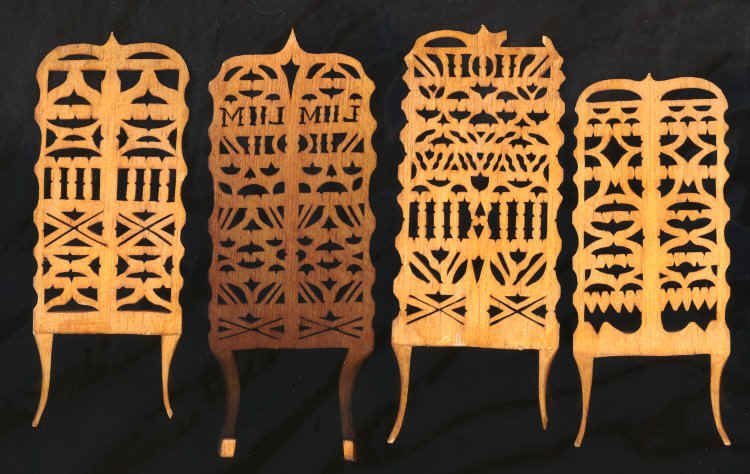
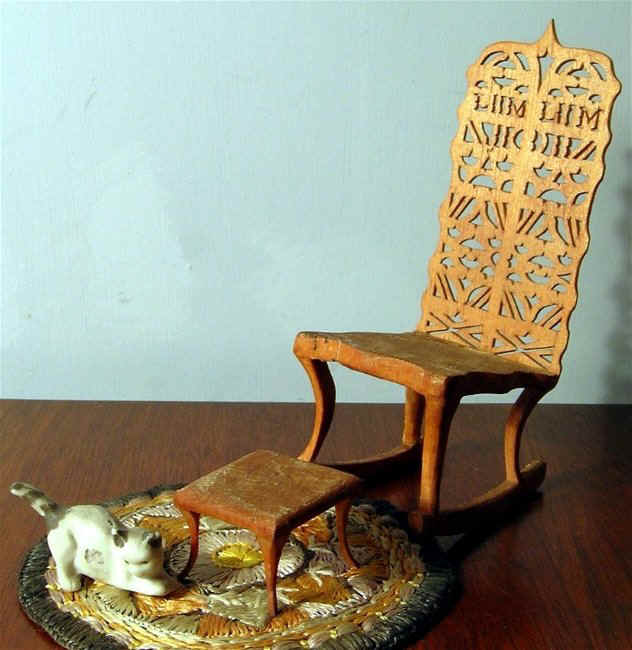
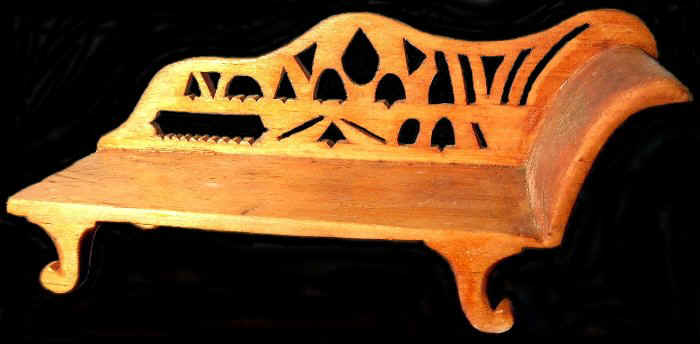
1880s set of pine sidechairs, rocking chair, footstool and chaise lounge made by an American carver named Fiddler; a tour de force with each carved from one piece of wood and each chair back (7 in total) with a different back design in fretwork and ranging from 4¾ to 1½ in. high; the rocking chair is initialed L M; the 7½ in. chaise lounge has an Empire-style arm and scrolled legs (and is also carved from one solid piece of wood)
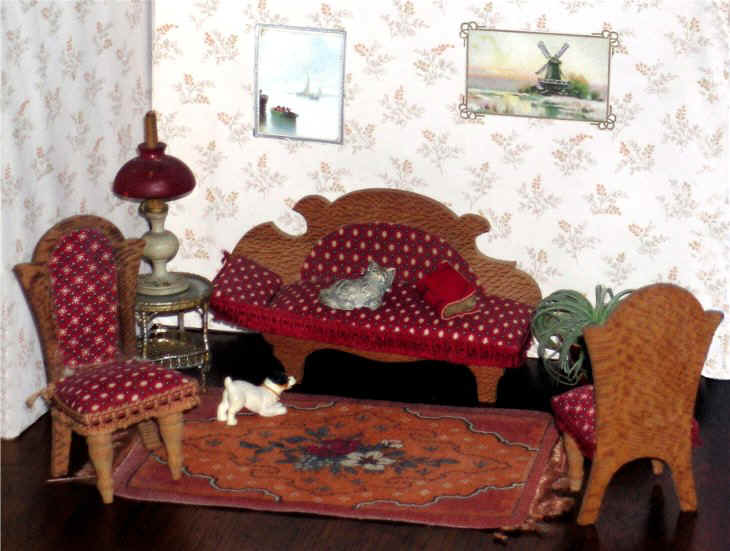
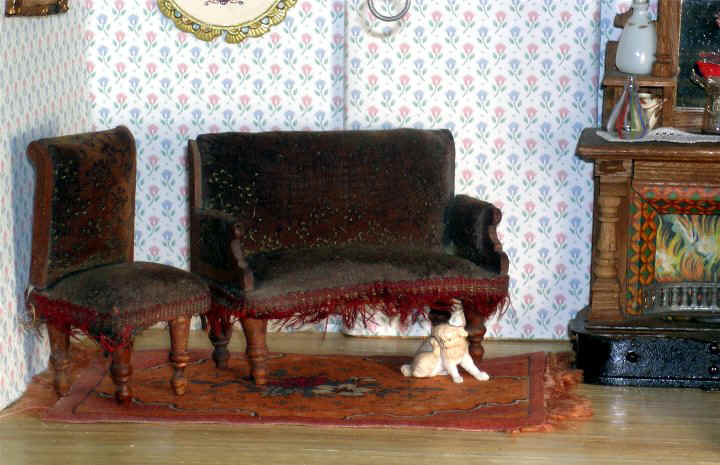
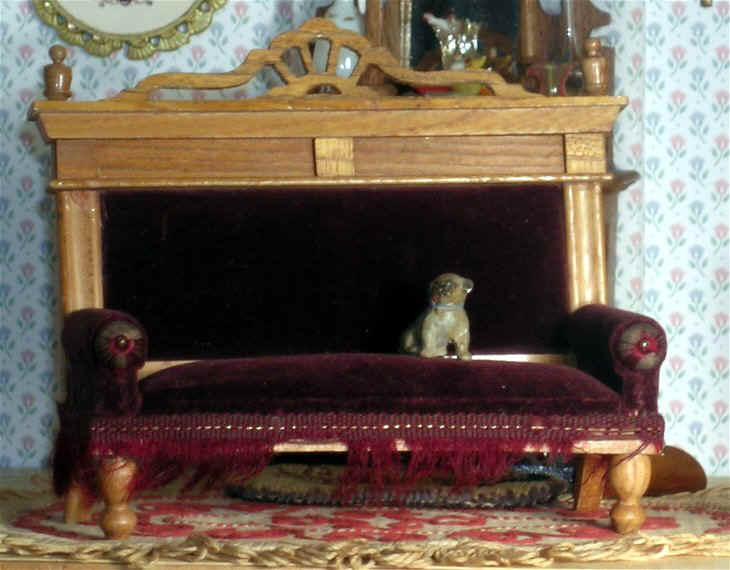
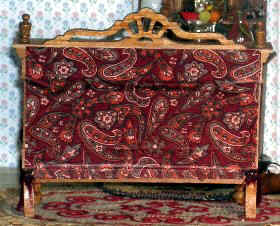
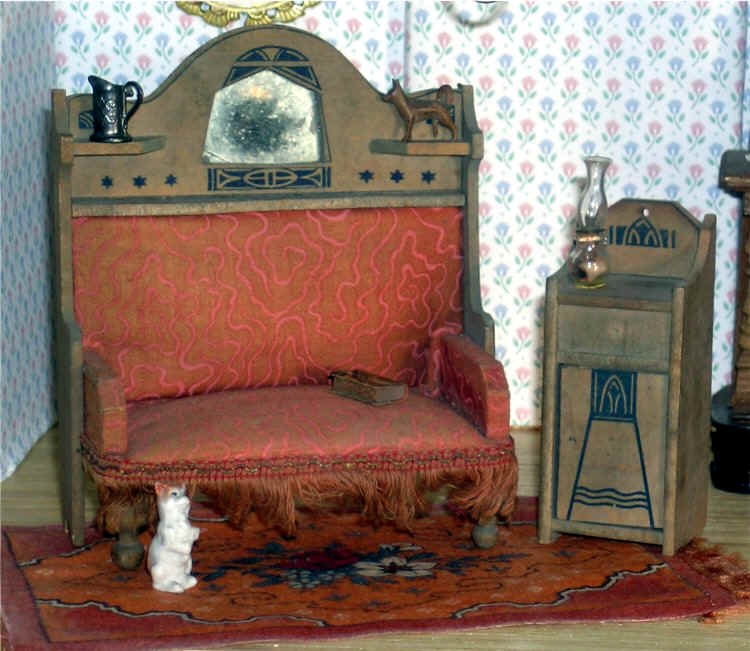
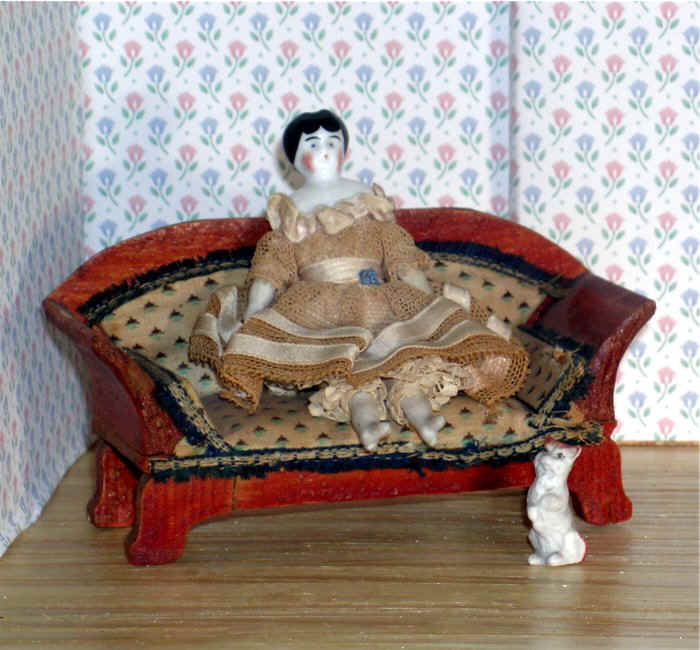
This tall sofa with burgundy upholstery and a fringe has paisley wall paper covering the back; attributed to Schneegass of Waltershausen, Germany
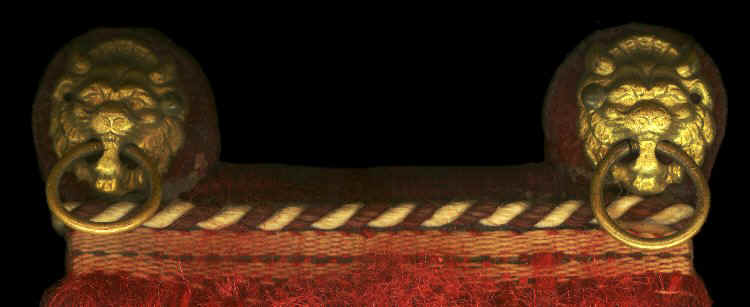
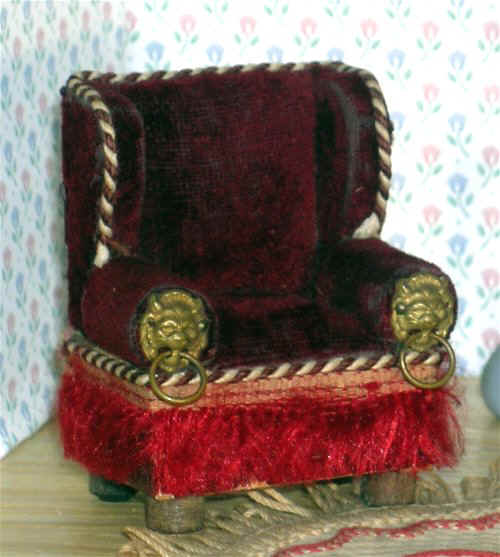
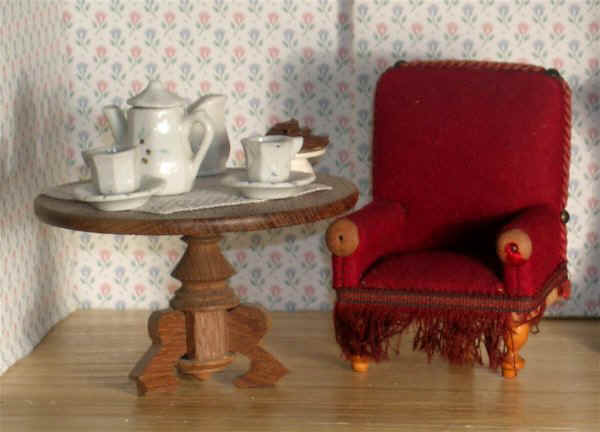
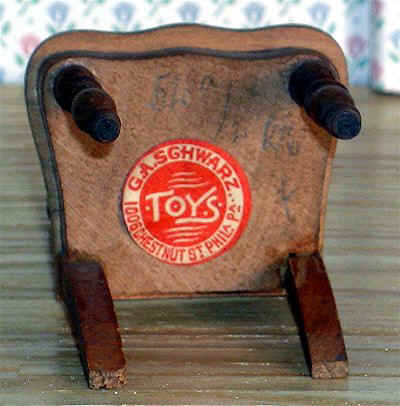
The red upholstered armchair has a Schwarz toy store label underneath, as does the sidechair on the left (below); this was one of the American stores importing German toys, dollhouses and miniatures
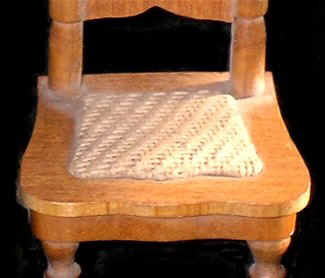
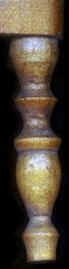
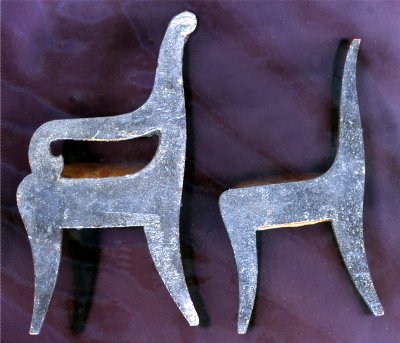
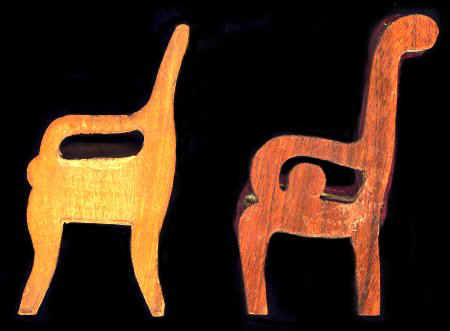
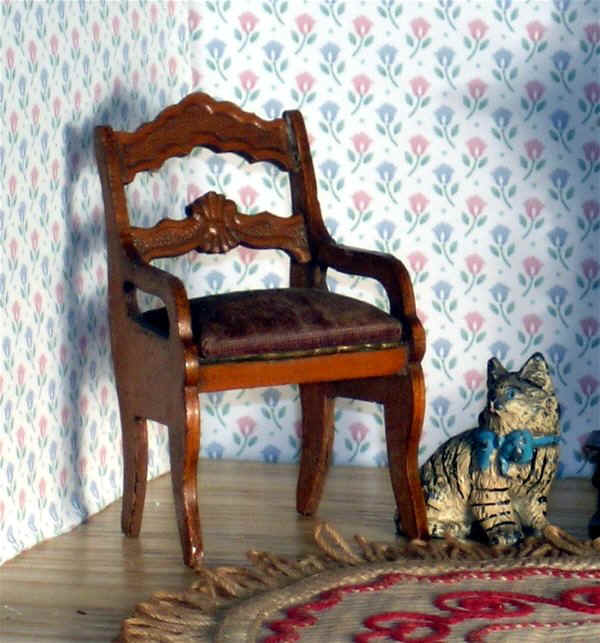
chair with "caning" (applied woven material representing caning which, on real chairs, was actually woven directly onto an open frame of a seat or back ); right typical chair leg and (below) chair profiles 1870-1910
c1900, attributed to Schneegass of Waltershausen, Germany
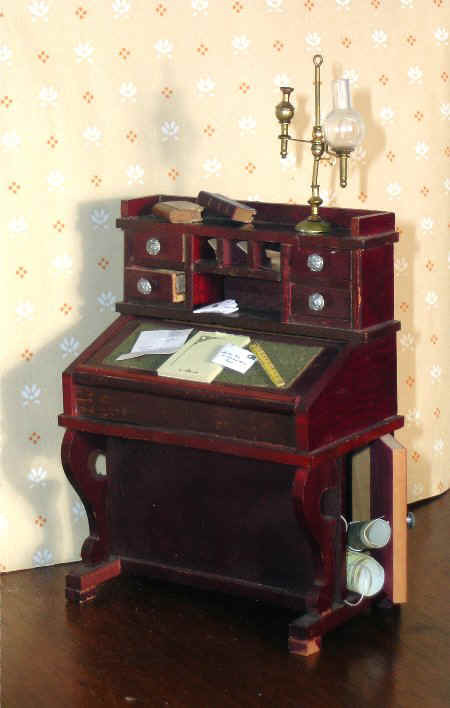
c1880, Davenport desk, attributed to Schneegass of Waltershausen, Germany; scrolled front supports in the Empire style; flap forming writing surface lifts up; door on each of the lower sides
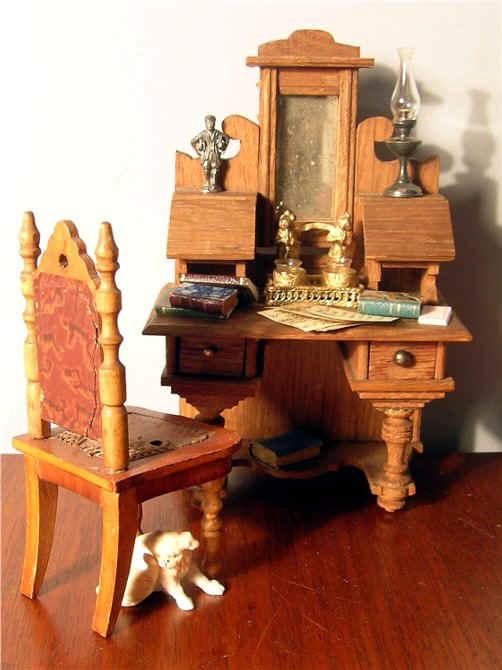
c1890 desk, oak, slanted covers are hinged; ormolu inkwell with a pair of military figures
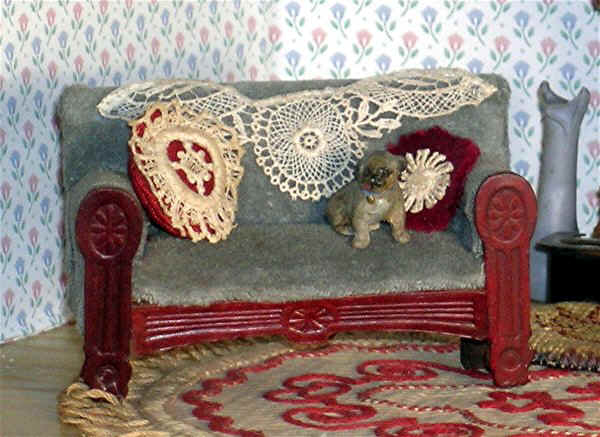
sofa 4½" long; bench ends were in vogue in the late 19th century, as seen in Charles Eastlake's Hints on Household Taste of 1878
\
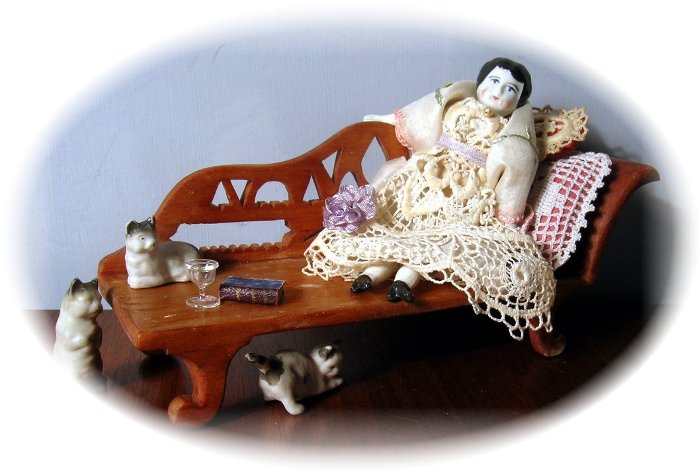
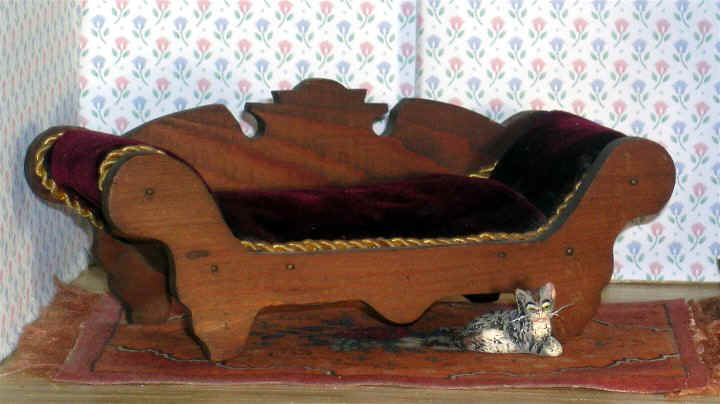
Chaise lounge for daytime reclining (also known as a Récamier sofa or popularly as a fainting couch); what-not with a cupboard door (missing top finials)
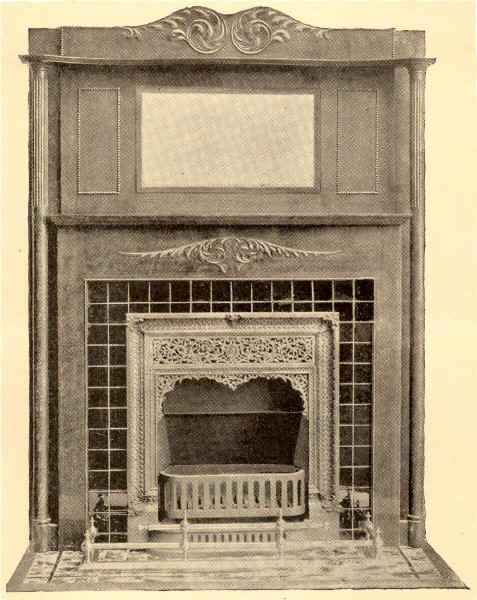
Metal fireplace with original grate, shelves, fender and hearth; soft metal gilt mirror in Art Nouveau style
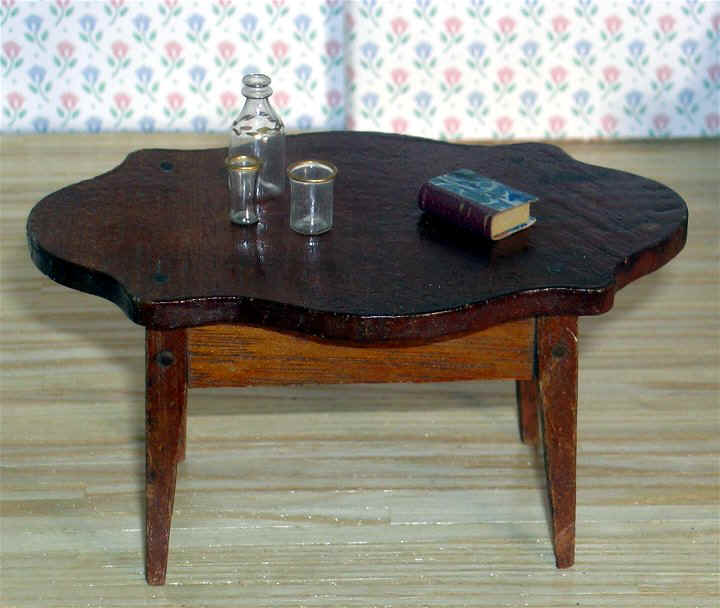
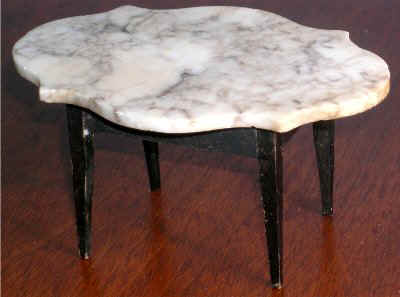
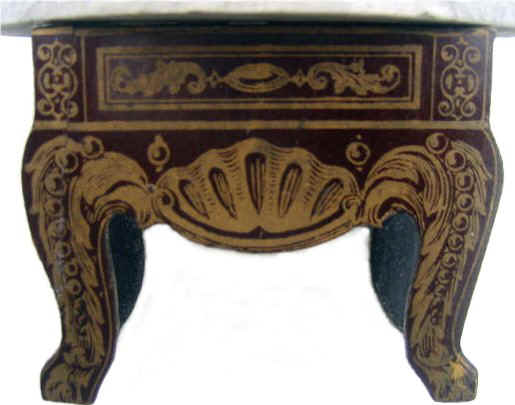
Splayed taper leg table in natural wood with scalloped top, often made with a marble top and sometimes called a turtle table; below with taper legs painted black, 5¼" long
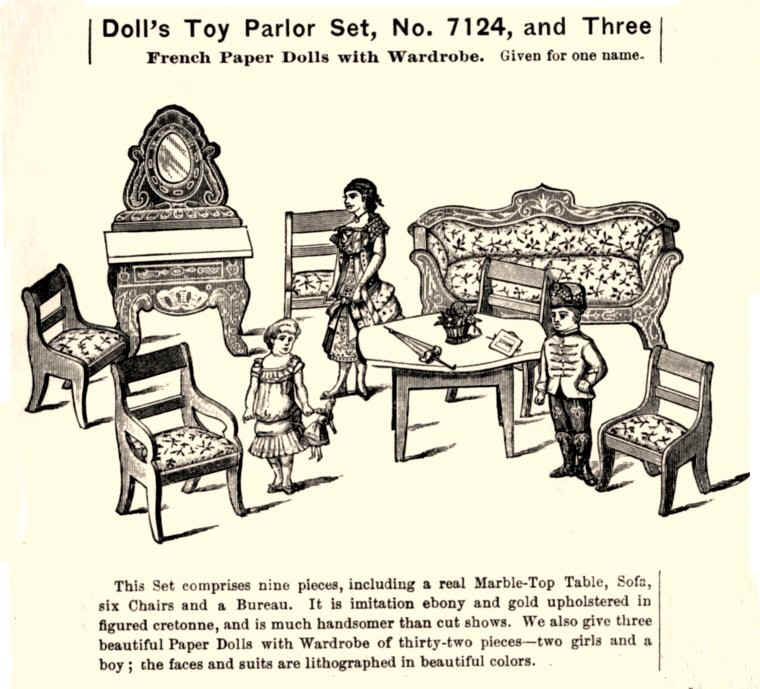
Furniture usually described as Biedermeier
(a term referring to the taste in decorative arts of the German bourgeoisie
in the mid 19th century) in the late 1880s (Youth's
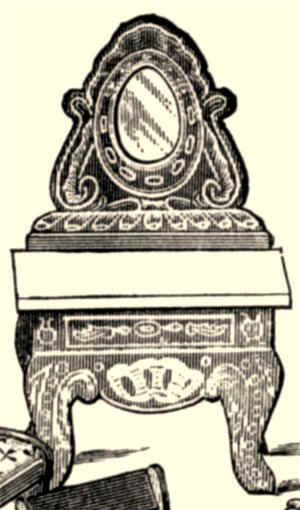
Companion, 1886-1889) with a marble-topped table; the sofa and side-table have
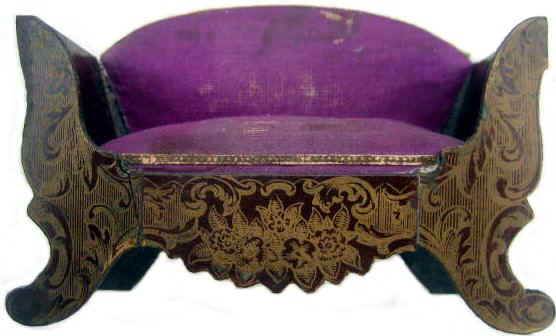
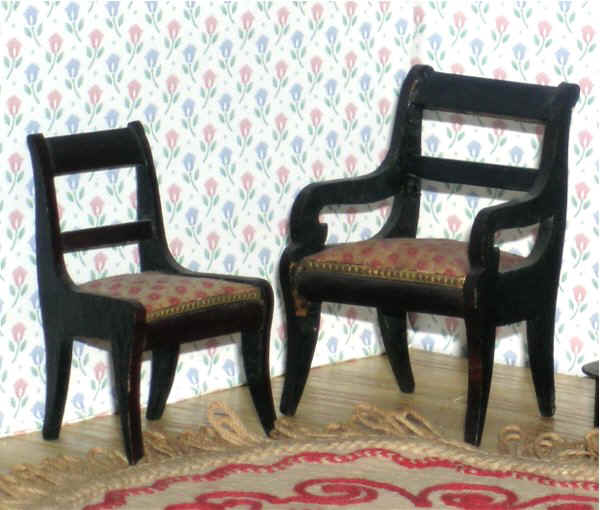
applied lithographed paper imitating wood and metal inlays (Boulle marquetry, sometimes termed Buhl in Britain); the
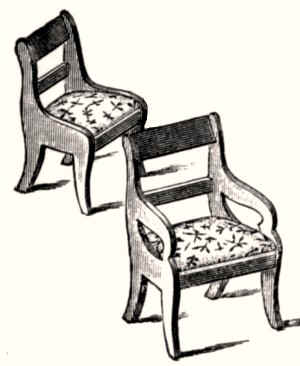
chairs have klismos (curved outwards back and
front) legs with scrolled arms and upholstered seats, which often have
imitation brass tacks over edging along the front of the seat; the seat
covering is often a small floral print or velvet in colours such as gold or
burgundy.
(See also History of Dollhouses 1890s )
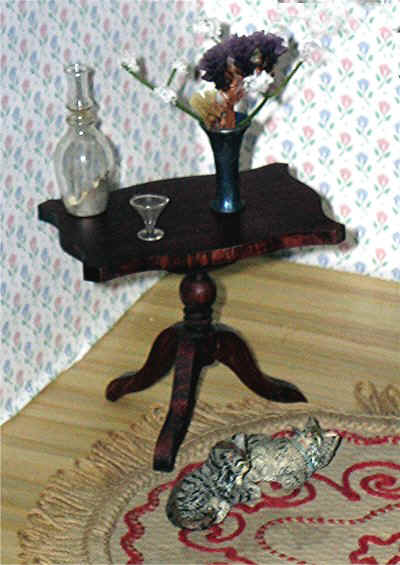
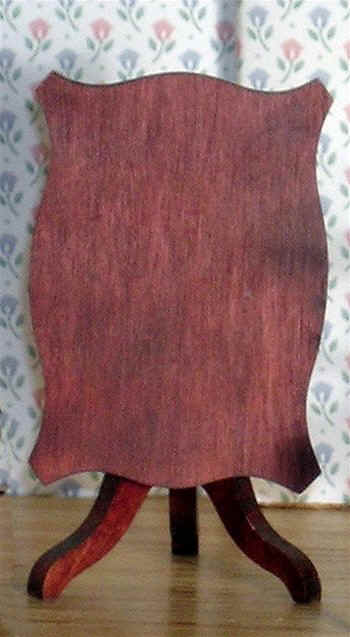
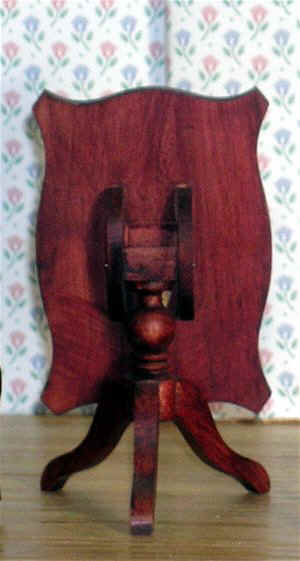
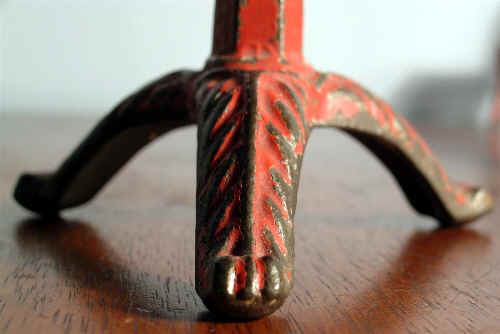
Tilt-top table in red stain on a turned pedestal base with three
legs; on the top's underside is a paper label printed "Germany",
c1910
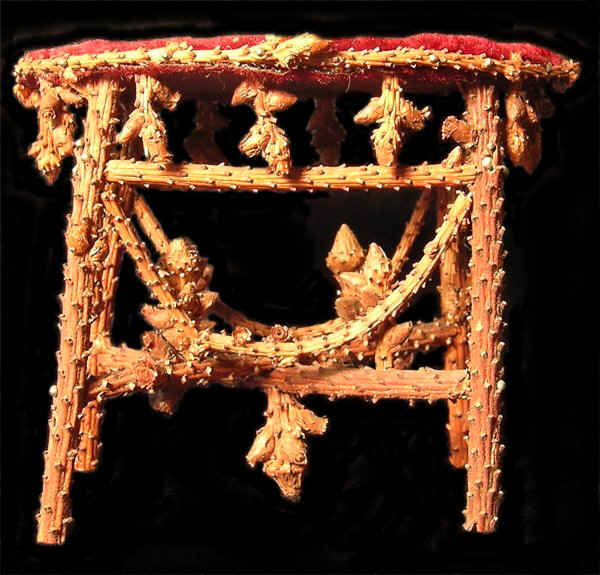
c1870
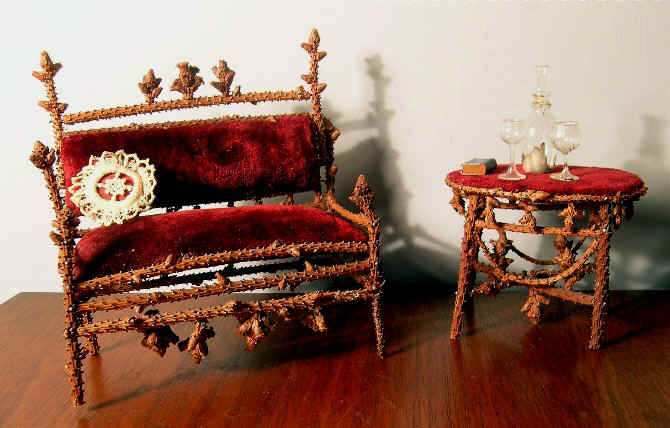
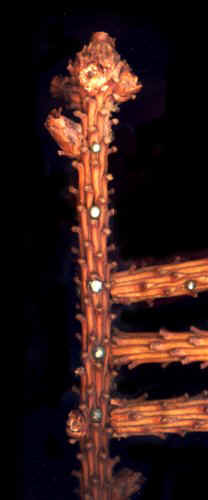
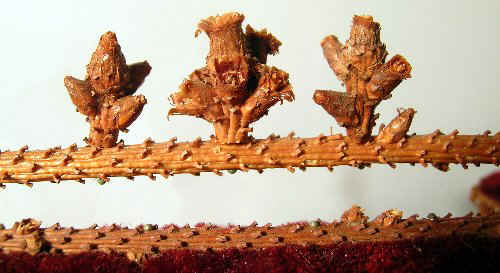
twig furniture, sofa 5½ in. long, pine twigs held together with metal pins in
shapes imitating w
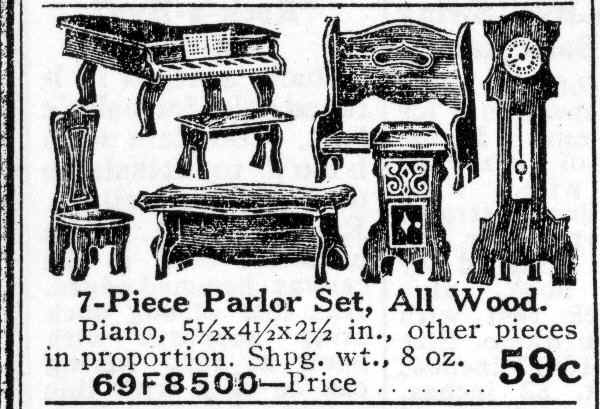
1921 parlour set advertised in the American Sears Roebuck catalogue; made from flat thin pieces of wood
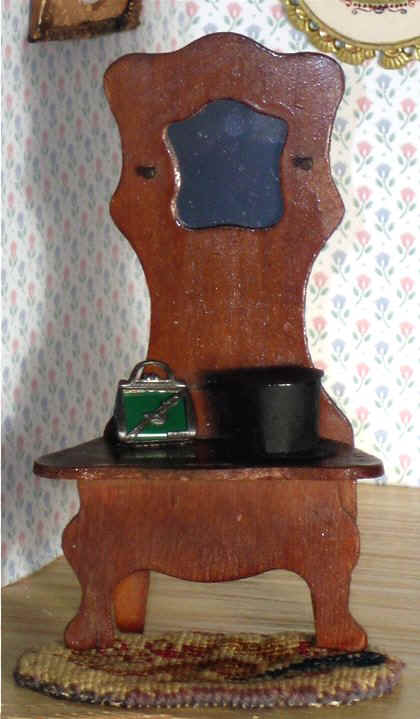
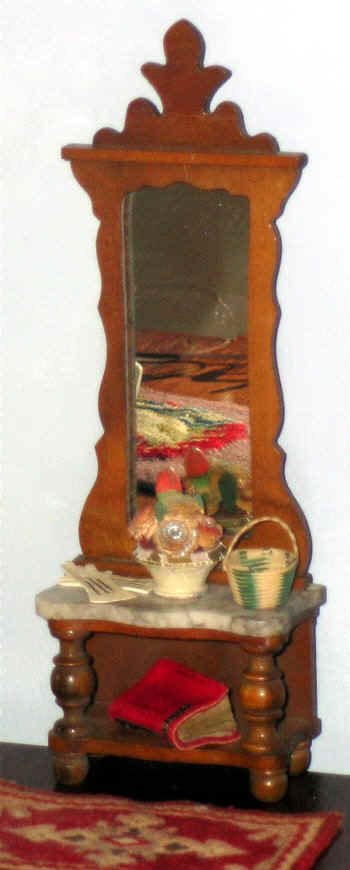
c1920 (on the left) hall stand made from flat thin pieces of wood, made visually appealling by curvilinear lines; the simplicity of construction and detailing suffers in quality when compared to the stand on the right, c1880s-c1910, with its turnings, ball feet and use of marble; both, however, deserve to be judged on their own merits; also one needs to consider that they were likely made for customers with different financial resources
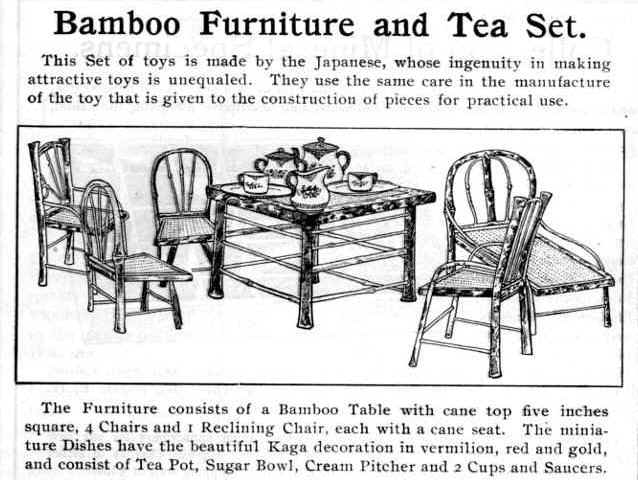
1901 Japanese bamboo
furniture and tea set, Youth's
Companion, 24 October; see also article on Toys
******************* METAL FURNITURE including radiators & stoves (for cook stoves, please see
The Kitchen in Gallery 4 -- link at bottom of page)
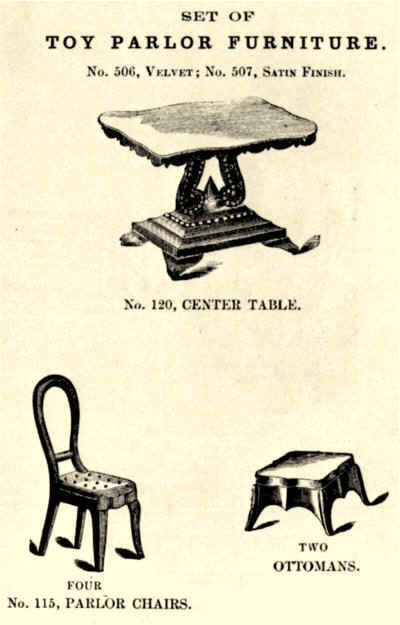
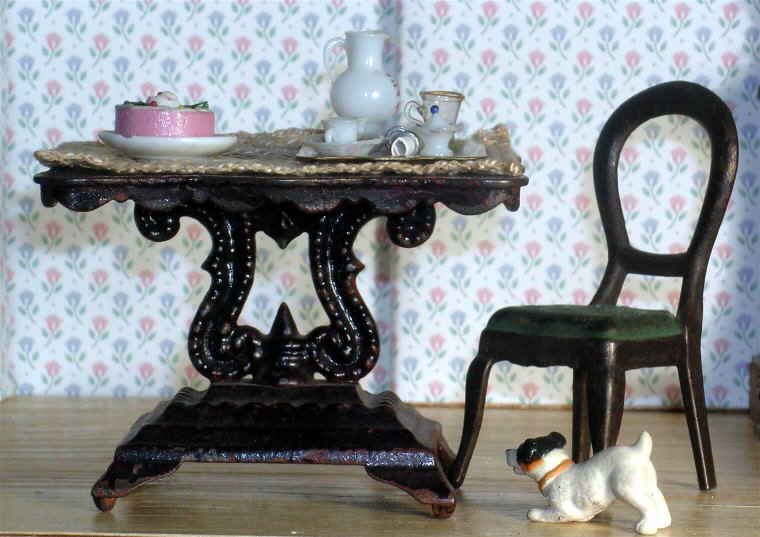
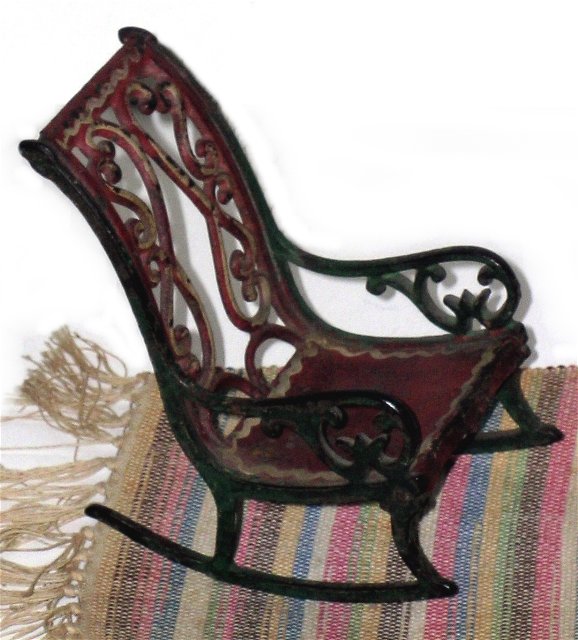
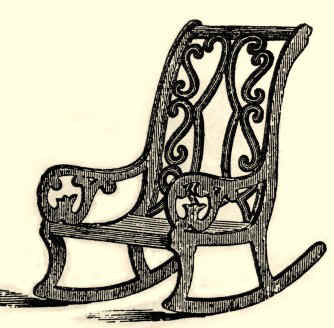
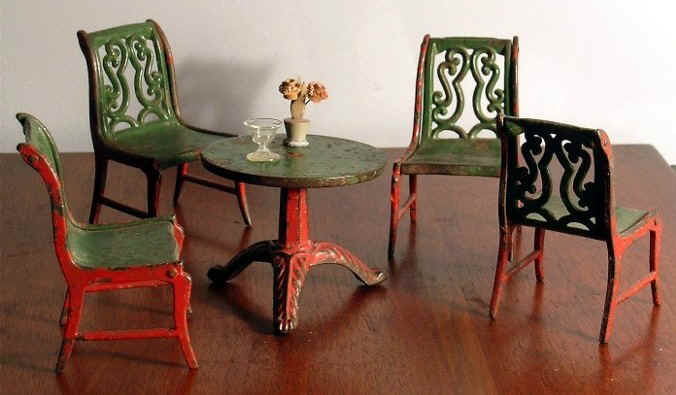
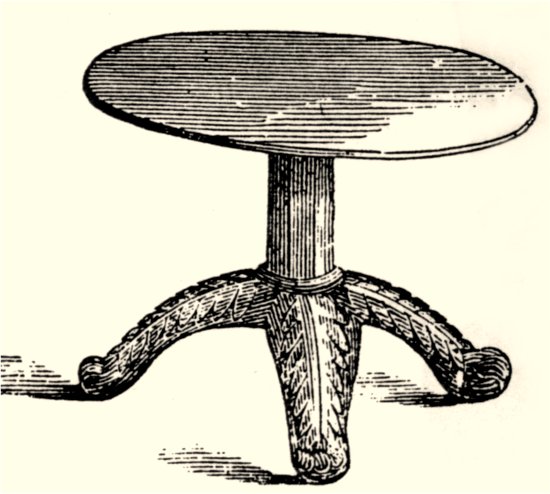
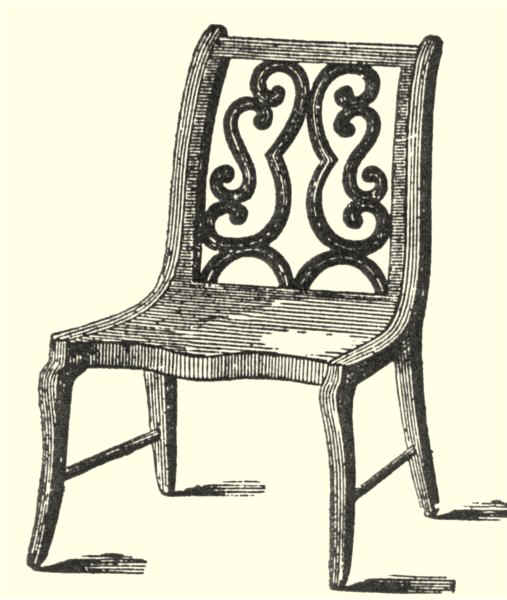
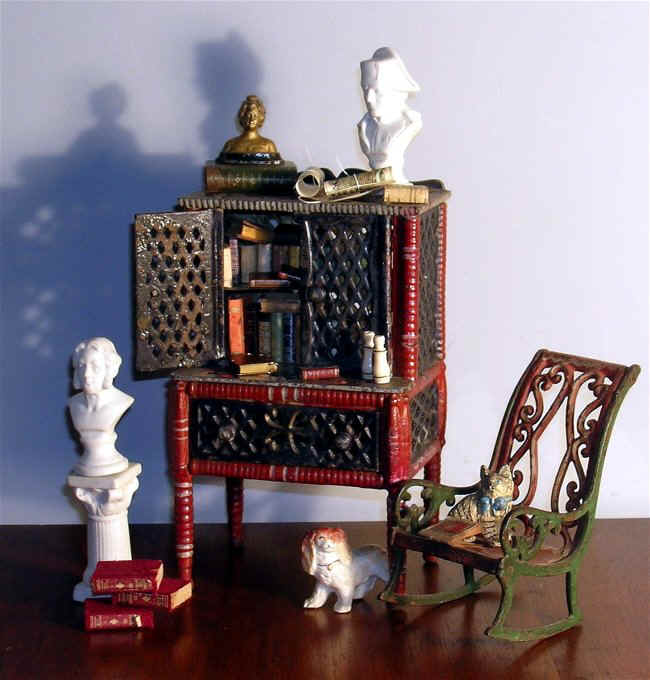
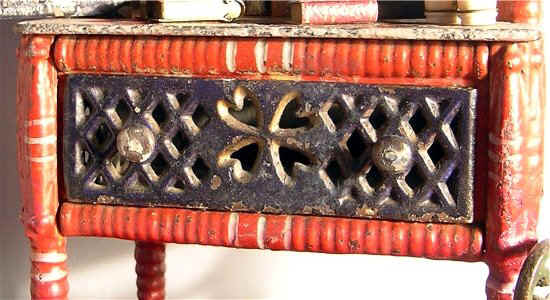
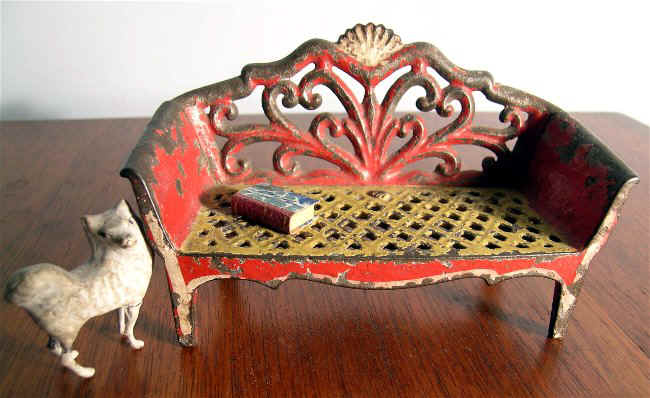
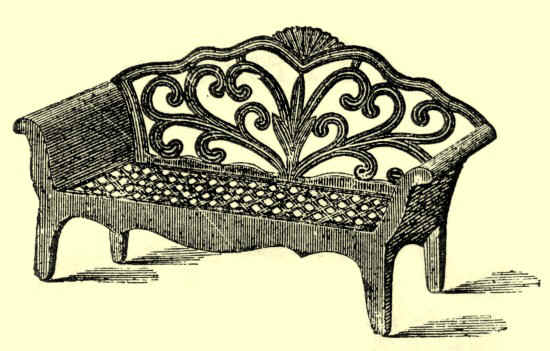
1872 catalogue of manufacturer Stevens & Brown of Cromwell, Conn., USA; cast-iron; the sofa and armchair of this set are in the first illustration in this section of the Gallery of Images (and in the first section of the History of Dollhouses & Furnishings); Rococo Revival style; balloon-back sidechair; rocking-chair with pierced back and scrolled arms
Stevens & Brown 1872 continued
Stevens & Brown 1872 continued
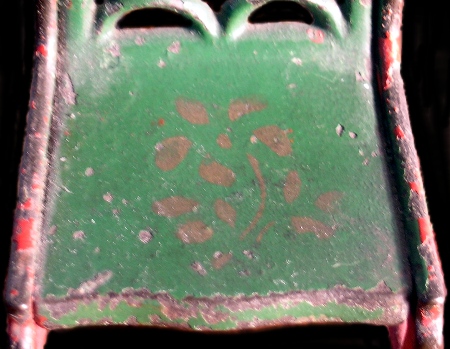
Parlour chair, detail of painted daisy on seat
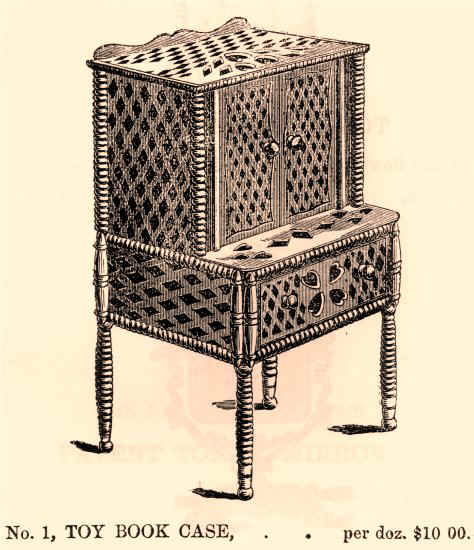
Stevens & Brown 1872 continued Book case, 8½" high; German statuary
Stevens & Brown 1872 continued Sofa, 4½" long
(end of Stevens & Brown)
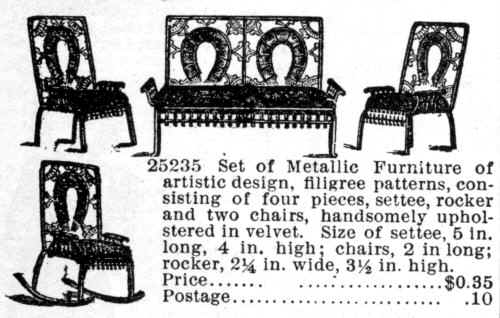
below: 1894-95 advertisement in the Montgomery Ward catalogue
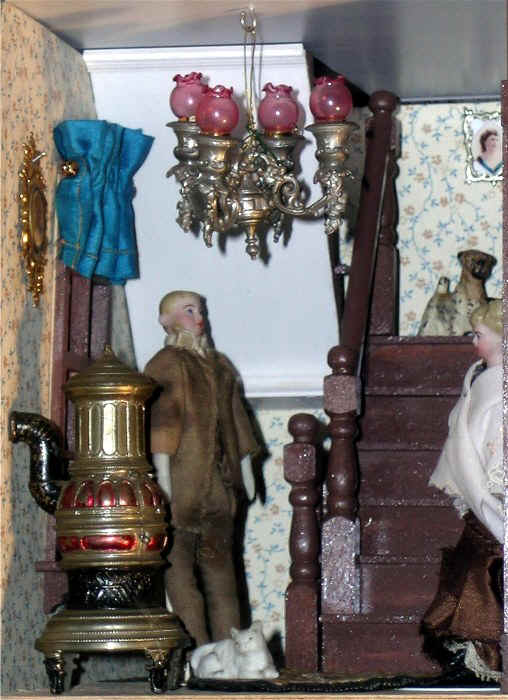
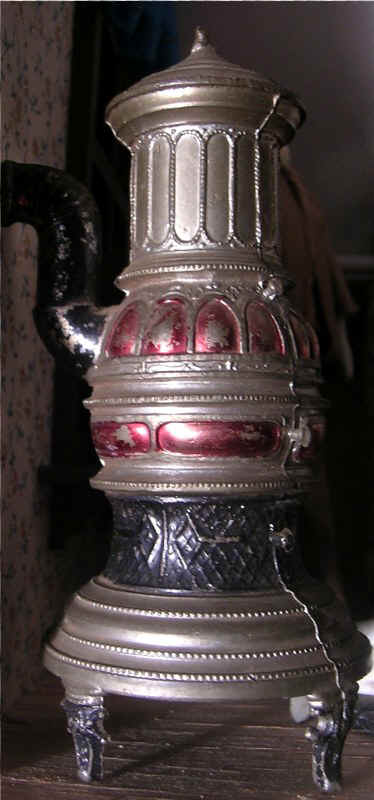
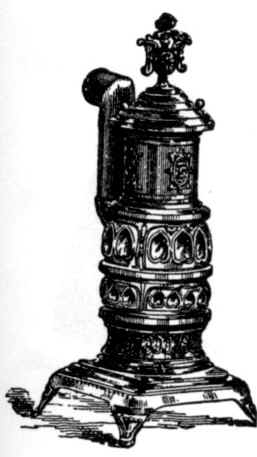
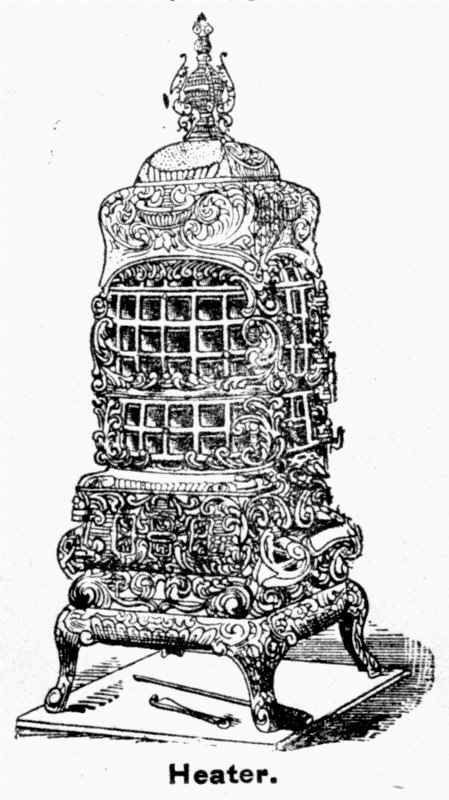
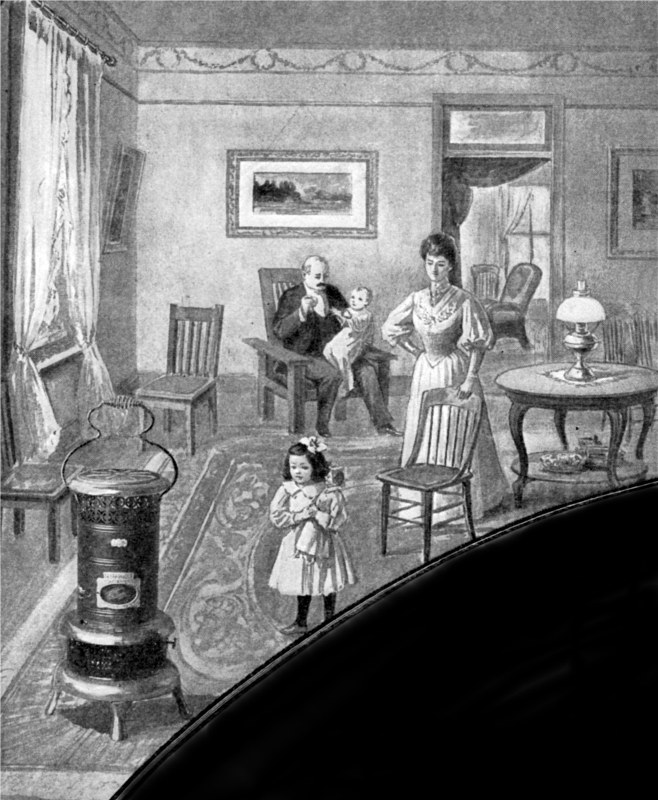
left 1893 advertisement for dollhouse heaters in the Stirn catalogue, NY right 1902-1903 advertisement for a real heater in Eaton's catalogue, Toronto, Canada; the advantage of the upright stoves is that they took up relatively little floor space; as many were placed in formal areas such as hallways and parlours, they were necessarily fancy in ornamentation
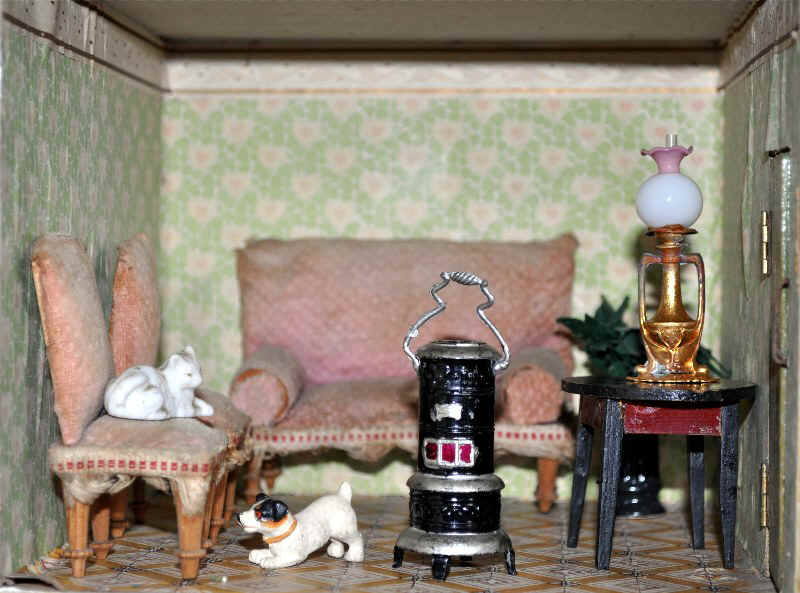
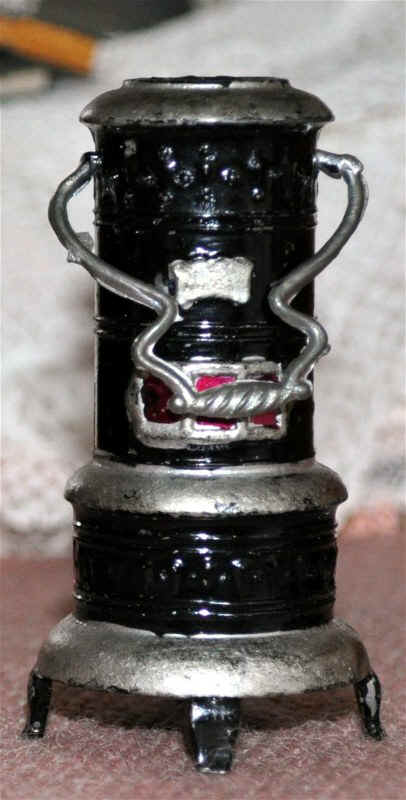
The advantage of this oil heater was that it was portable and thus could be moved to a chilly spot, where the family had gathered; it did not need a fixed stove pipe; dollhouse soft-metal heater painted to look like nickle plating and japan finish with red painted "openings" to show the fire through sheets of mica; the miniature does not attempt the open grillwork seen above in the real heater advertised in Youth's Companion, 29 Nov. 1906; still popular in the 1920s
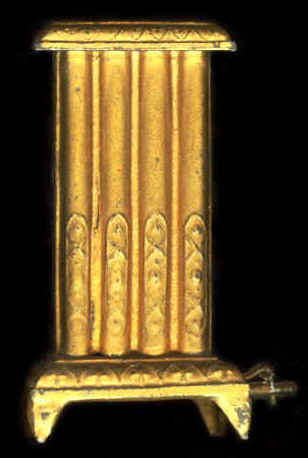
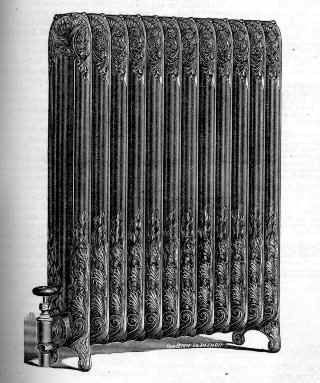
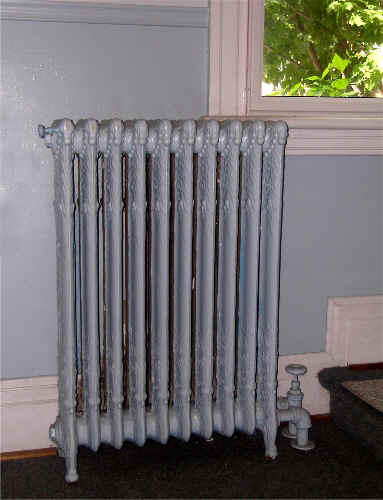
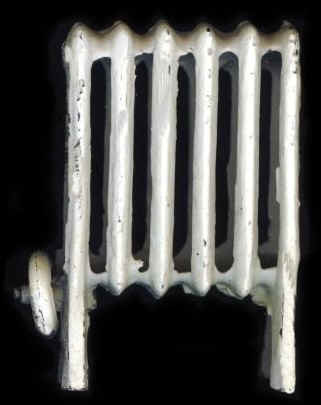
Coal-fired boilers in cellars produced hot water pumped to radiators in the main and upper floors in houses of the well-to-do in the 1860s, '70s and '80s; by the 1890s, they were becoming widespread in North America
above c1890 gilt painted metal radiator, just under 2½" high, embossed with Art Nouveau designs
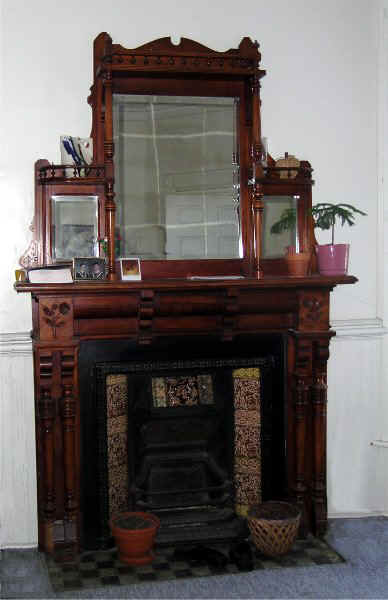
left real radiator in a c1898 house in Kingston, Ontario, Canada
plain painted white radiator with splayed feet and spoked wheel to control the water flow; just over 2" high
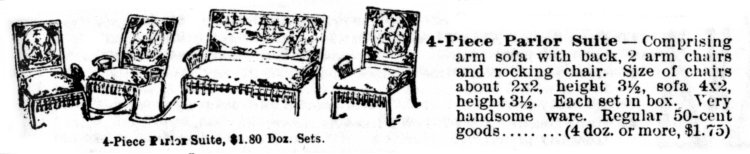
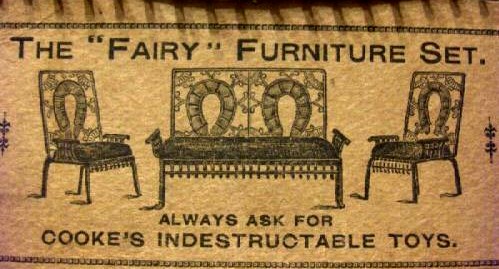
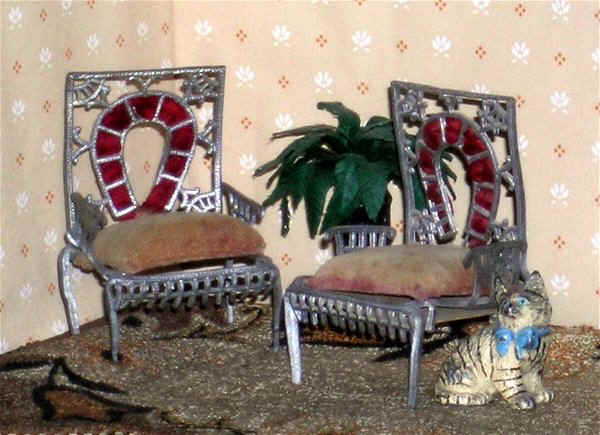
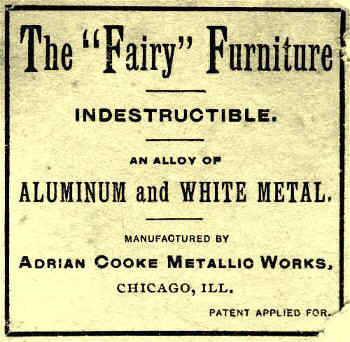
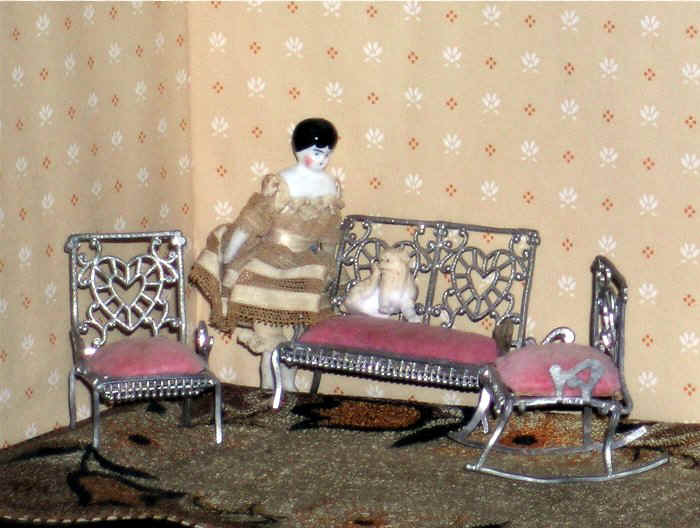
******************* "PENNY TOYS" parlour furniture made of metal in a variety of scales: see History of Dollhouses 1900-1910 (link at bottom of page) ******************* PICTURES
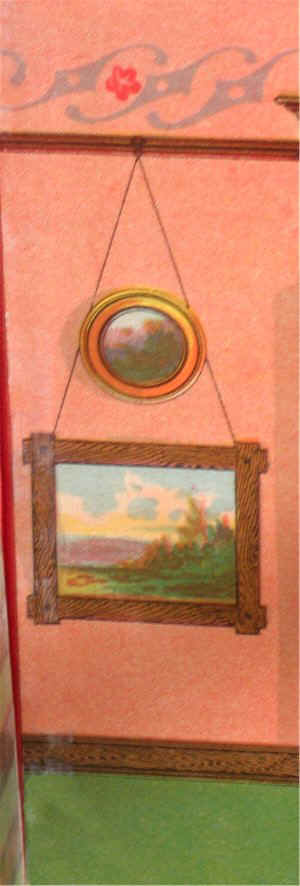
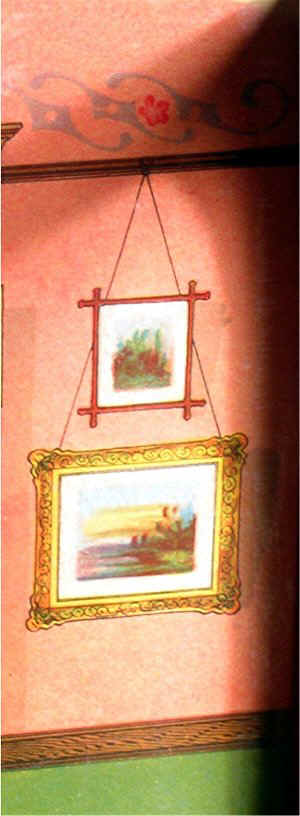
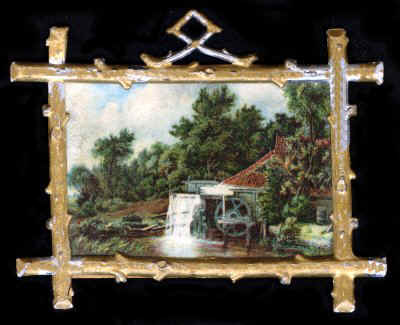
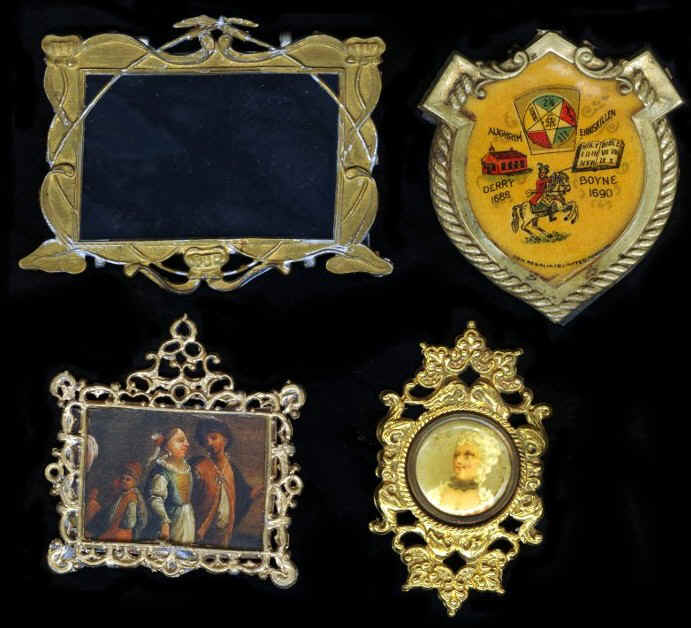
the larger one is suspended by a visible cord from a picture-rail moulding and rests above the chair-rail moulding (usually just under 3 feet from the floor), below which the wall is painted a contrasting colour; a stencilled frieze appears above the picture-rail; a small picture is hung above the large lower one; traditional gilt frames continue in popularity but ones with the ends of the wood frames continuing beyond the corners are particularly in vogue at the turn of the century, the frame may be in the form of tree limbs (example below, 2½" wide), part of the 19th-century interest in the Romantic, sublime and primitive aspects of Nature; the subject of an old mill set in nature was a popular subject; (left & right, details from the McLoughlin Garden House)
******************* RUGS
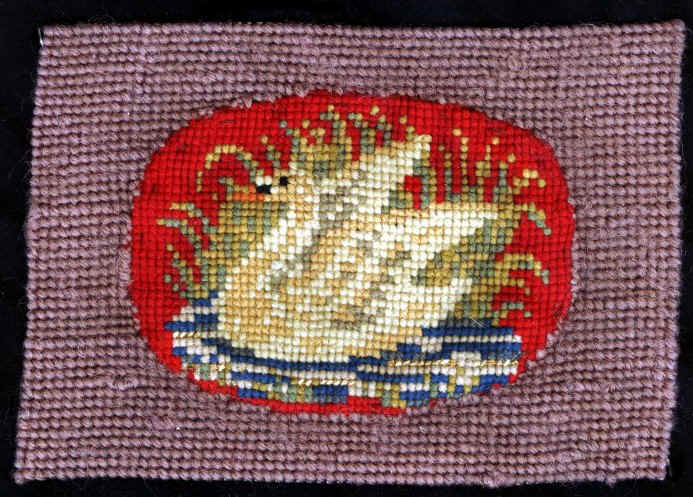
c1870 needlepoint rug with swan, Quebec, 6" x 4"
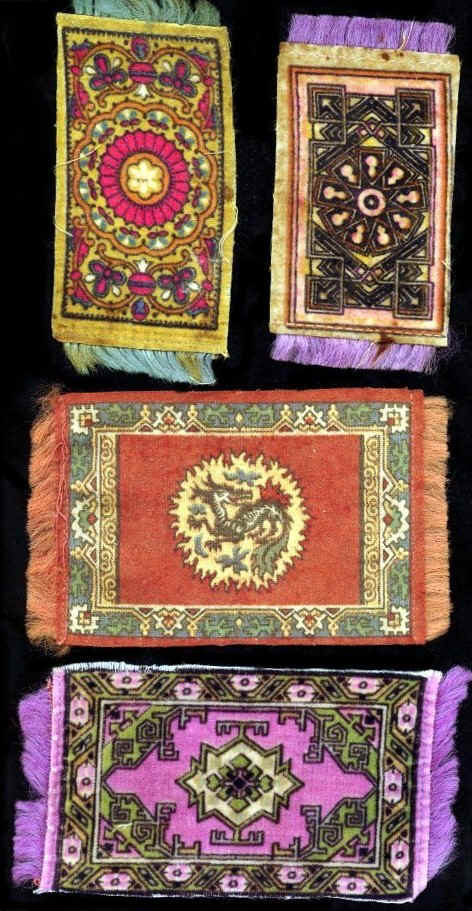
c1920
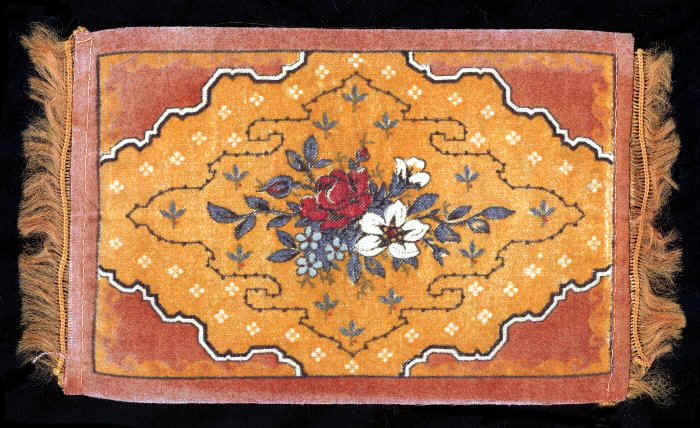
printed "tobacco rugs", largest 5" x 3"
c1920
printed rug with flowers, 8" x 5"
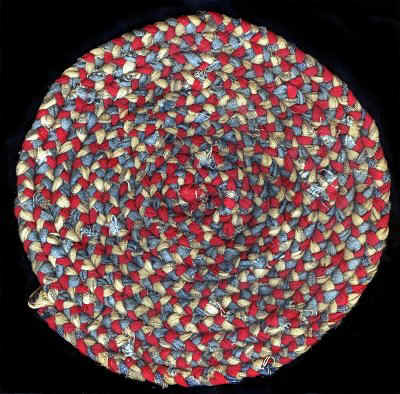
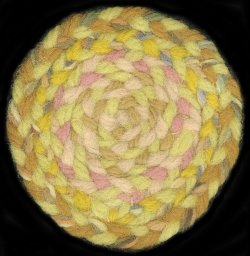
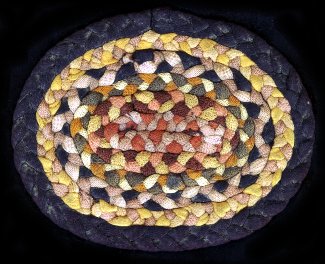
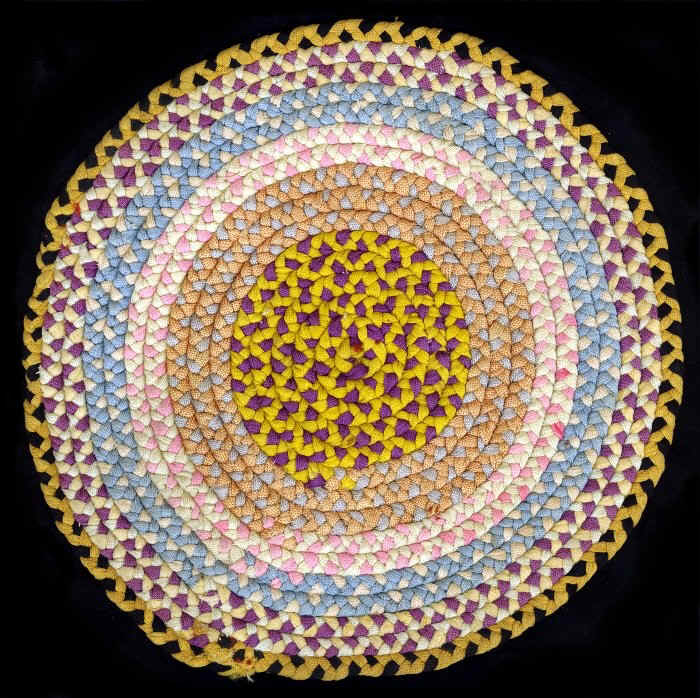
Braided rugs, smallest 2" diameter, largest (below) 7½" diameter; oval
3¼" x 2½"
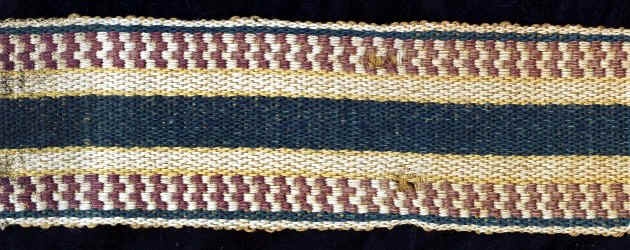
Runner, woven, Canadian, 2½" wide
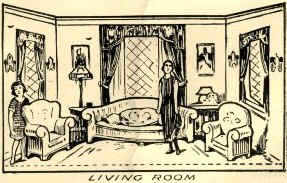
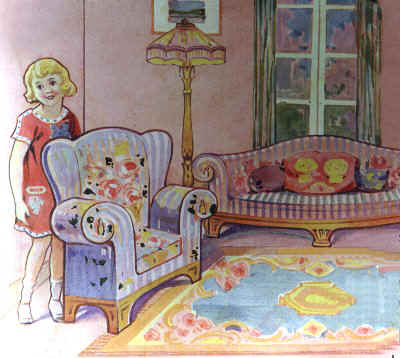
1921 perhaps this is a good place to end images of "the parlour", as it has become "the living room" with familiar looking stuffed armchairs and a couch; lighting is now all electric with wall fixtures and a floor lamp; the setting is now an apartment instead of the usual house -- an acknowledgement of how many people lived in North American cities during the 1920s; from a cardboard set "This 4 Room Apartment..with 'Invisibles' Cut-Out and Paint...", New York, 1921-23 PLEASE CLICK HERE TO CONTINUE THE GALLERY OF IMAGES! top top of page home page history of dollhouses GALLERY of IMAGES 1 GALLERY OF IMAGES 2 GALLERY OF MAGES 3 GALLERY OF IMAGES 4 |