Content-Language" content="en-us">
|
section 2: dollhouses 1880s to 1920s images & photography: Jennifer McKendry© home page
GALLERY of IMAGES 1 GALLERY OF IMAGES 3
GALLERY OF IMAGES 4 GALLERY OF IMAGES 5 GALLERY OF IMAGES 6 GALLERY OF IMAGES 7 GALLERY OF
IMAGES 8 INDEX to GALLERY
History of Dollhouses article
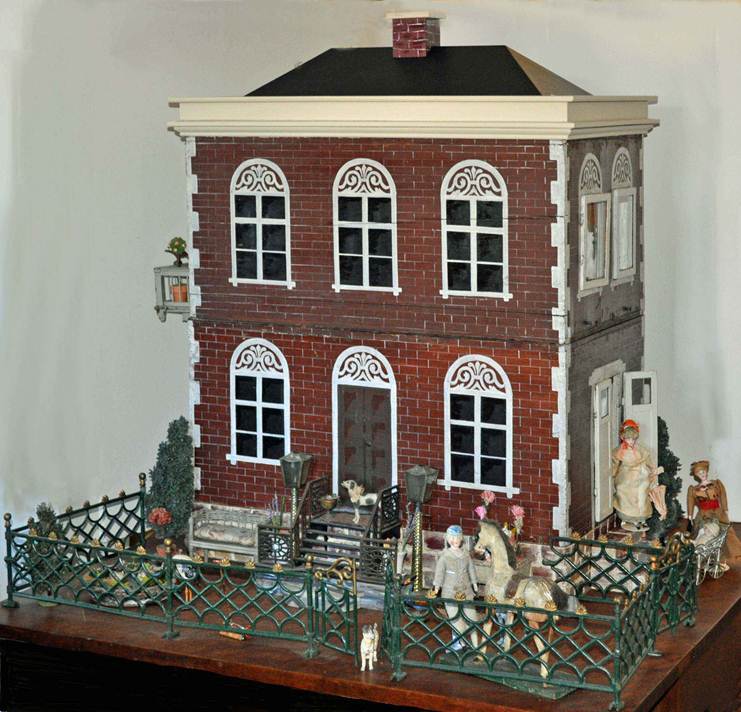
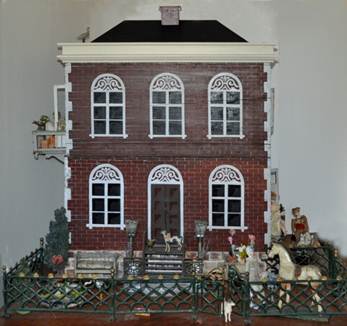
painted wood glass hinged windows by convention, the fake windows on the front wall
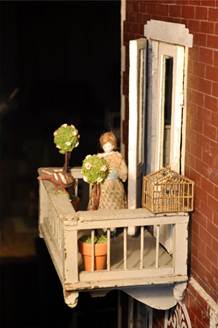
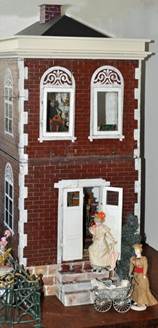
have the “glass” panes painted black balcony with hinged French doors (restored foundation, steps, roof, parapet,
chimney, wallpaper) 3- dimensional interior woodwork in a classical
style 35 inches to top of chimney, 27 inches wide, 16½
inches deep antique German furnishings & dolls; American cast-iron parlour set of the early
1870s, American Tynietoy high-post bed 1920s
Children’s bedroom (for the bedroom
set, see GALLERY_OF_IMAGES_6 )
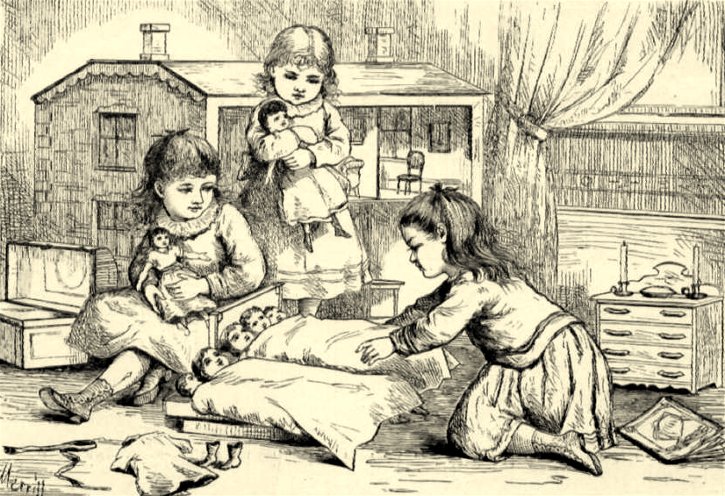
1889
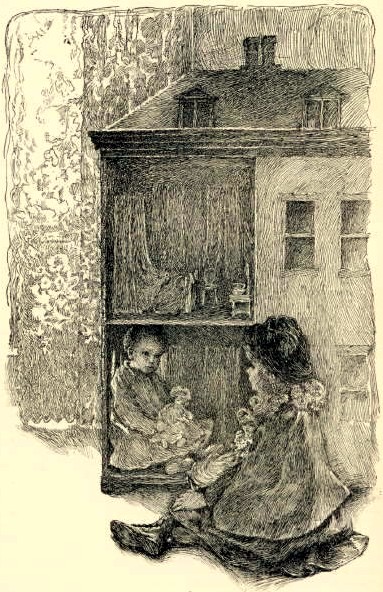
1892
c1890 American
stereocard by I.W. Ingersoll, St Paul, Minn. (no date)
The furniture is likely German
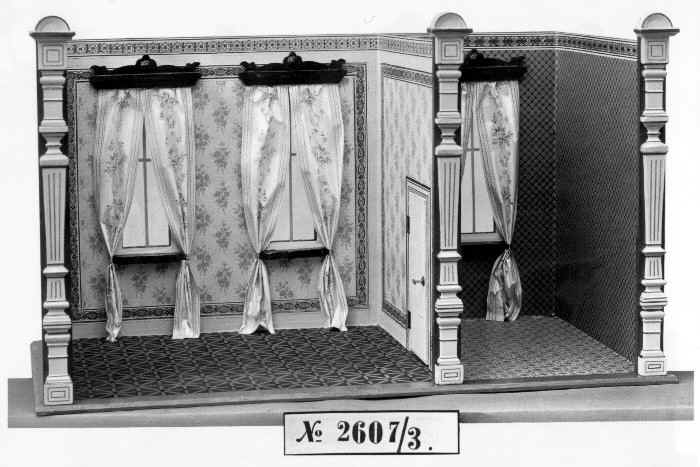
1896 Moritz Gottschalk catalogue
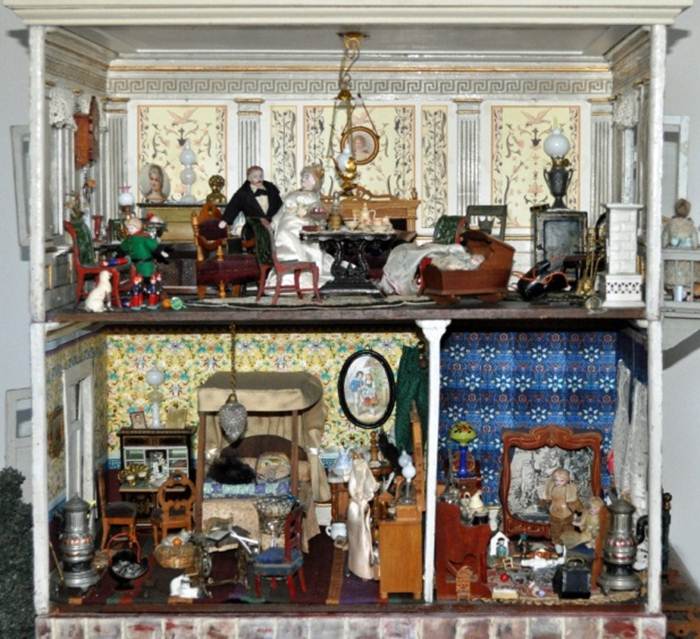
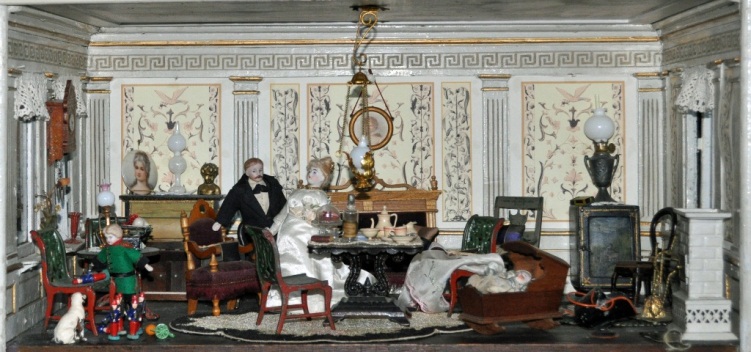
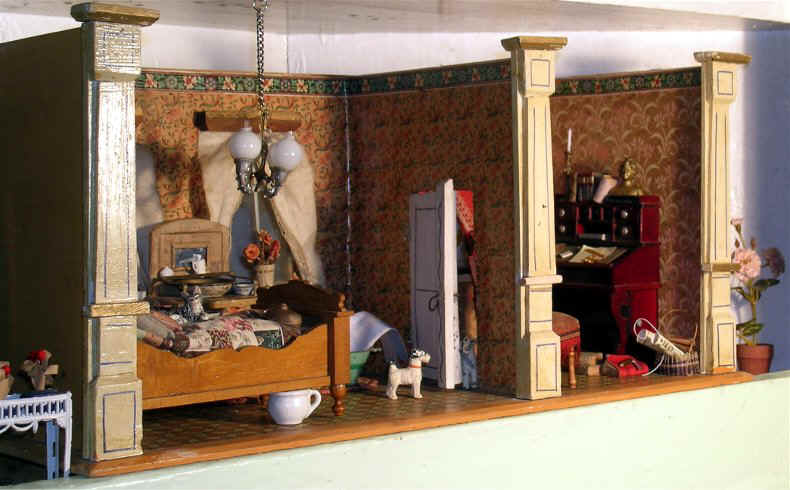
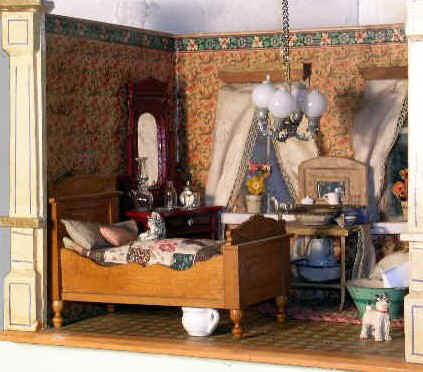
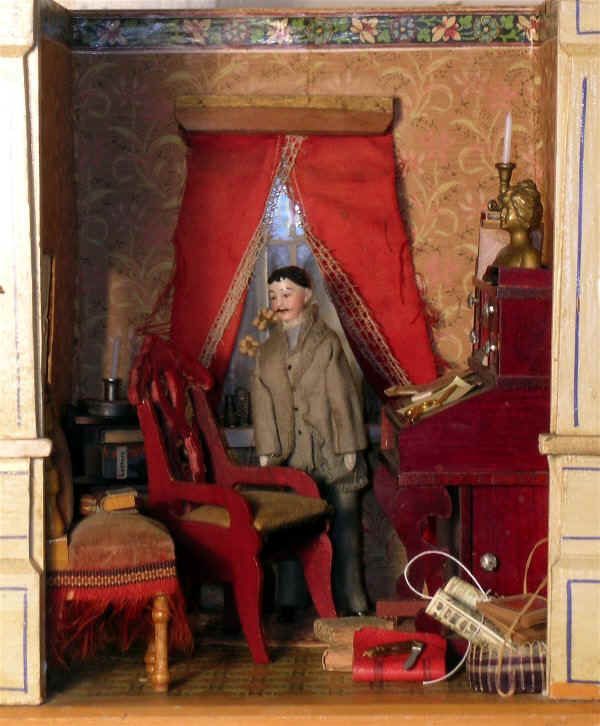
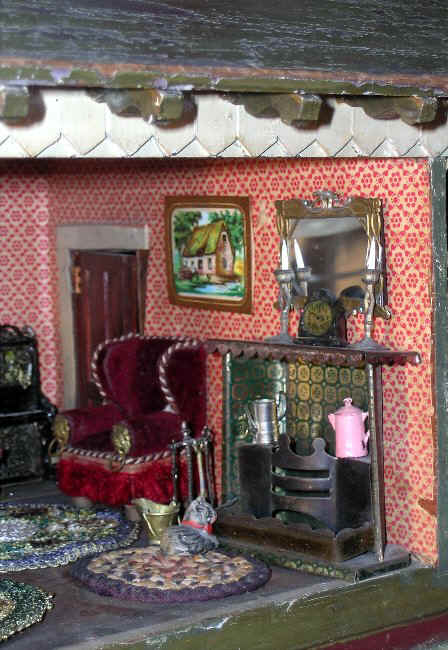
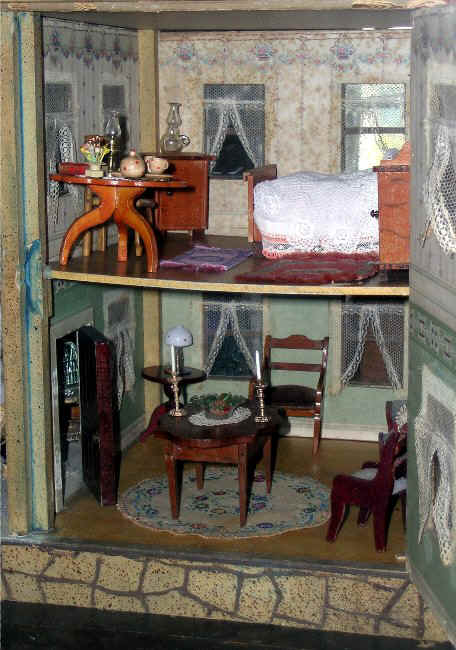
Open rooms on
21¼ in. base, attributed to the German factory of Moritz Gottschalk (1840 - 1905),
making dollhouses, furnishings and stables from about 1873 to about 1940,
when World War Two interrupted toy manufacturing, which began again in 1947.
Although this particular set of rooms does not appear in the surviving
catalogues from 1892 to 1931, certain features resemble ones shown in the 1890s. (See References
for books on Gottschalk by Ackerman and Cieslik.)
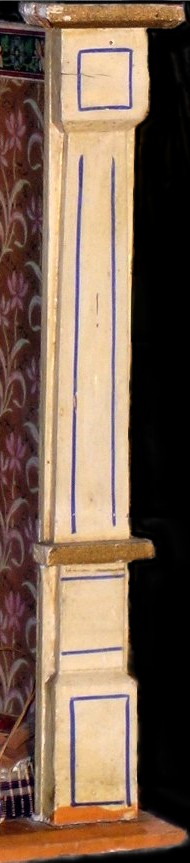
Hand-painted blue lines decorate the cream-coloured front 3-dimensional
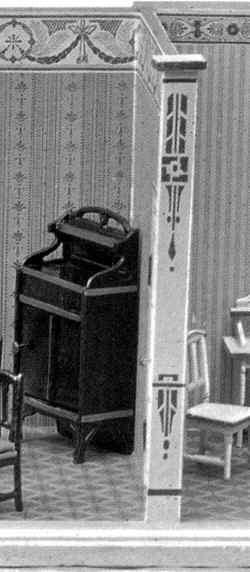
pilasters, made up of mouldings, a base and capital (but in the 20th century,
the shafts are flat with painted decoration suggesting a base or with applied
fretwork retaining a 3-dimensional capital but no base). The main wooden base
for the rooms has a simple angled profile at the front. The geometric
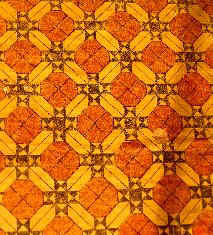
"tiles" on the
Pilasters -- on the right, post c1906 (from the 1909 catalogue) and, on the far right, pre 1906
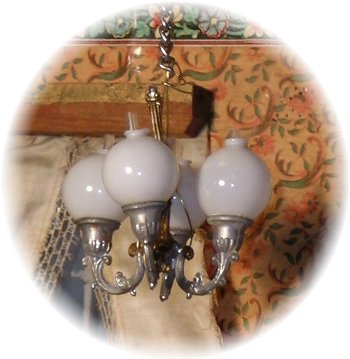
German metal chandelier with original glass chimneys and shades c1900
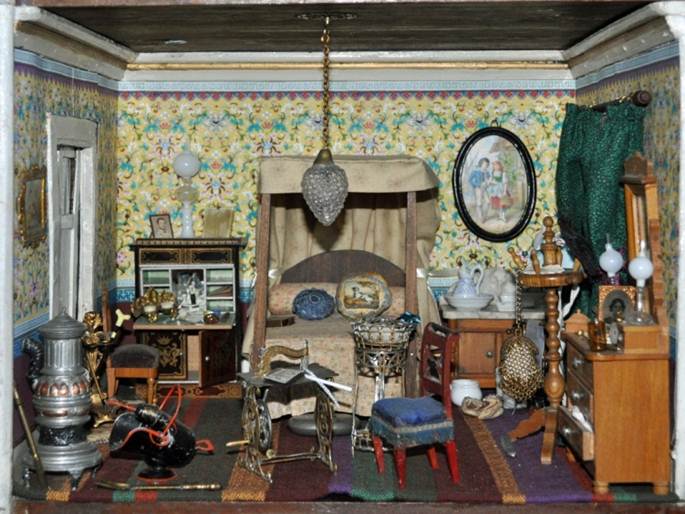
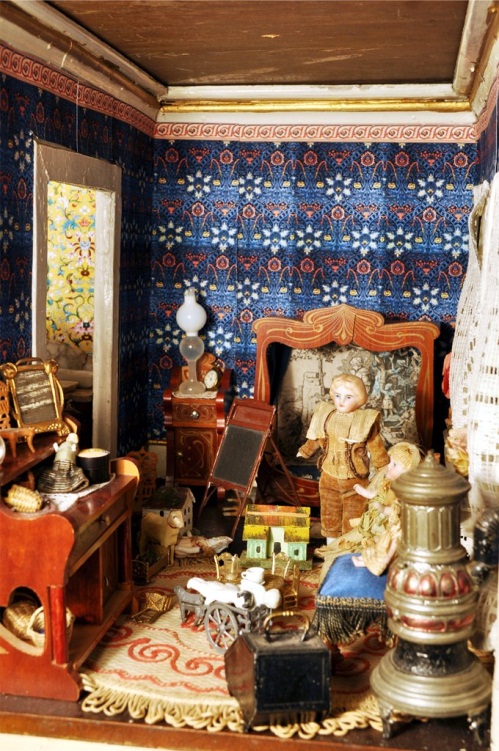
Furniture shown in the two rooms is discussed in Gallery 5 (desk) and Gallery 6 (bed, chest of drawers, wash stand) links at bottom
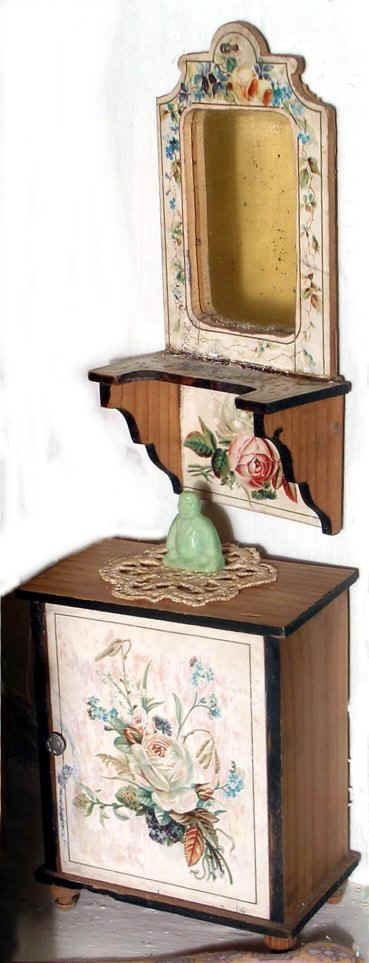
1890s These were among the pieces of furniture, which originally furnished this particular set of rooms (when set up as a parlour and a bedroom); German; printed paper applied over natural wood with black painted borders on the cupboard and edging on the shelf below the mirror; above table top, 3 in. diameter with turned pedestal base in natural wood
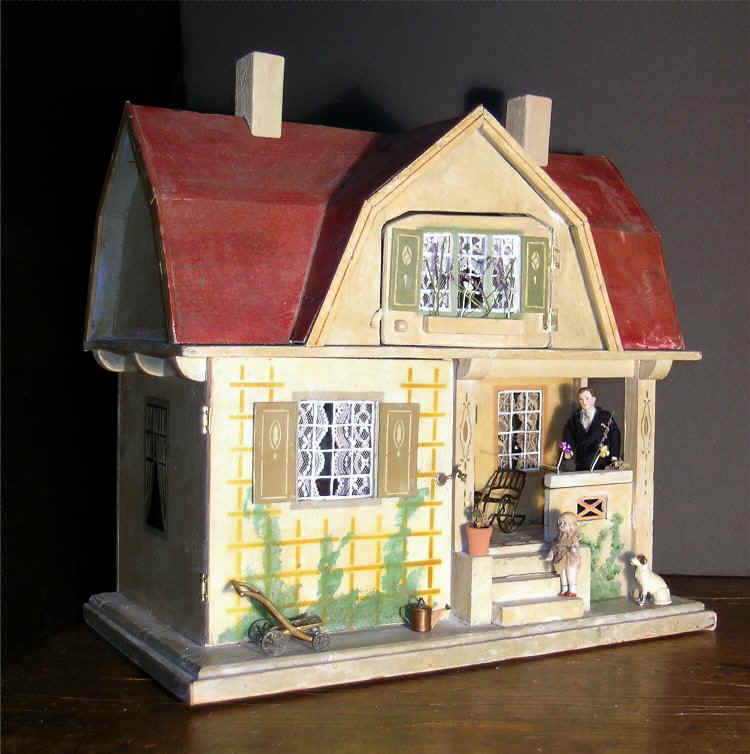
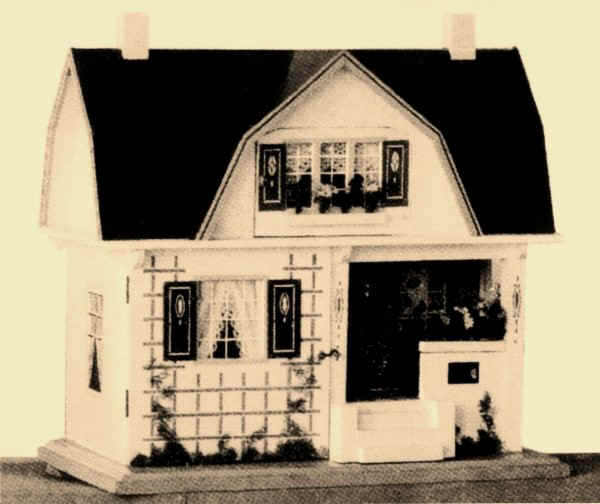
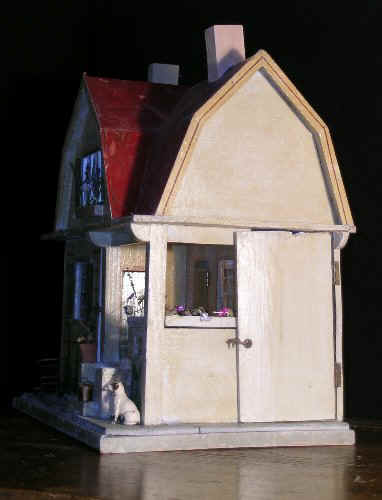
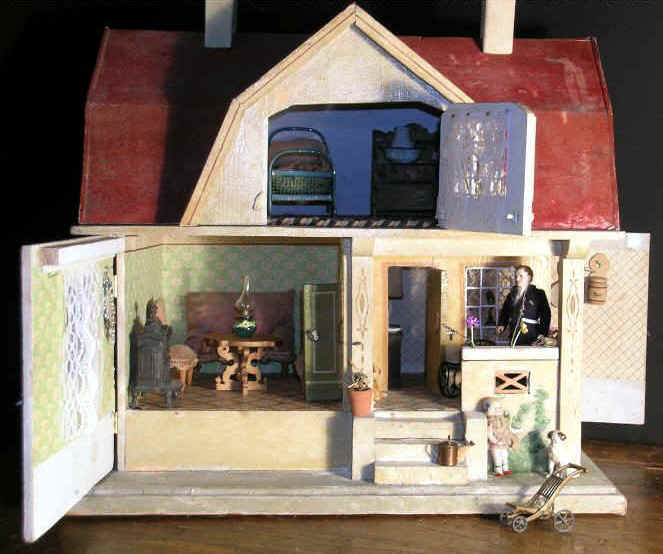
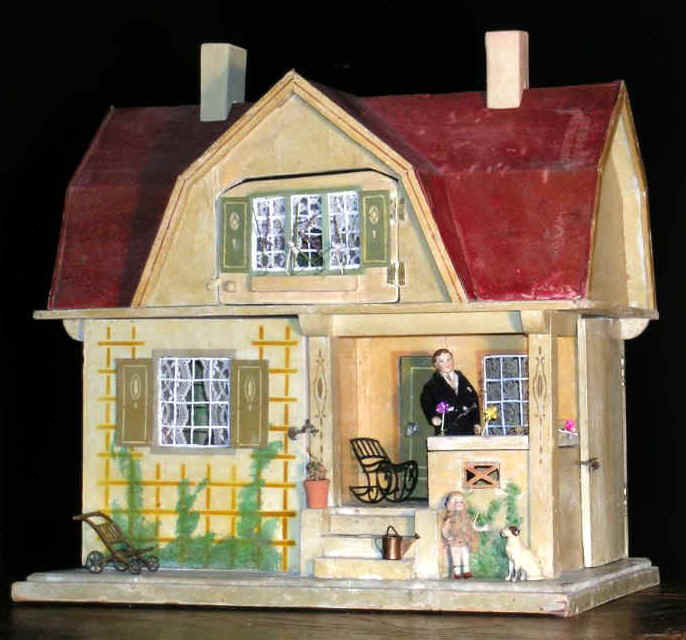
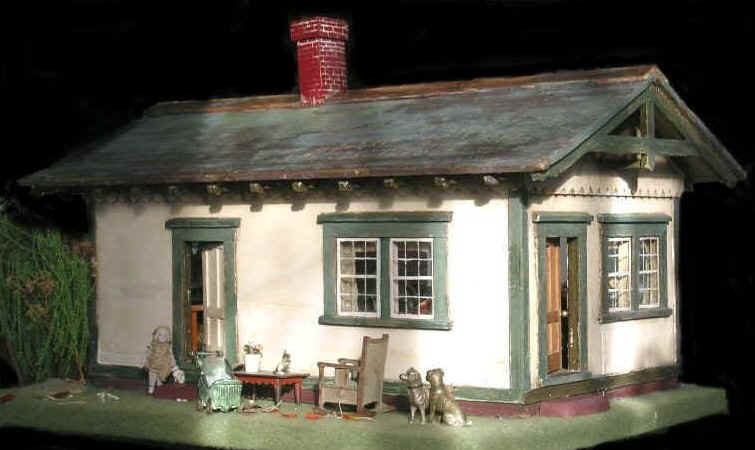
1910 Moritz Gottschalk "red roof" dollhouse. The missing dormer window was restored based on the illustration from the 1910 catalogue (below), as were the glass windows and chimneys.
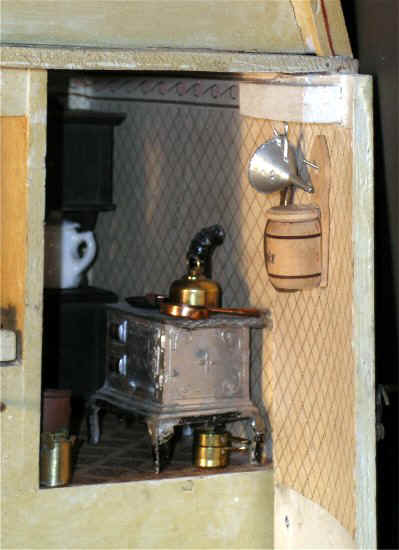
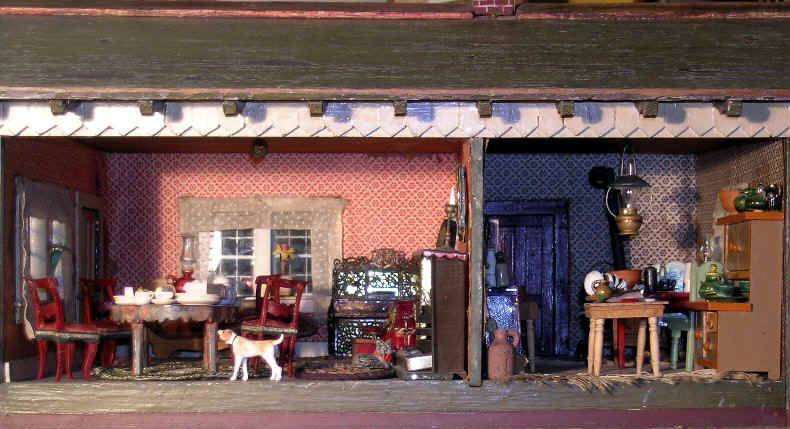
The narrow kitchen accessed from a doorway in the recessed porch or from a swinging wall panel. The wall paper and paper "tiled" flooring are original.
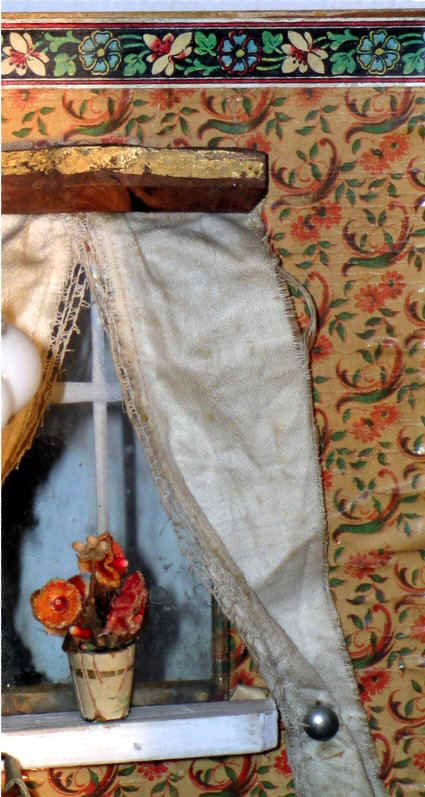
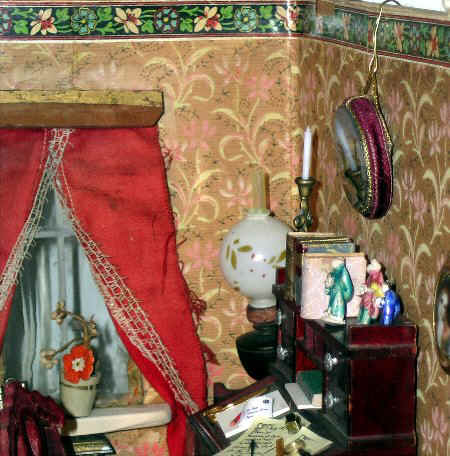
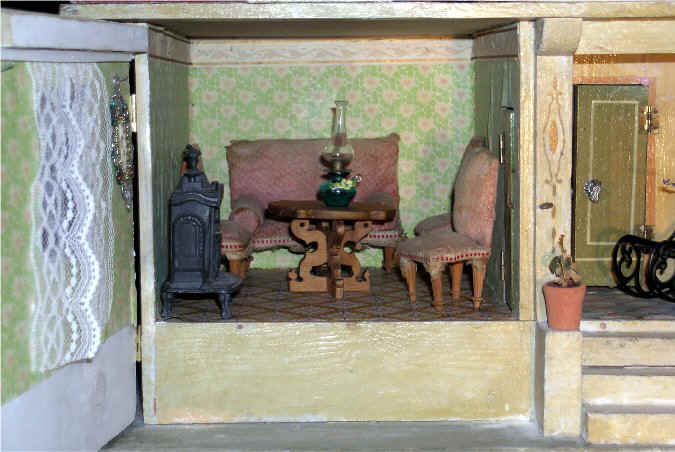
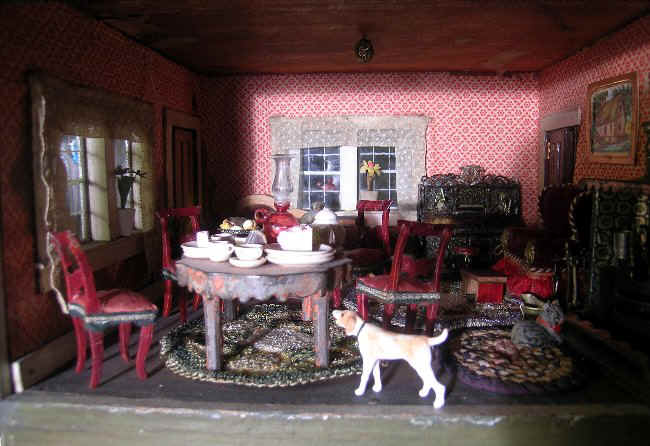
There are three rooms: parlour, kitchen and bedroom. The first is accessed from a doorway off the porch and a swinging wall panel, the second also has a doorway onto the porch and a hinged wall panel and the third is accessed from a hinged window (restored).
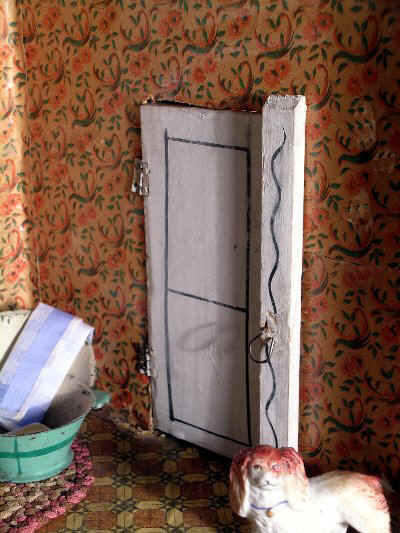
Note the typical Gottschalk slab door with a painted panel and handsome knob, which pivots on a staple on the reverse of the door. The wallpaper with its upper band and flooring are original but the curtains are replacements.
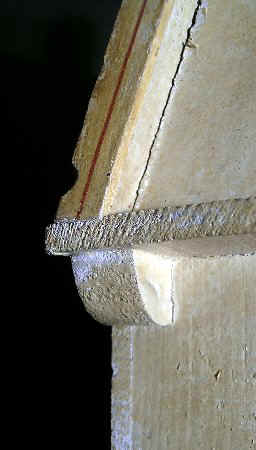
left Detail of one of the corbels supporting the eaves; the corbels are a medieval revival aspect
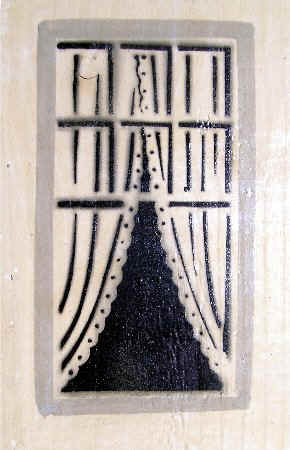
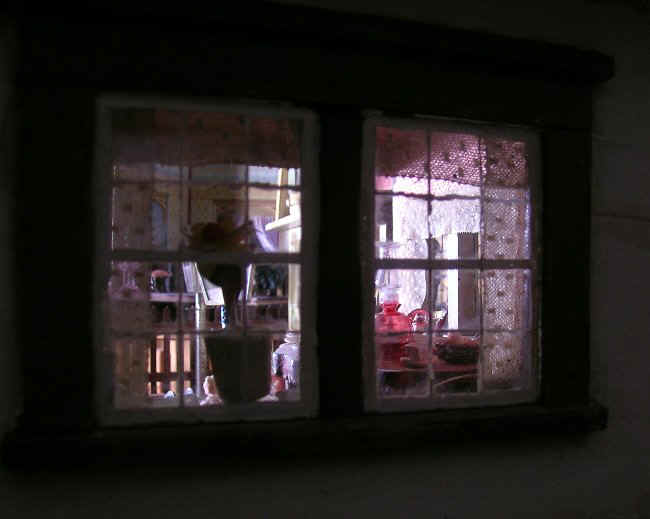
right Stencilled window on the end wall ("illuminating" the parlour); lace edged curtains; real lace curtains were intalled in the actual windows
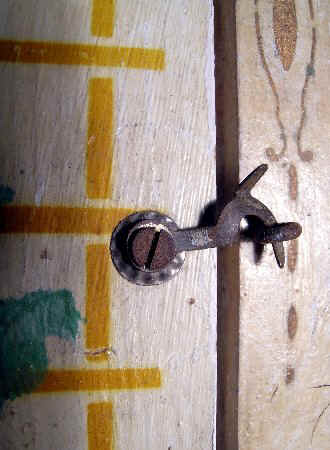
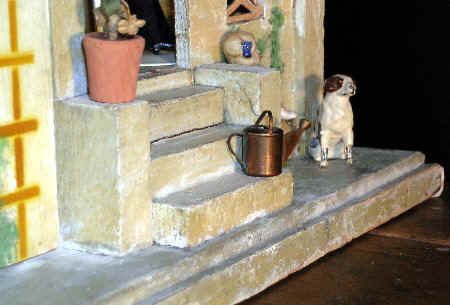
Original typical Gottschalk clasp and details of stencilled trellis. Original steps.
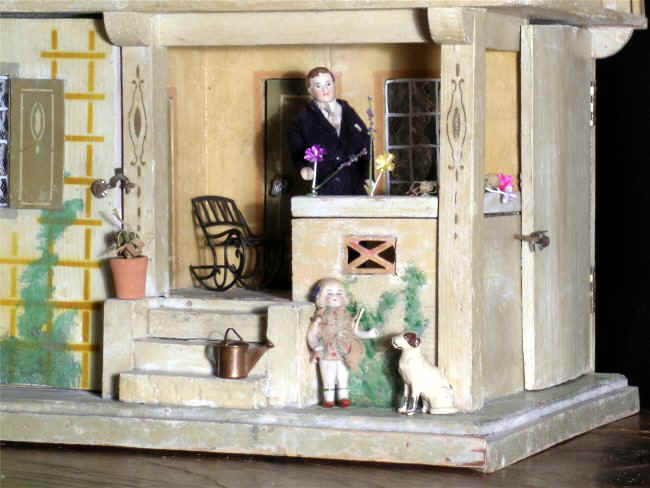
The recessed porch with a cut-out cardboard X; typical Gottschalk ornament in gold on the porch pillars
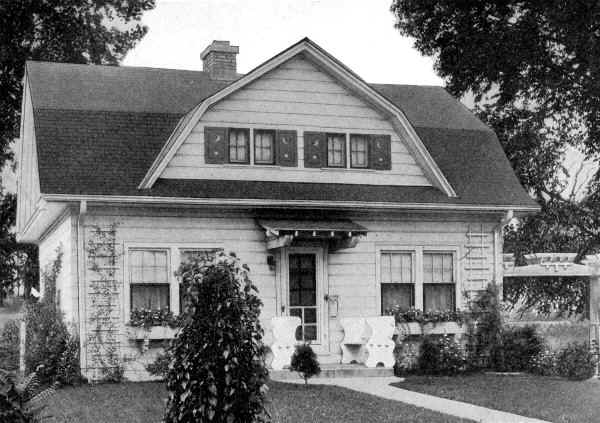
1928 Odell Bros., Home Builder's Catalog
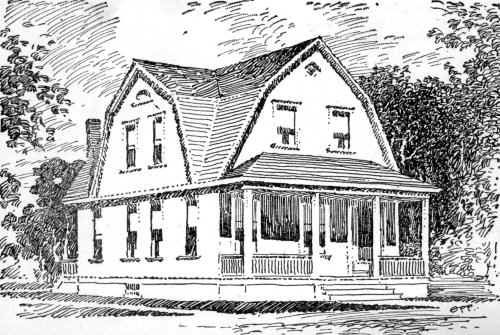
1904 Hodgson's Low Cost American Homes Style and form:
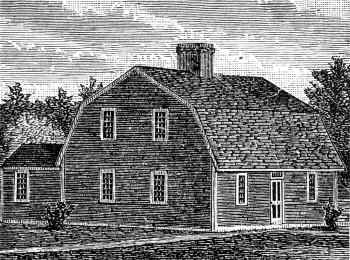
the dollhouse is dominated by a gambrel
roof, intersected at right angles at the front by another
gambrel roof sheltering a wide dormer, also seen (above) in the 1928 house in an American
catalogue and in a 1904 architectural pattern book, although in this case the
dormer is on the house's side wall. The gam
note: for images of Gottschalk kitchen rooms, see Gallery 4
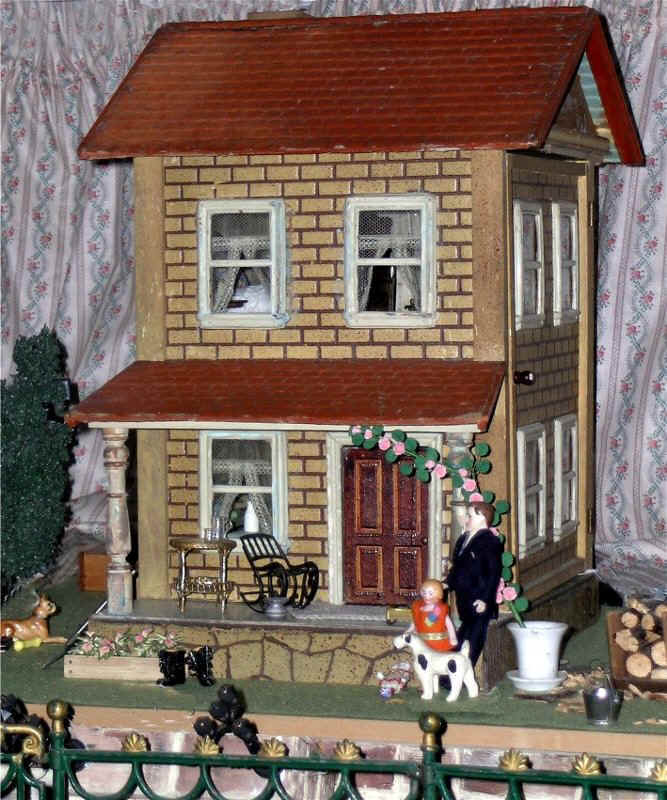
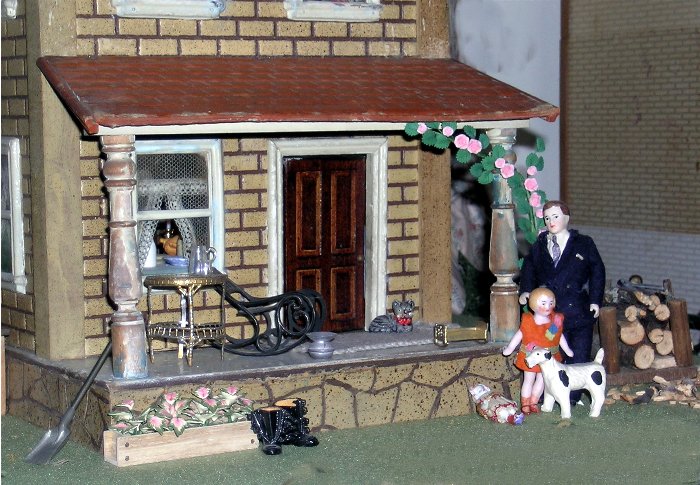
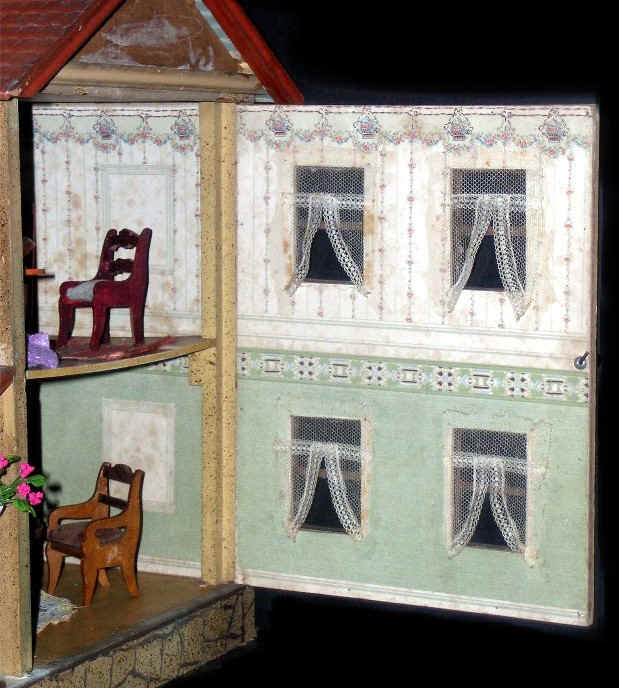
c1880 Canadian house from south-west Ontario, probably hand-made by skilled craftsman, glazing bars painted on glass, panelled doors, original wallpaper and curtains
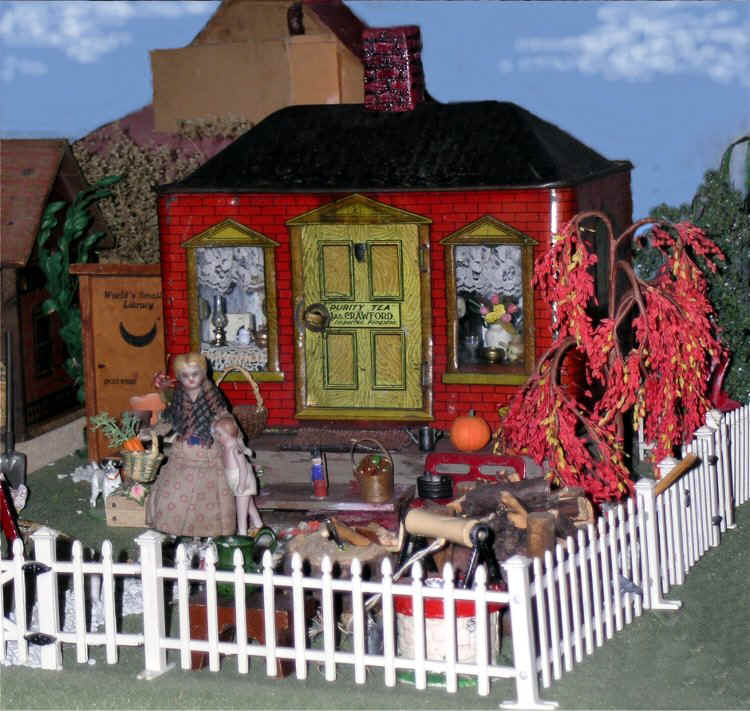
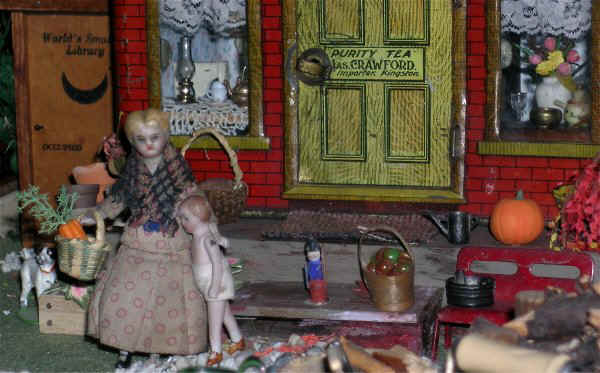
Purity Tea Canister, painted tin with glass windows, in the form of a house with a door that opens, James Crawford, grocer, Princess St, Kingston, Ontario, Canada; in business 1881 to 1920; marked on the back is, "This style & design of Package Registered by Baird & Peters of Ottawa." (chimney replaced)
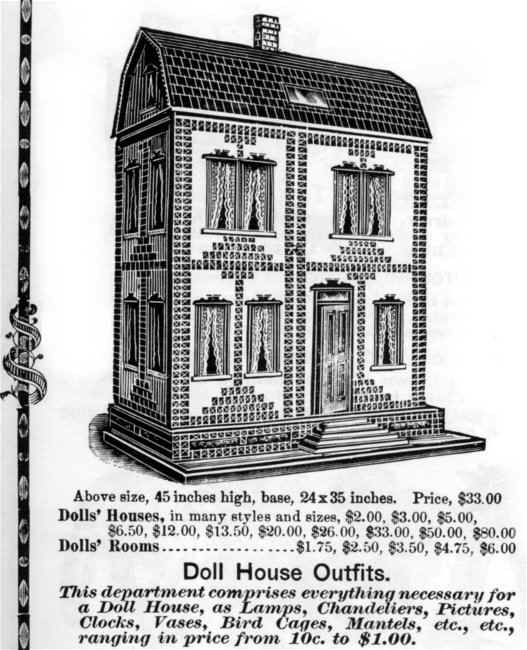
1893 Carl P. Stirn catalogue, New York; dollhouse with lithographed front made by Moritz Gottschalk of Germany
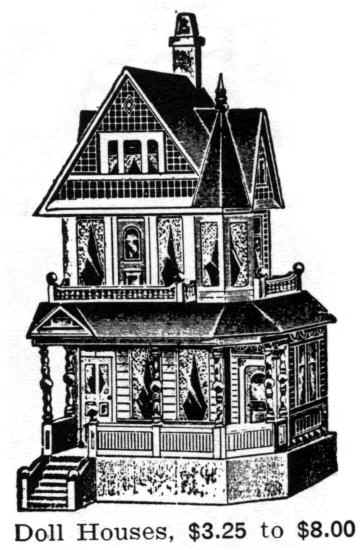
1897 Schwarz catalogue, New York, likely made in Germany
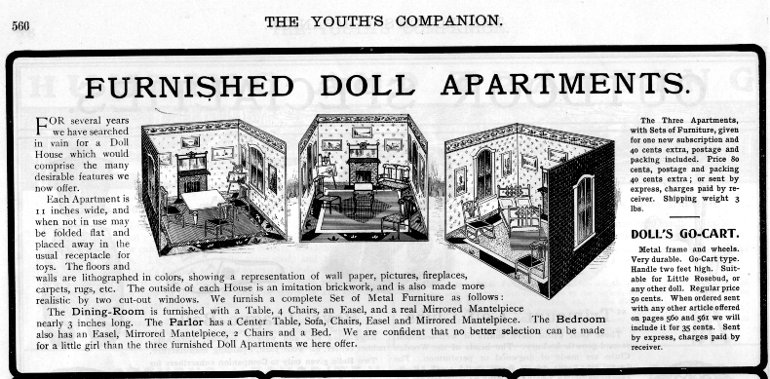
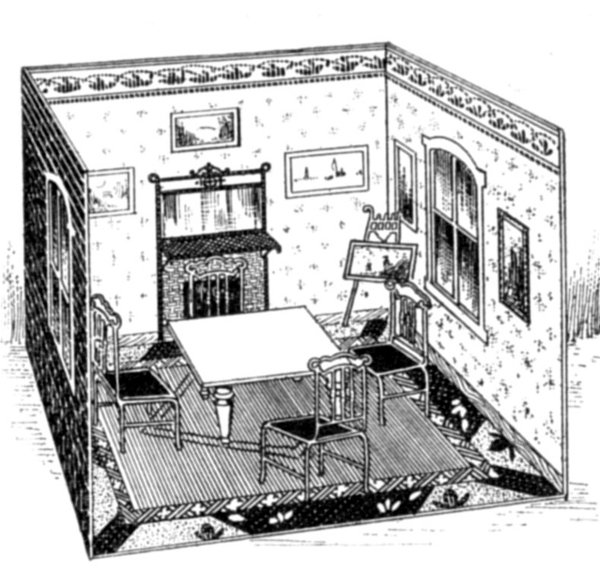
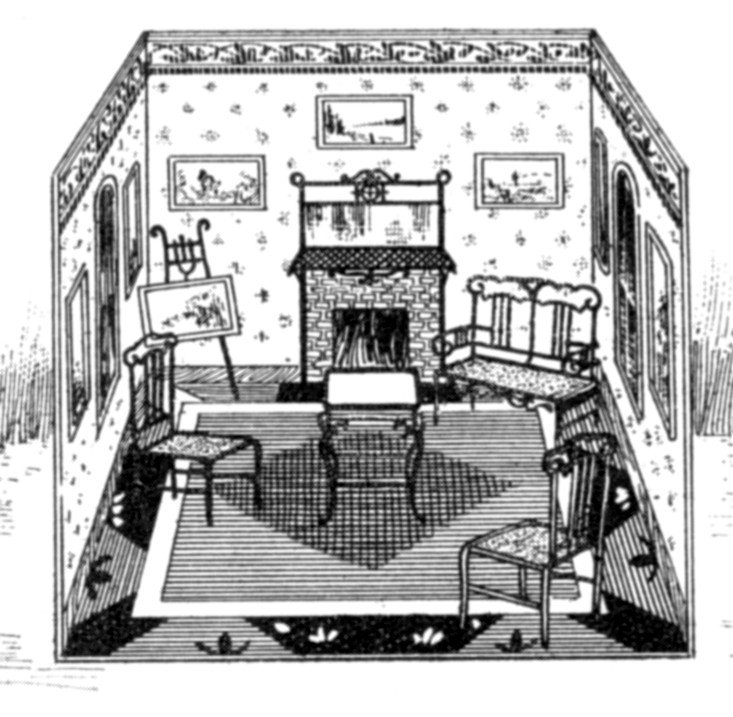
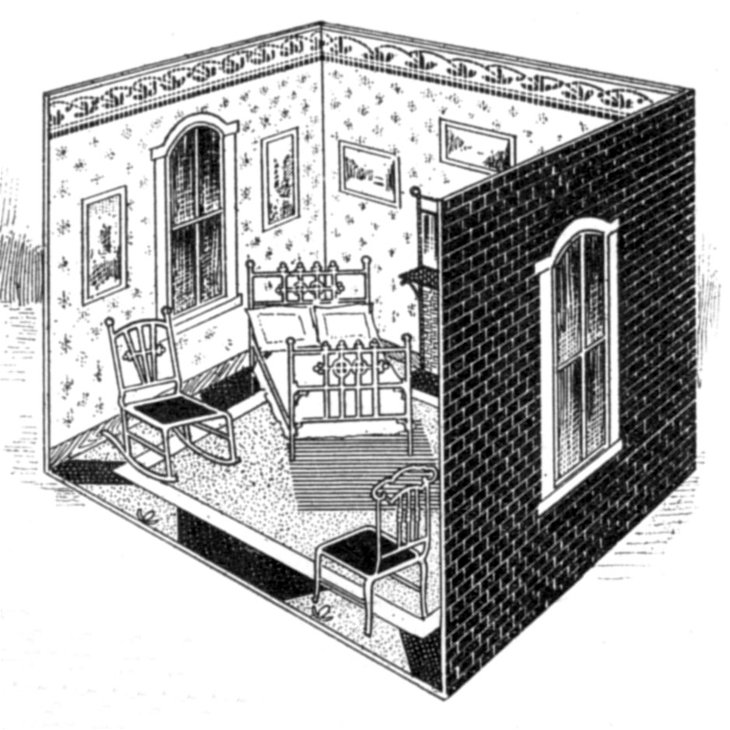
1901 Lithographed cardboard rooms, which can be folded (each room is shown below); furnished with soft metal furniture, easels and mantelpieces; attributed to Peter F. Pia of New York
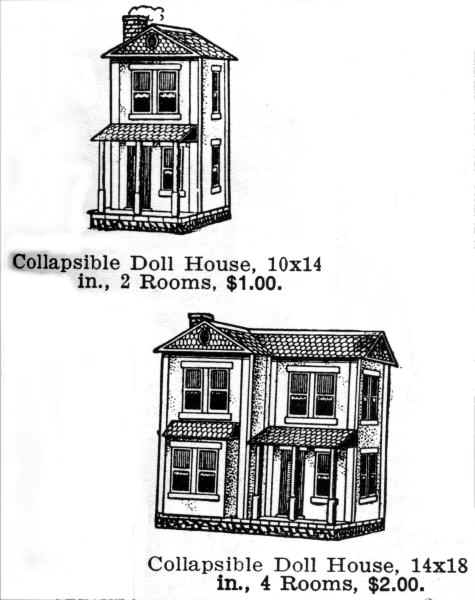
1903 Leeds Toy House: a lithographed, folding, cardboard house made by Grimm & Leeds of Camden, New Jersey, patented 22 Sept. 1903, four varities; ad in the Wanamaker catalogue, USA, of 1905
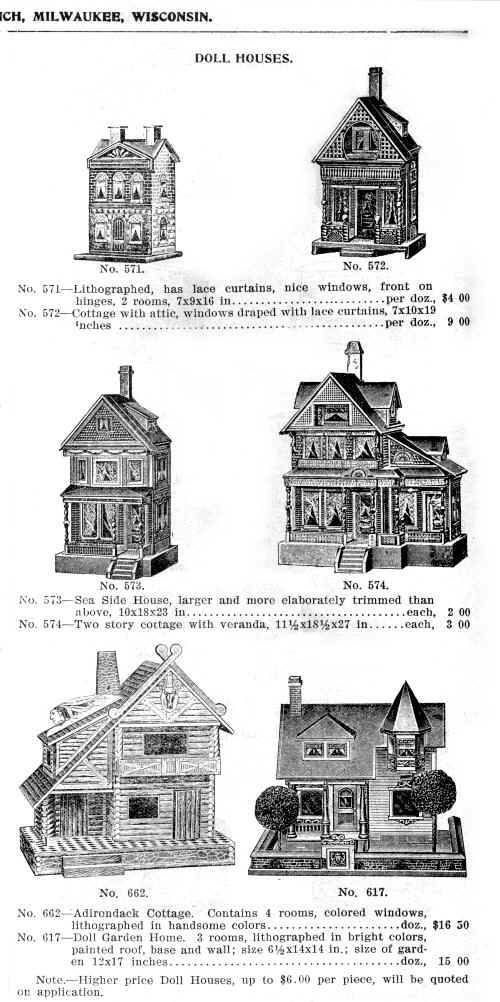
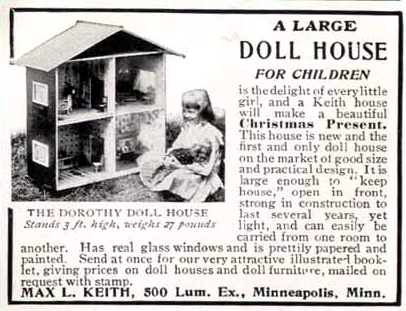
1905 page from the Catalogue of Holiday Goods offered by Wiemann & Muench, Milwaukee, Wisconsin -- details follow
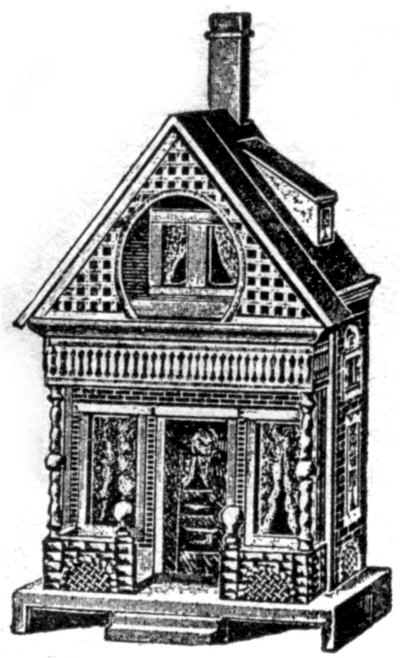
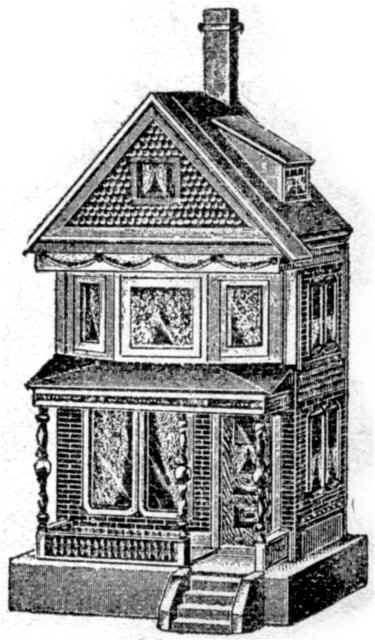
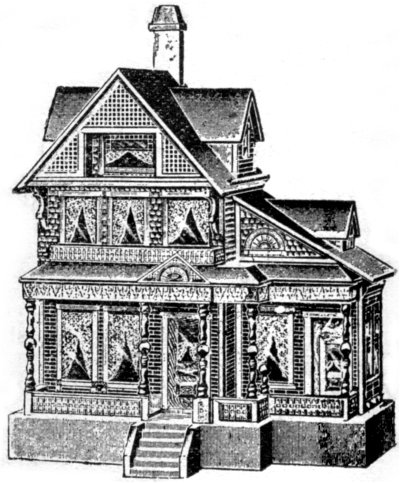
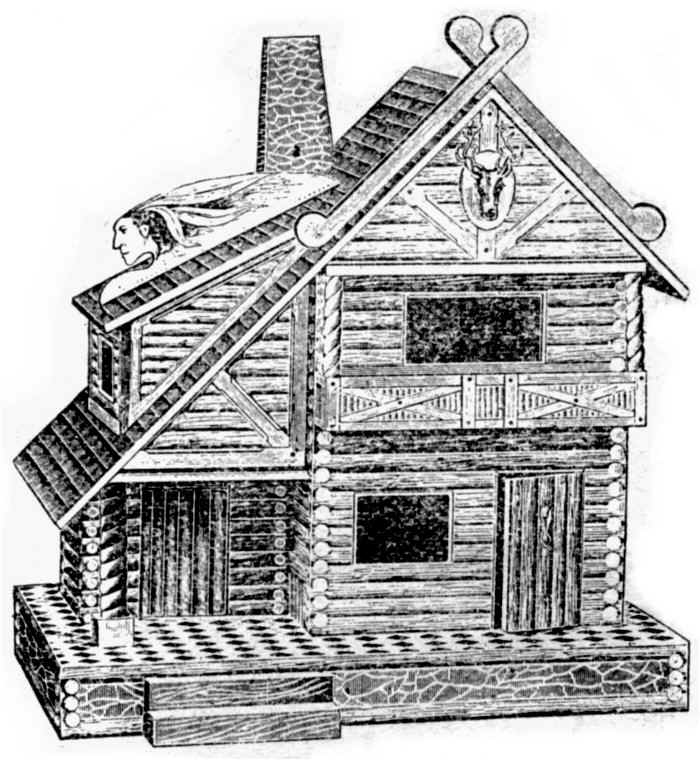
Six dollhouses, some of which are by the American manufacturer Bliss, for example, the cottage with the keyhole attic (#572 left) the seaside house (#573 below left) the two-storey cottage with verandah (#574 below right) the rustic Adirondack Cottage complete with a roof handle in the form of a member of the First Nations (#662 below, attributed to Bliss).
None of these designs are shown in the 1911 Bliss catalogue. Bliss began making lithogrphed paper on wood houses in 1889.
1905 likely by Bliss, USA; ad in the Wanamaker catalogue
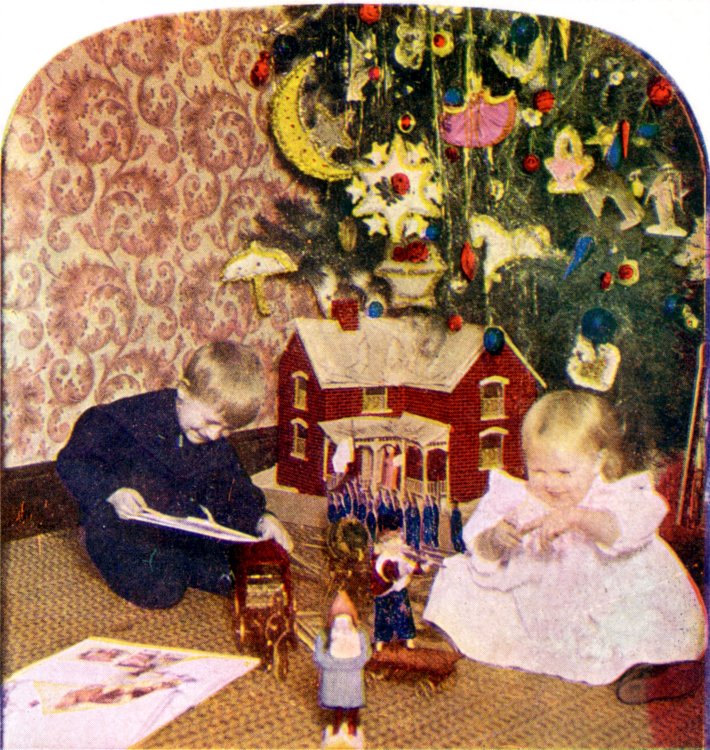
1905 dated stereocard, Kawin &Co.
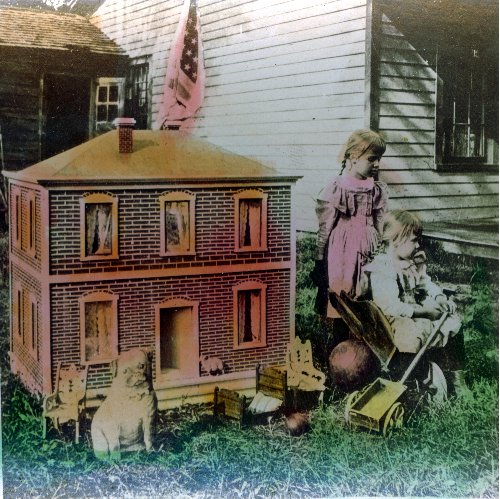
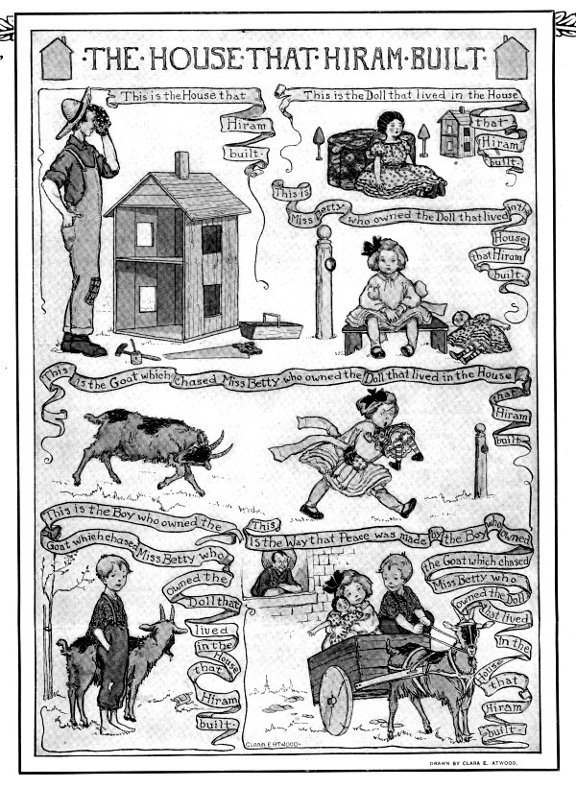
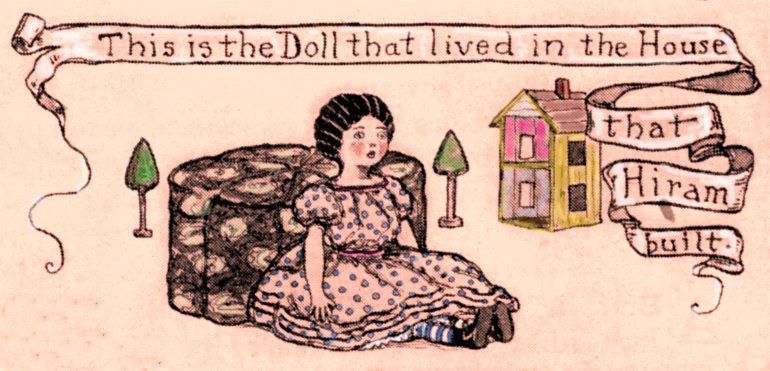
1905 Youth's Companion , 5 November (detail below with colour added)
1906
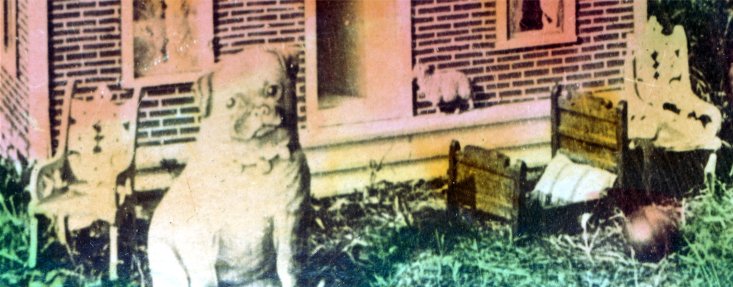
detail below
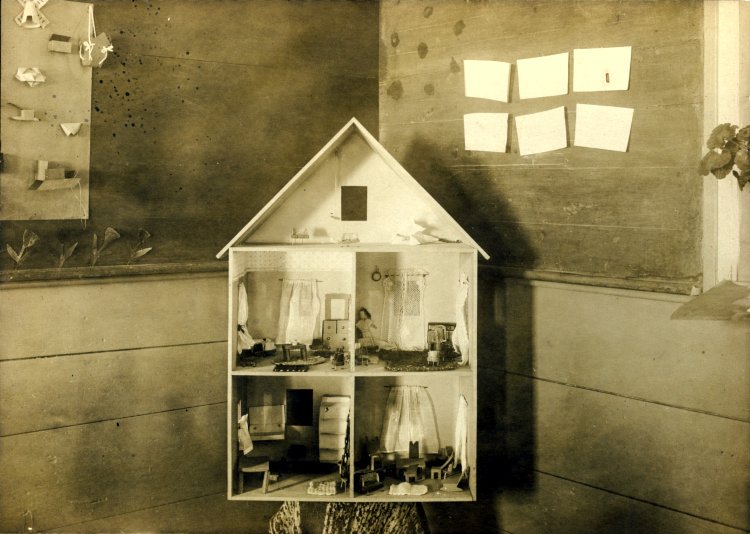
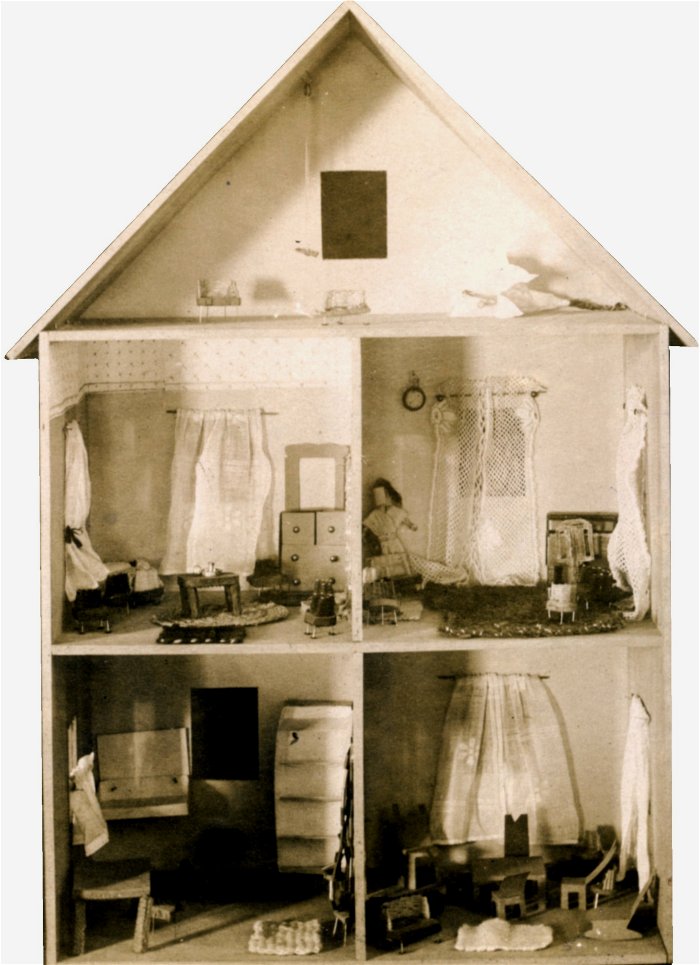
Undated Photograph (in a school?) from the USA; shows a simple home-made dollhouse with home-made furnishings
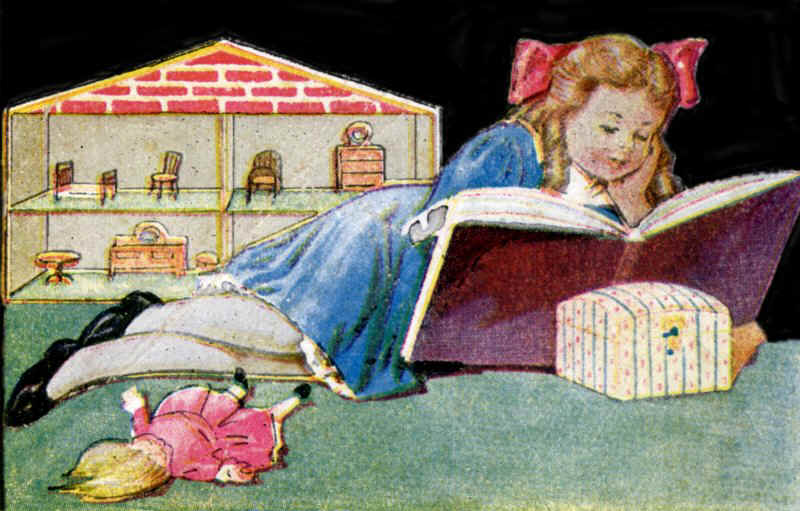
Undated postcard, American [1910s]
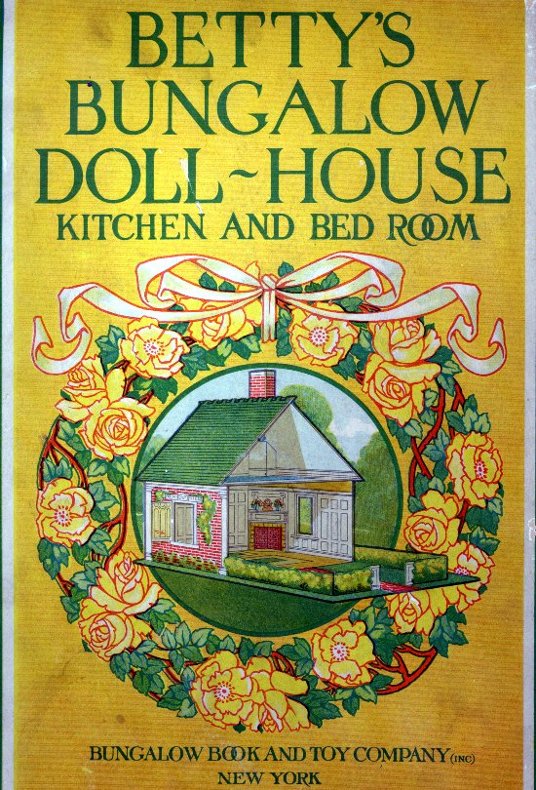
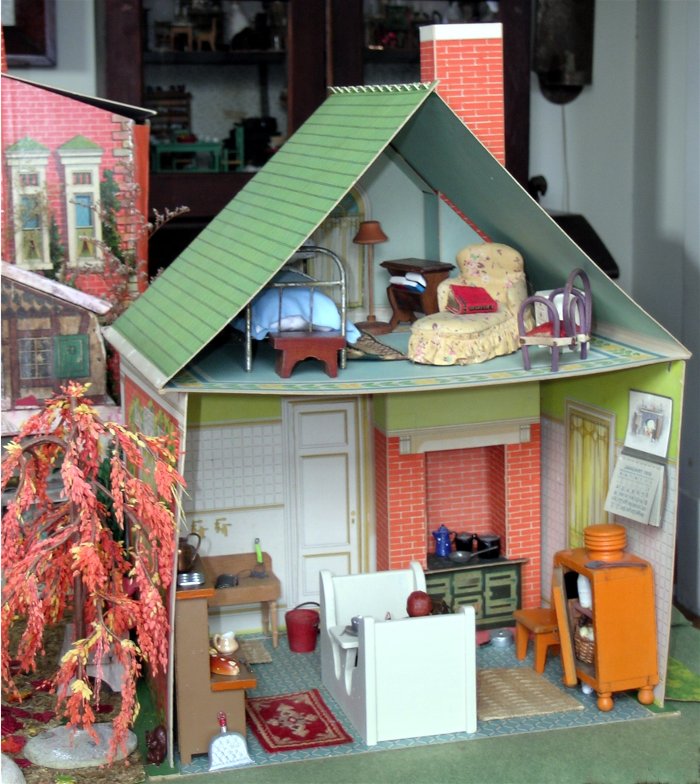
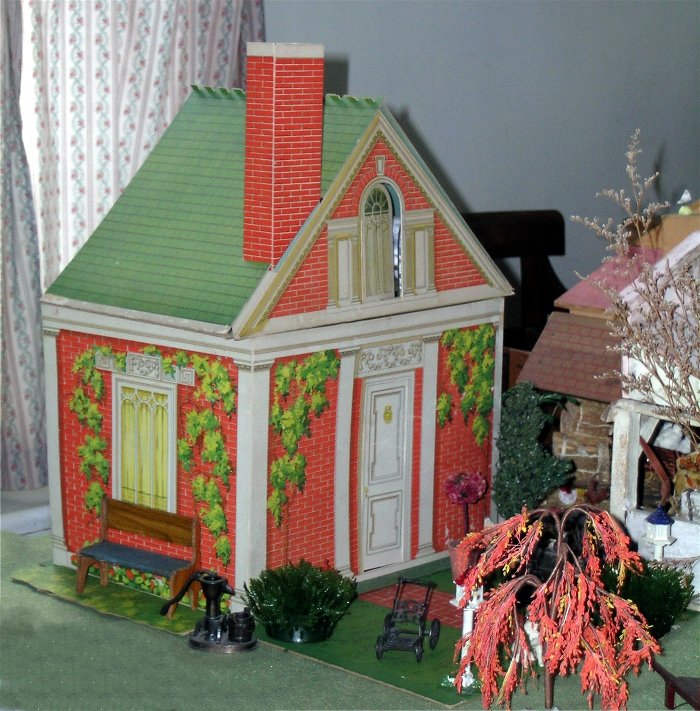
1913 American cardboard house and garden (interior and exterior are shown below); windows and door are hinged; complete with range and chimney; originally sold with lithographed cardboard furnishings
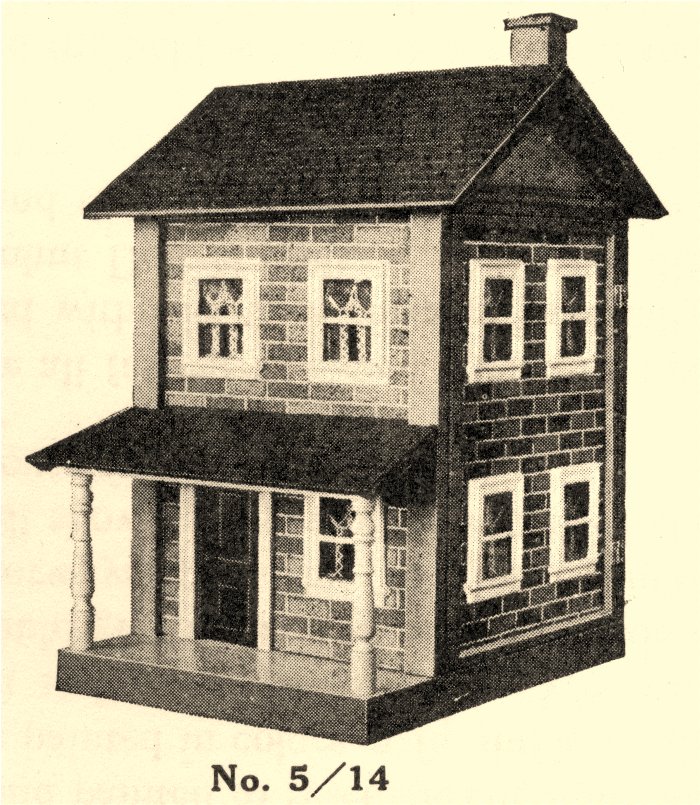
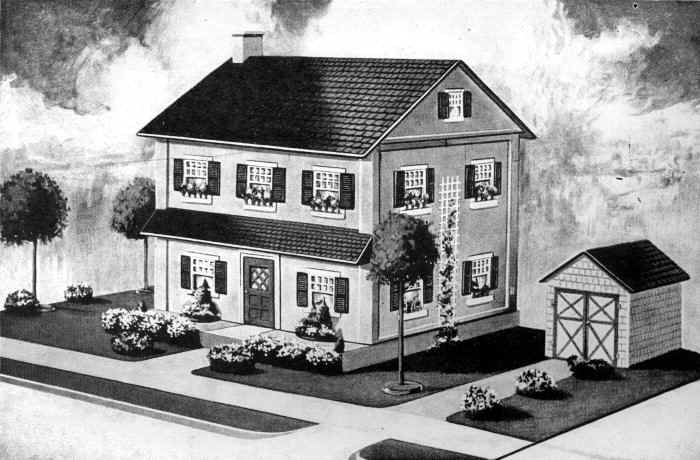
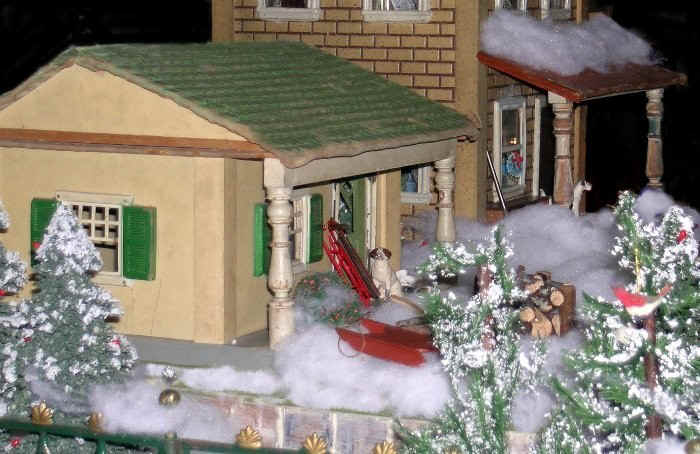
American Illustration from the catalogue of the Schoenhut Company, Philadelphia This line of houses was introduced in 1917. Made with a wood frame, the fibreboard is embossed to represent stone walls and a foundation with a tiled roof; made in a variety of sizes and number of storeys; side wall opens (see below); "inside of houses covered with lithographs to represent fancy wallpaper"; glazed with glass, the windows were hung with lace curtains Beginning in 1927, the exterior walls were smooth, perhaps imitating stucco
Note: for a Schoenhut catalogue of toys c1920, see the article on TOYS
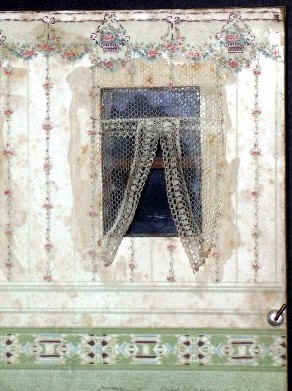
Original lace curtains (the glue has discoloured over the years) and attractive wallpaper decorated near the ceiling with hanging baskets and garlands of roses; this model has 11 glass windows along with 4 fake ones printed on the back interior wall
In 1927, Schoenhut
introduced "a line of
very artistic high-class doll houses" including ones with
gardens, trees, shrubbery, a garage and painted wooden automobile; each of
the shuttered windows has 8 tiny lights in the upper sash over an undivided
lower sash (the earlier houses have 2 undivided sash in each window); the
door has a lattice-work window( the earlier houses have solid panelled
doors); house sizes ranged downward to a simple one-room bungalow with the
front roof extended to form a verandah
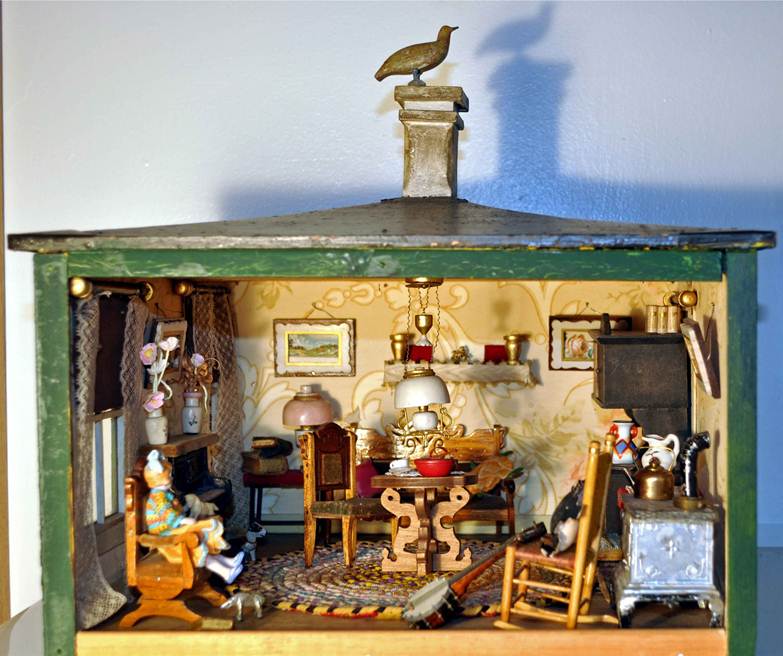
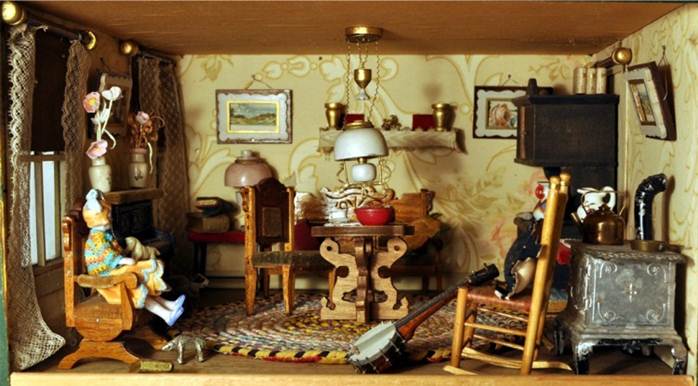
c1910 one-room “dollhouse”, hand-made in
the United States; likely made as a display item rather than a play toy,
because all the furniture was nailed down; the accessories and furniture are
original to the room except for the cupboard, stove, centre table, rug and
doll. Hipped roof, clapboard exterior, 11 inches to top of chimney, 13 inches
wide, 12 inches deep
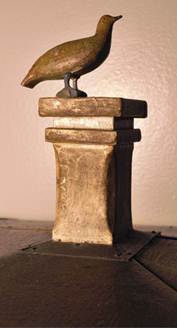
Chimney with an antique German-made
bird
The wallpaper scale is huge: no doubt
a leftover piece from real wallpaper
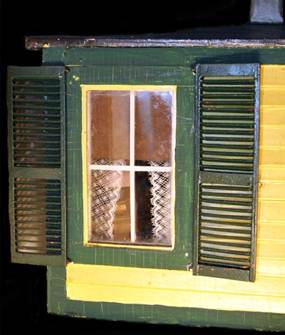
Four-pane glass windows with exterior
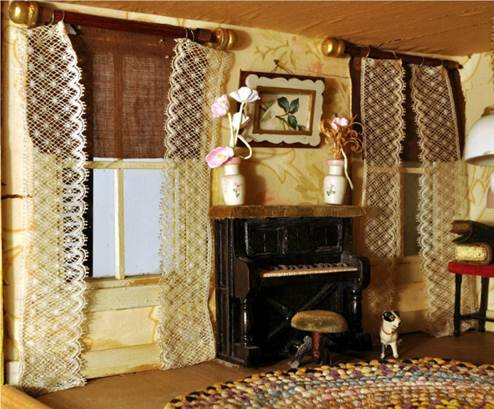
louvred shutters and interior lace curtains hung by
rings on curtain rods; an unusual aspect is the use of blinds; original
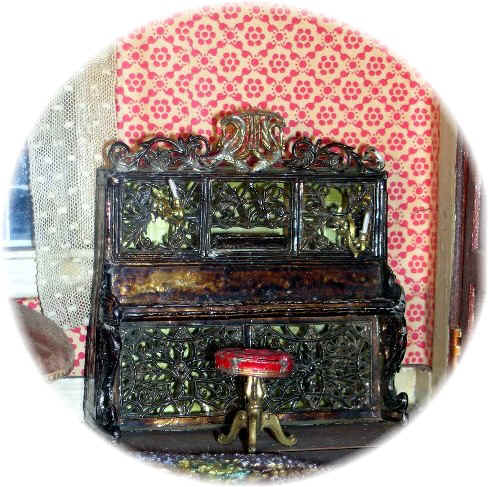
piano, stool, vases and picture
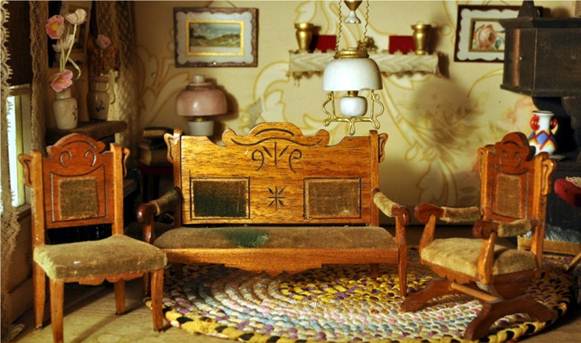
Original set of parlour furniture
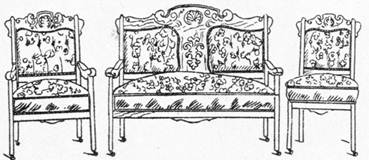
including a platform rocker in a style seen in Eaton’s catalogue of 1899-1900
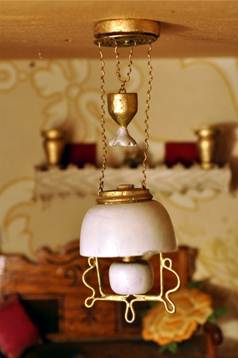
Original kerosene hanging lamp made
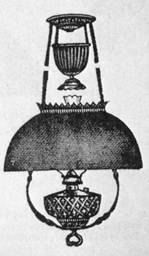
of painted wood and wire, 3 inches high, of a type shown in Eaton’s catalogue
of 1909
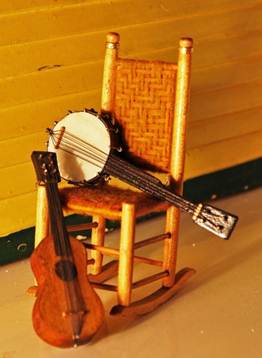
Original rocking chair, guitar and
banjo, the latter 3 inches long PLEASE CLICK HERE TO CONTINUE THE GALLERY OF IMAGES! top of page home page history of dollhouses GALLERY of IMAGES 1 GALLERY OF IMAGES 3 GALLERY OF IMAGES 4 |