Content-Language" content="en-us">
|
section 4: cooking & eating: kitchens & dining-rooms 1880s to 1920s images & photography: Jennifer McKendry © home page GALLERY of IMAGES 1 GALLERY OF IMAGES 2 GALLERY OF IMAGES 3 GALLERY OF IMAGES 5 GALLERY OF IMAGES 6 GALLERY_OF_IMAGES_7 GALLERY_OF_IMAGES_8 INDEX to GALLERY History of Dollhouses article cooking: THE KITCHEN
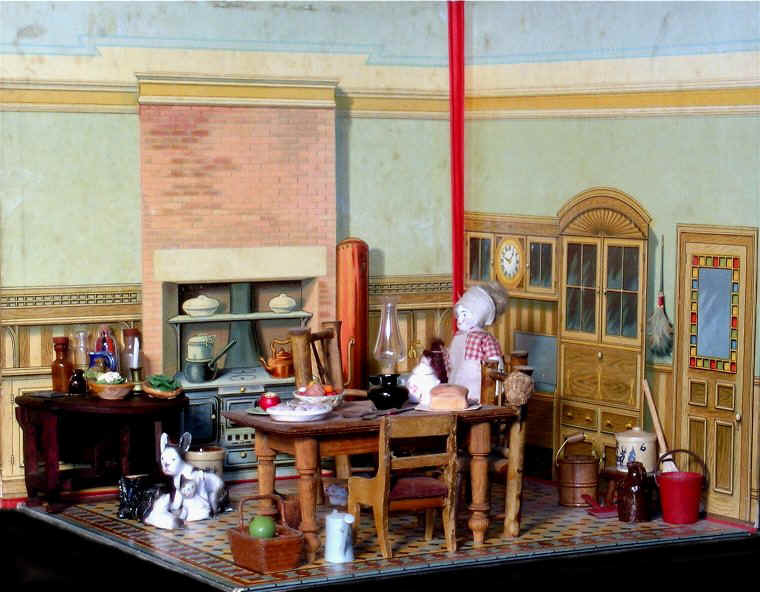
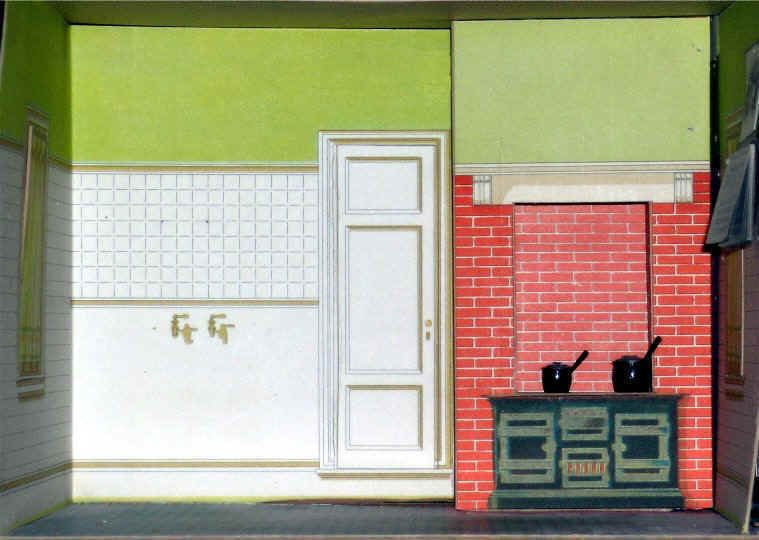
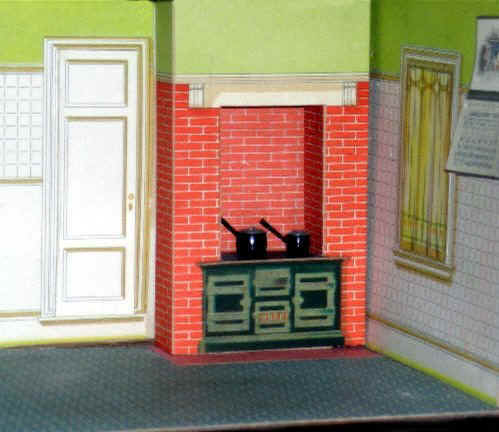
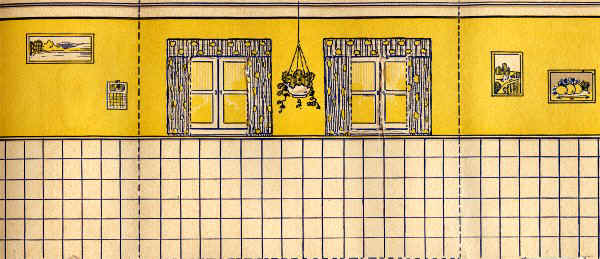
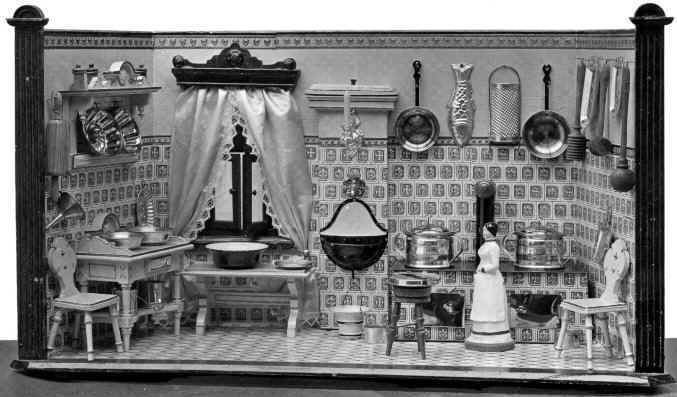
1894 the American firm McLoughlin produced a set of 4 rooms with lithographed walls showing the furnishings and decor enjoyed by the urban upper classes; even the kitchen -- the realm of the cook and maids -- was handsomely appointed, including an attractive tiled floor, striped wainscoting topped by a shelf supported on iron brackets and fronted by latticework; German furnishings c1890-c1920
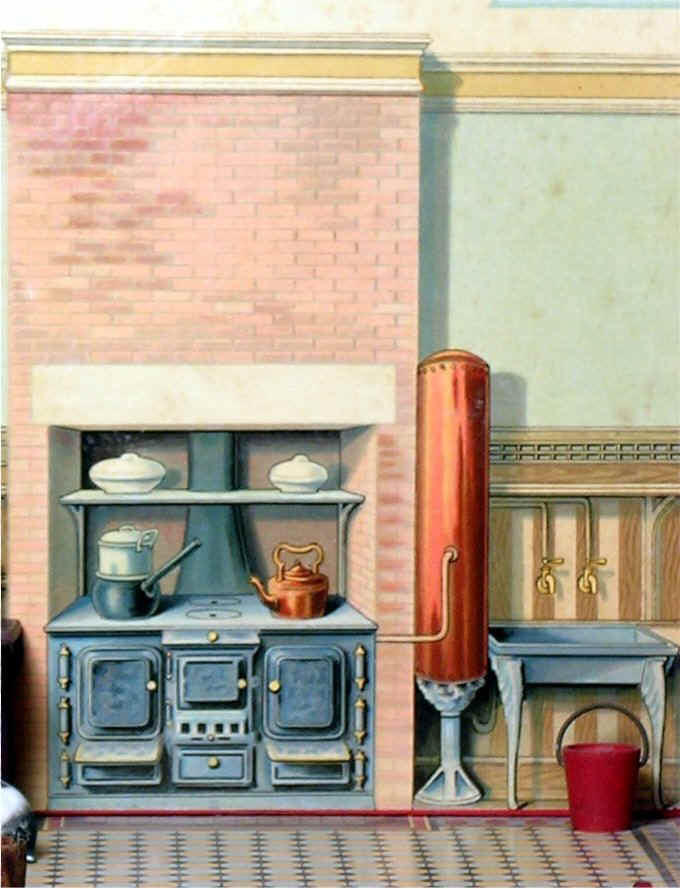
1894 the iron range, probably heated with coal and set into an exposed brick chimney, has a warming shelf with covered china serving pieces waiting to be taken into the dining room; there is a large copper kettle and a metal double-boiler on the range cooking surface; a boiler in the range provides hot water to the vertical copper reservoir, raised on an iron pedestal and feeding the sink by an exposed pipe; the faucets are affixed to the wainscoting above the sink; cold water, stored in a tank in the attic, descends by gravity down pipes; a hand-pump, perhaps in the cellar, may exist to force water through pipes to the upper floor bathrooms; by this time, independently heated hot-water tanks also existed, usually fired by gas
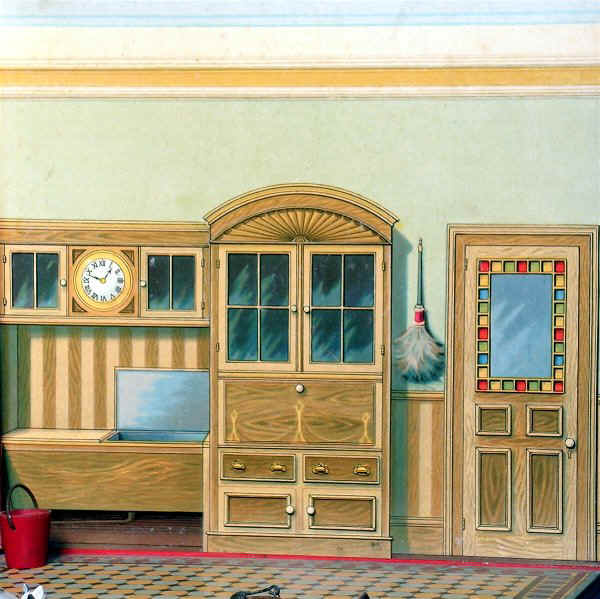
1894 there is a glazed
hanging cupboard with a clock over the ice box, which has a pipe to drain off
excess water from melting ice in the zinc-lined receptacle (more common at
this time were vertical free-standing wooden iceboxes lined with zinc --
examples are shown further below); a tall wood kitchen cupb
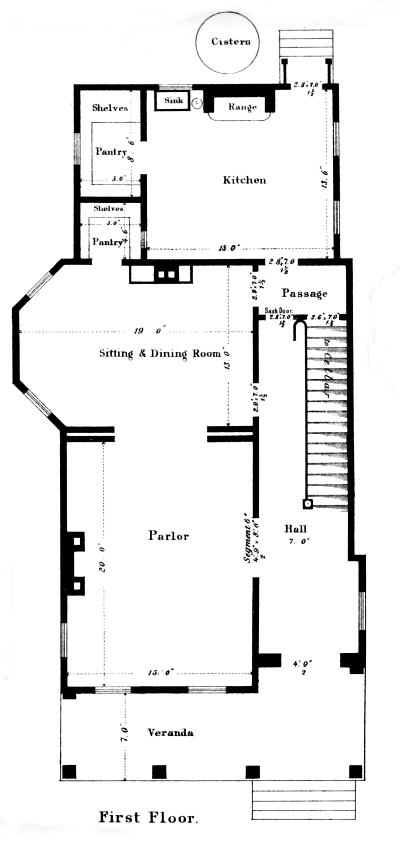
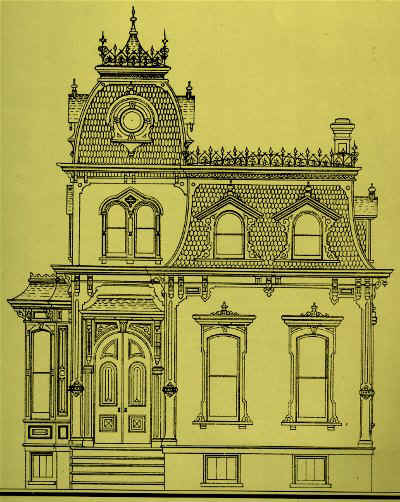
1878 typical, upper middle-class American houses with a parlour joined by a double archway to the dining room; a short passage (hallway) leads from the dining room to the kitchen (direct access between kitchen and dining room was usually avoided -- separating the spheres of servants and the family); the kitchen has a sink and built-in range; there are two pantries (usually not incorporated into dollhouses) -- one off the dining room and the other off the kitchen, which has a back or service door near an outdoors cistern; Bicknell's Village Builder
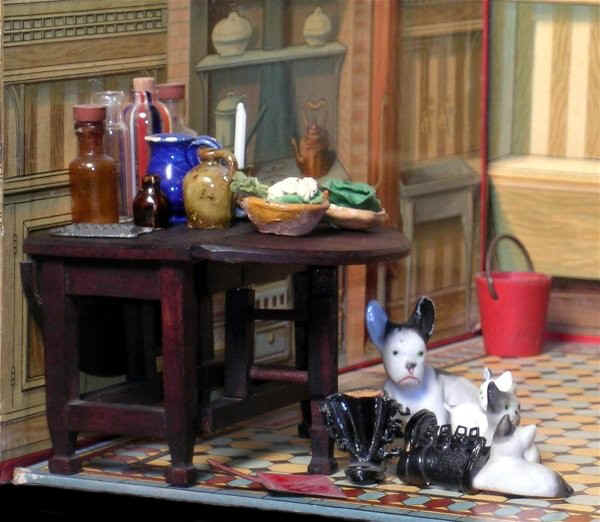
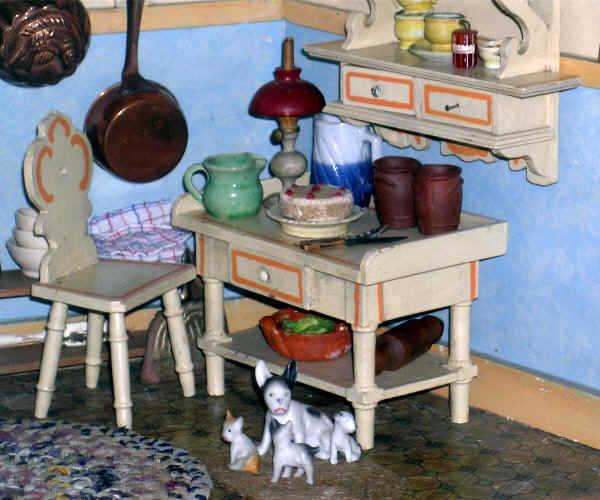
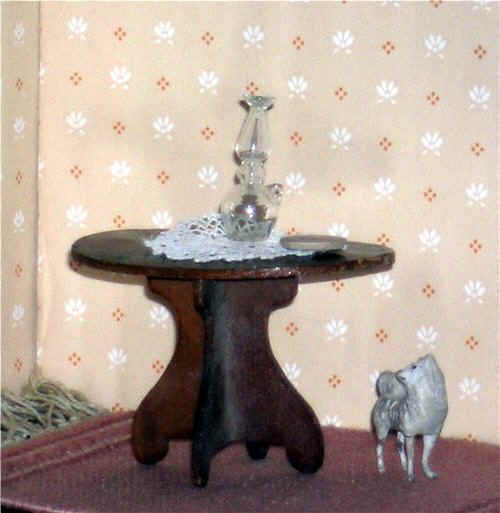
old glass and earthenware crocks, bottles and dishes on a "red-stained" drop-leaf, gate-leg German table c1910 guarded by a mother dog and her pups; when not in use, most of these dishes would be stored in an adjacent pantry; portable tables with leaves were particularly useful depending upon how much activity was taking place in the kitchen; red wood bucket c1940s
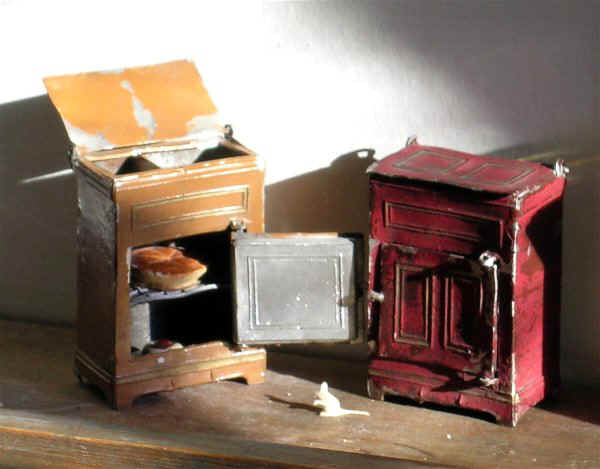
c1900 two small ice boxes made from painted soft metal in a panel design; lid lifts to reveal two compartments for ice, thick ("insulated") door opens for food storage area, which is lined with zinc and has a open-weave metal shelf; just under 2½" high, German
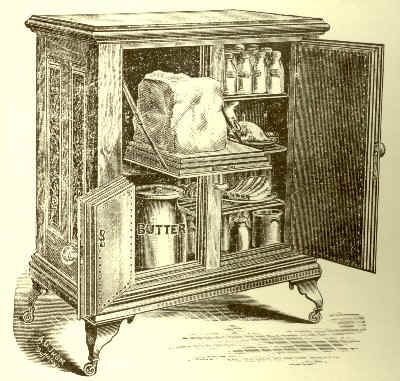
advertisement of a New York firm selling ice-boxes in 1880 showing the use of panelling and thick doors, which are swung open to show a block of ice, milk bottles, meat, butter crock and other smaller crocks and bottles (in Bicknell & Comstock's Specimen Book of 100 Architectural Designs)
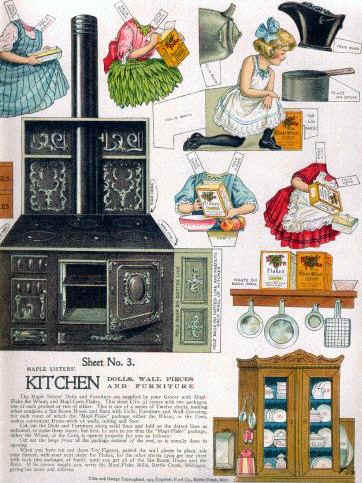
1911 Maple Sisters paper dolls and furnishings showing an iron kitchen range, coal scuttle (upper right corner), iron kettle and cooking pot, wood wall shelf holding cereal boxes and hooks for hanging pots and a griddle, kitchen cupboard with glazed doors exposing a set of china dishes, cooking accessories are hung on its side and on the wainscoting
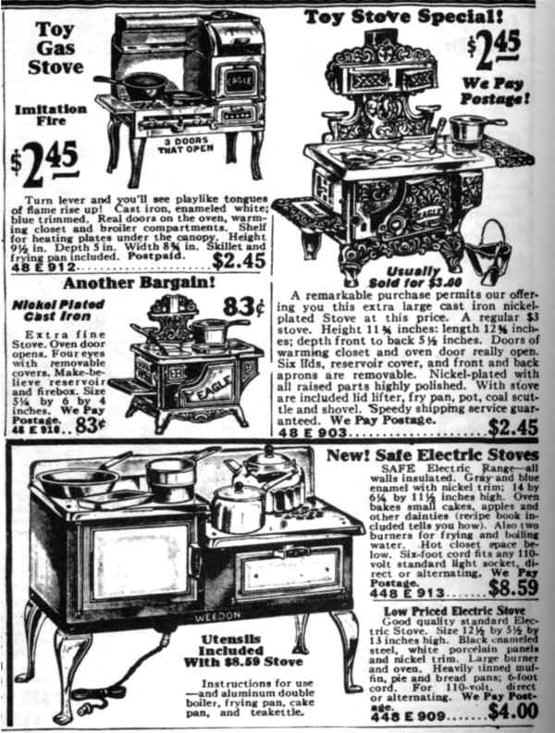
COOK STOVES In the meanwhile, many houses -- well into the 1930s -- in
Canadian and American villages and in thecountry
had iron cook stoves, which used split wood as the fuel. They were offered as
an alternative cooking apparatus (to gas and electric stoves) for dollhouses
in toy catalogues until about 1930.
1930, Montgomery Ward catalogue
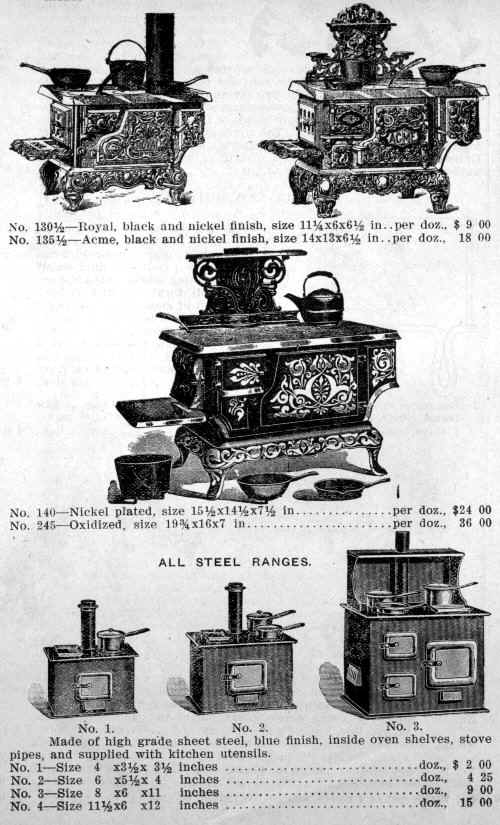
1905 the fussy detailing of the Eagle woodstove in the 1930 ad (above) echoes that of the Acme model from 25 years earlier and resembles even earlier stoves; models shown here include Royal and Acme; many are too large for dollhouses; Wiemann & Muench catalogue, Milwaukee, Wisconsin
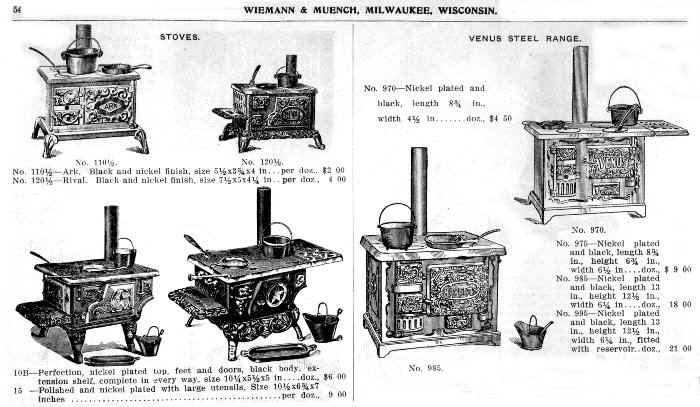
1905 note the pots, frying pans, coal scuttles and long griddles, as well as the lifters for moving the burner plates on the cooking surface; models include Ark, Rival, Venus, Novelty; Wiemann & Muench catalogue, Milwaukee, Wisconsin
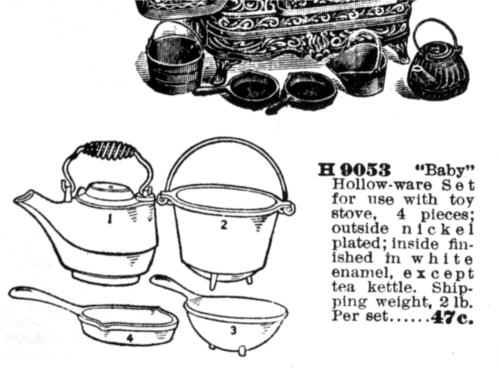
1903 kettle, pots and frying pan for toy stoves, Montgomery Ward catalogue
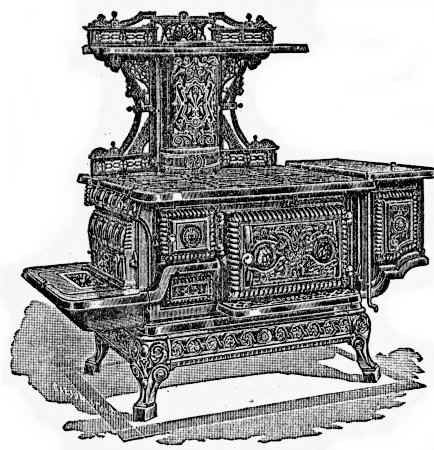
1887 ad for a real cast-iron cookstove in Canada with a fancy upper area, as seen in the toy stove below left
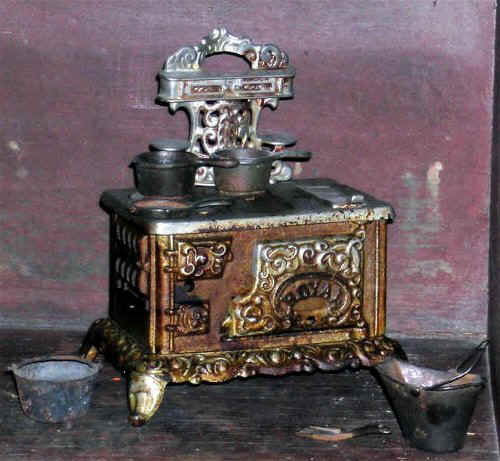
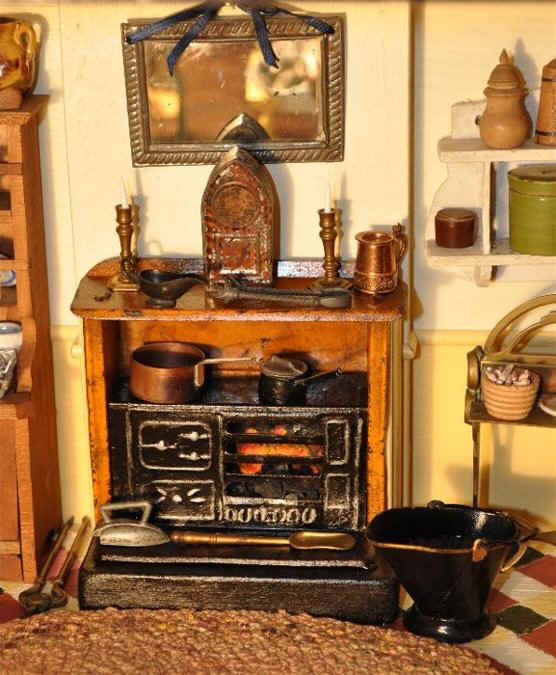
c1915 "Royal" cook stove,
made in Kenton, Ohio, with hot water reservoir and warming ovens on
stove-pipe portion, 8½" high (missing side extensions)
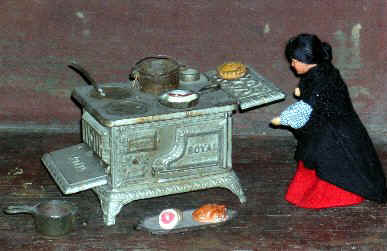
c1915 "Royal" cook stove, made in Kenton, Ohio: retaining its side extensions; 3½" high
left long iron griddle, as seen in ads of 1905 (see further above), just over 4" long
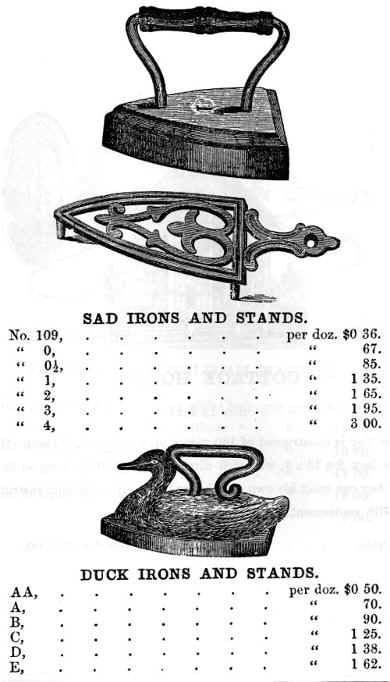
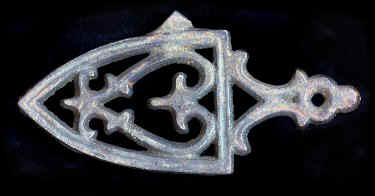
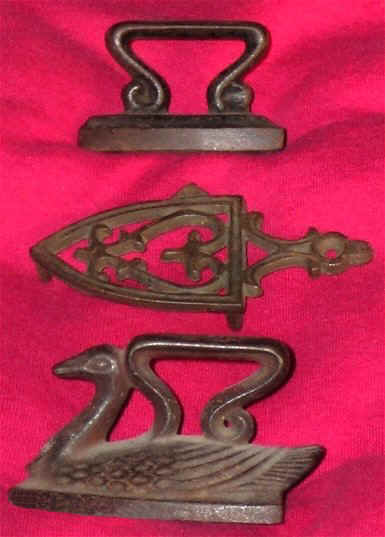
1872 toy sad irons, cast in iron by Stevens & Brown in Cromwell, Conn., USA; the top iron (on the right), belonging to the stand (3¾" long) in the middle, likely is also from their factory, although not shown in the catalogue; the duck iron is 3¼" long
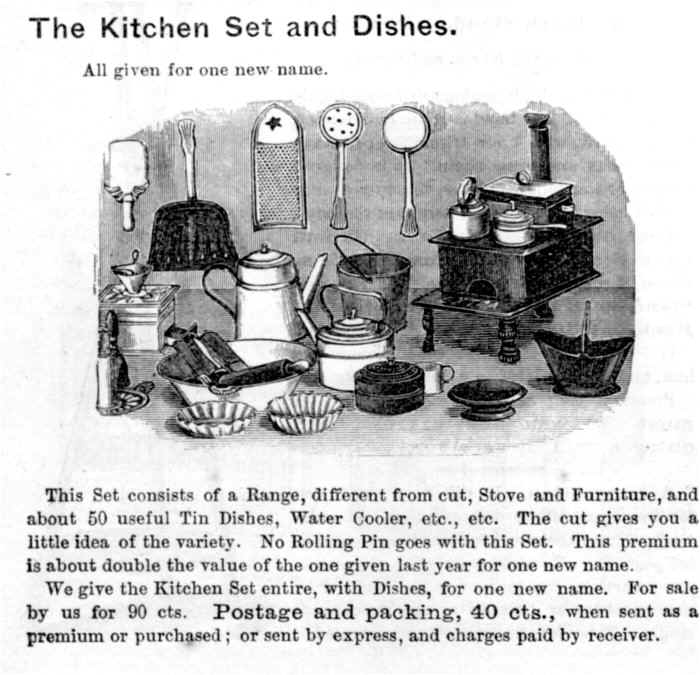
1890 kitchen stove and cooking accessories, Youth's Companion, October
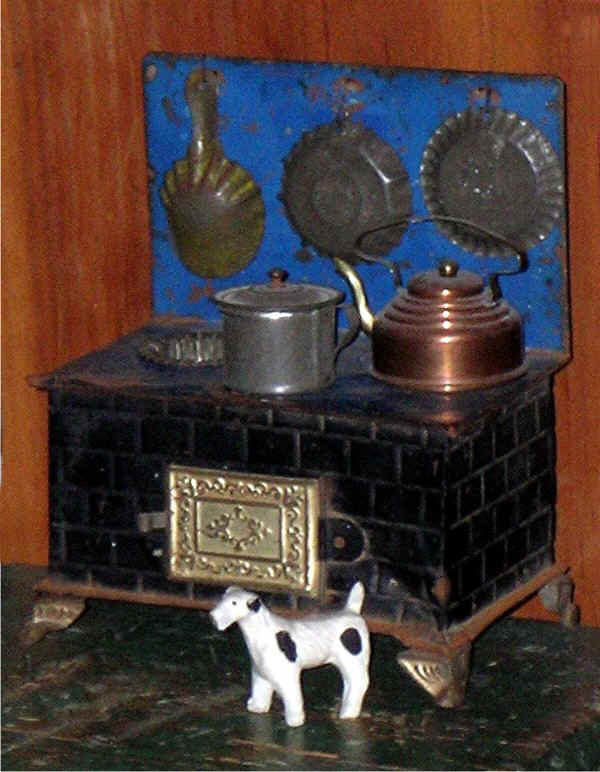
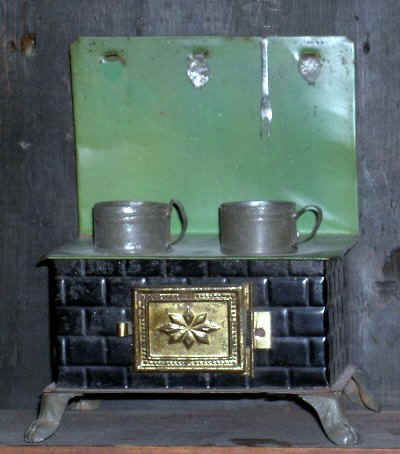
blue and black German tin stove, 7" high green and black German tin stove with lion's paw feet and 2
permanently placed stew pots, 6½" high
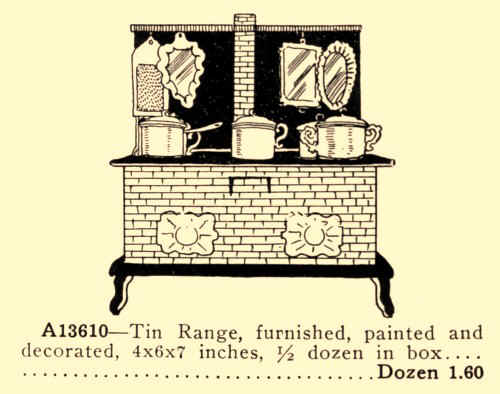
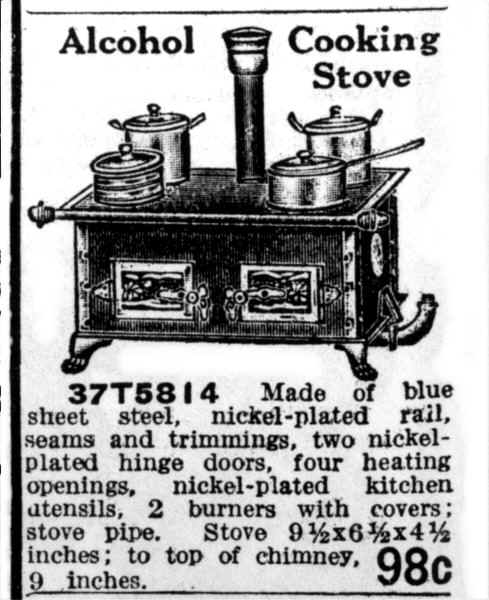
1914 small tin stove with
cooking pots and pans illustrated in Montgomery Ward catalogue; the stove
itself imitates tiled walls, indicative of its German origins
Built-in metal range. This one was part of a set ("Monster Kitchen Set": stove, dresser, table, chairs, plate & frying pan, all in metal), made in England by Hopkins Bros., Victoria Tin Toy Works, London, and advertised in 1927. This type of range, however, had been in use for many years previous. It was more popular at an earlier date in Britain because of the prevalence of coal than in North America.
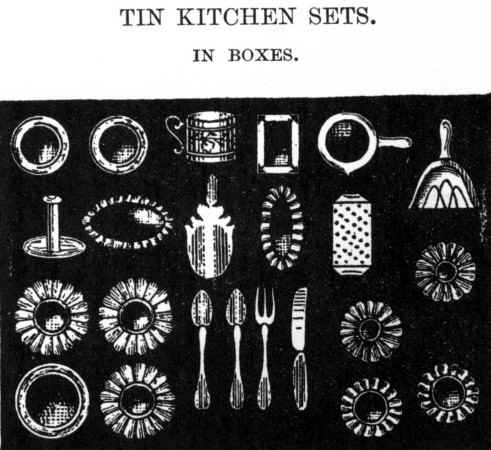
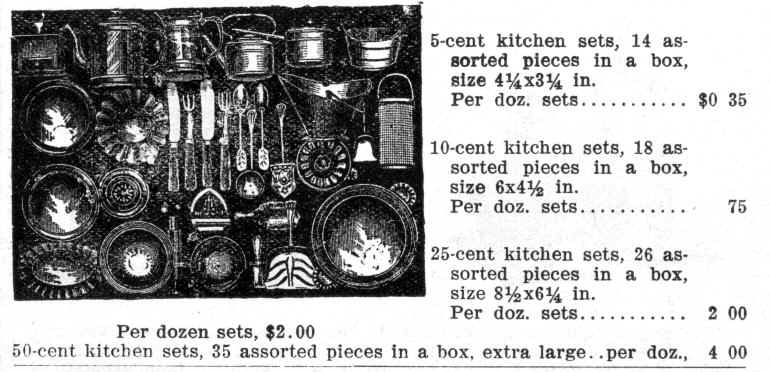
Tin Kitchen Sets
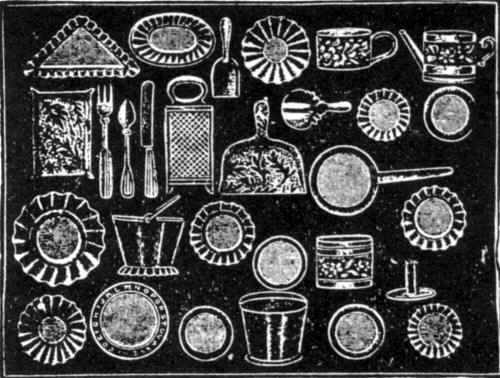
left 1893 Carl Stirn catalogue, New York; a dust pan is typically included in such a set
below 1905 Wiemann & Muench catalogue, Milwaukee, Wisconsin; coffee mill, coffee pot, kettle, etc.
1914 Montgomery Ward catalogue; note the ABC
plate
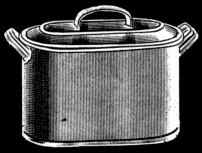
above tin washerboiler,
3" x 4" x 5½" (1914
Montgomery Ward catalogue)
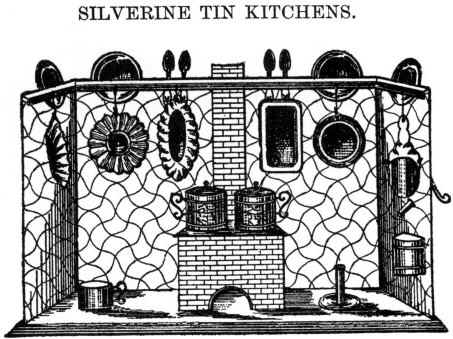
TIN KITCHENS
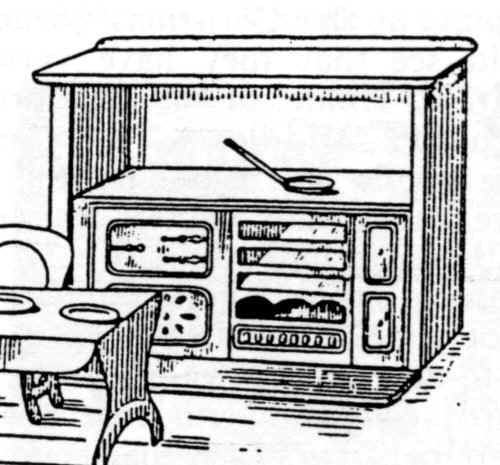
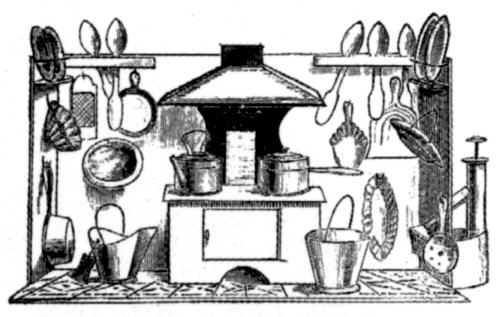
above right 1874 Althof, Bergmann & Co., New York, catalogue; stove with oven, hood and arched opening next to floor (to store fuel); the pump has a plunger instead of the usual handle; this company made and imported toys
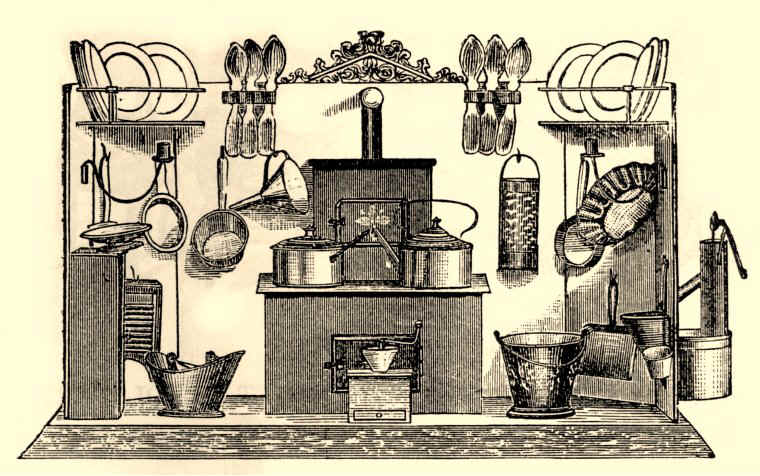
1872 Stevens & Brown catalogue, manufacturing company in Cromwell, Conn., USA; tin chimney and stove with two-tiered ovens in centre; pump on exterior side-wall with downward-angled pipe leading to a basin attached to the interior side-wall; accessories include plates, serving spoons, grater, coal scuttle, coffee mill, pail, ladle, pots, kettle, dust pan, funnel, scrub board, pair of wall candle-holders; eight sizes were available from 6" x 4½" to 19" x 12"
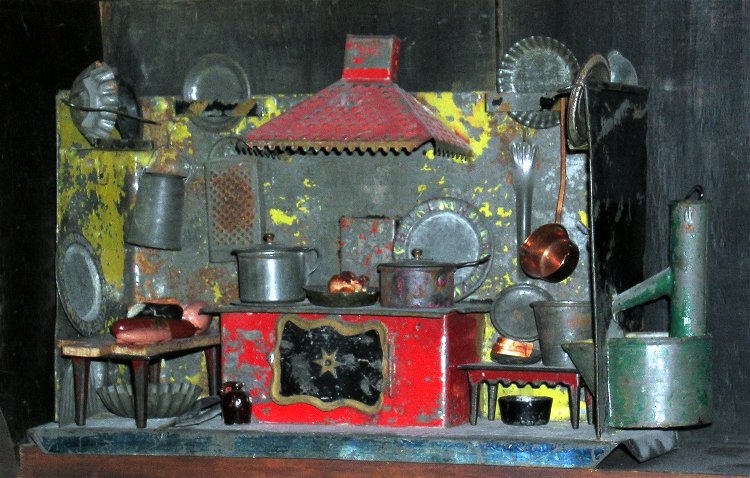
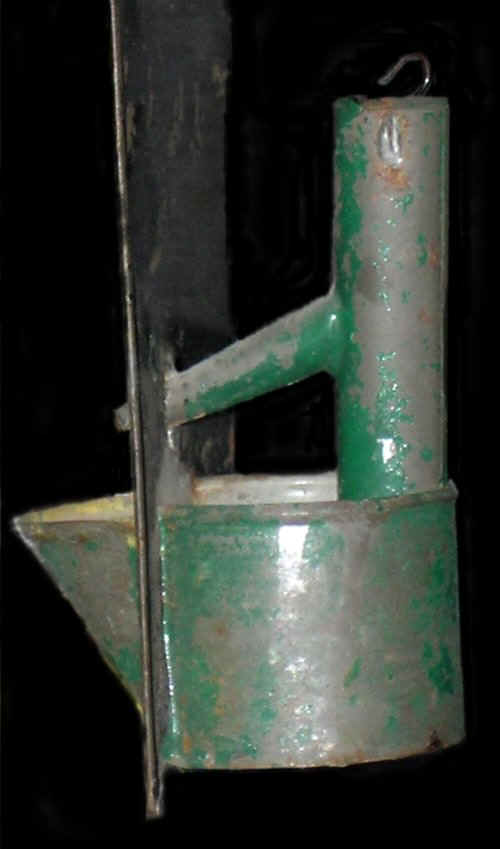
Tin kitchen painted with bright yellow on the walls, red on the stove, chimney and hood, green on the water pump and basin, and with an imitation tile floor; the scalloping on the lower edge of the hood and outer edge of the oven door is attractive, as is the door's gold star motif; the iron benches are additions (by Stevens & Brown, 1872), but most of the tin pieces are original; the scale of the cooking accessories is often inconsistent; 8½ " high x 12½" long detail of the pump (missing its handle)
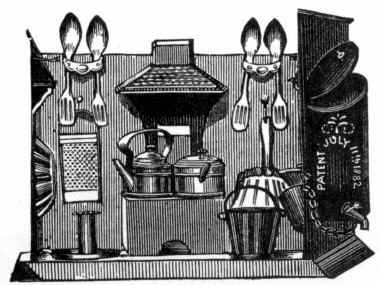
1882 (and 1893) patent date of July 11, 1882 on water reservoir on exterior end wall; large scale accessories compared to the stove, which does not have an oven door; Carl Stirn catalogue of 1893, New York
1893 stove with chimney and arched opening next to floor but no oven door; basin and pipe connected to water pump; Carl Stirn catalogue of 1893, New York
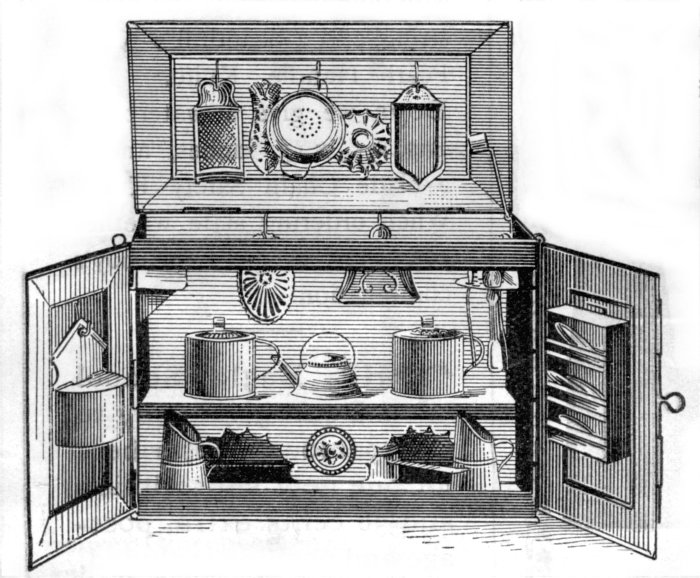
1901 tin kitchen with folding doors and top; the accessories include a colander and fish mould; Youth's Companion, October
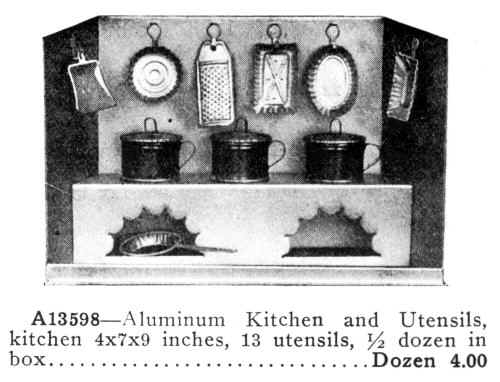
below 1914 aluminium kitchen with the same scalloped pair of openings as the 1901 example; aluminium appeared about 1900 in toy manufacturing
WOODEN KITCHENS
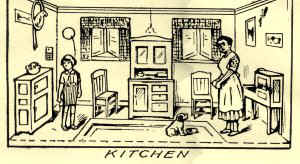
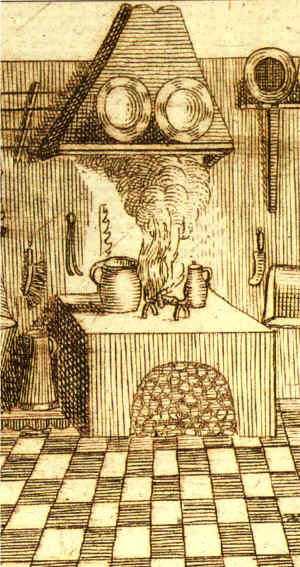
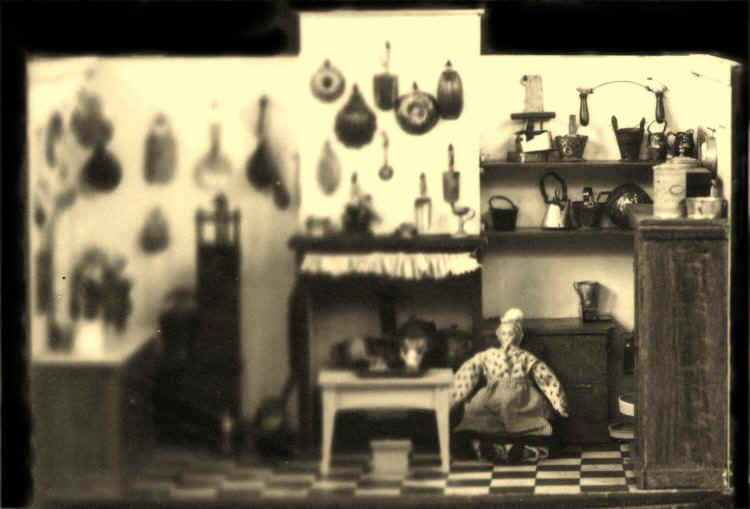
Detail from an undated postcard showing an unusual kitchen with
a chimney breast and a smoke curtain hung under the chimney shelf; the cook
is sitting on the tiled floor
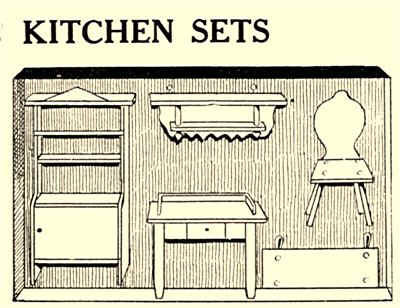
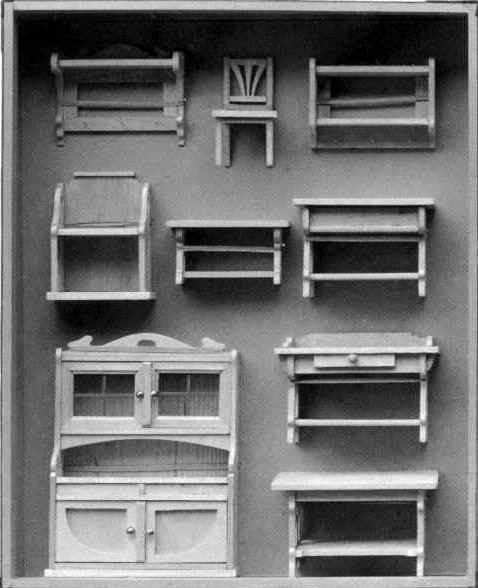
1914 A basic set of furniture
for the kitchen in white painted wood: cupboard, hanging shelf, work table,
chair and bench, no doubt German in origins, Marshall Fields
catalogue
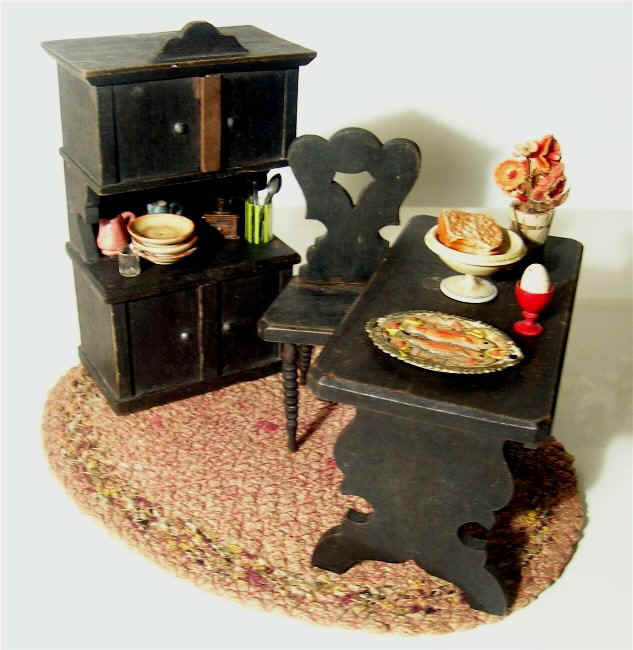
Part of a kitchen set, the choice of black paint is unusual,
each door in the cupboard swings open
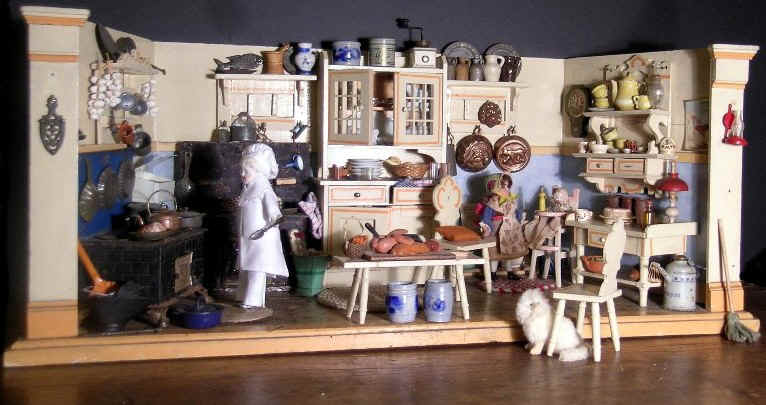
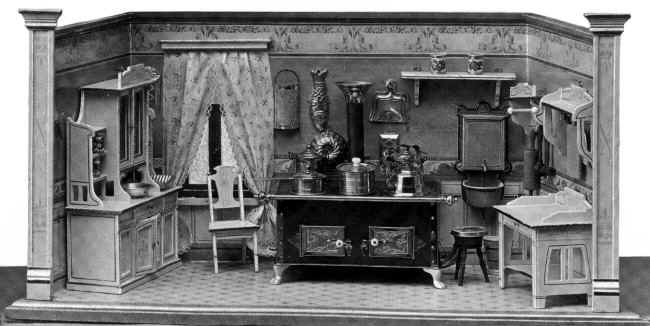
Kitchen in the
original paint scheme of yellow and sponged-on blue with orange details,
printed paper "tile" floor, 31½ inches across the front base;
side walls angle towards the back wall (creating a better display space);
original furnishings consist of 4 hanging shelves, cupboard with glass upper
doors, bench, work table with shelf, & 2 sidechairs;
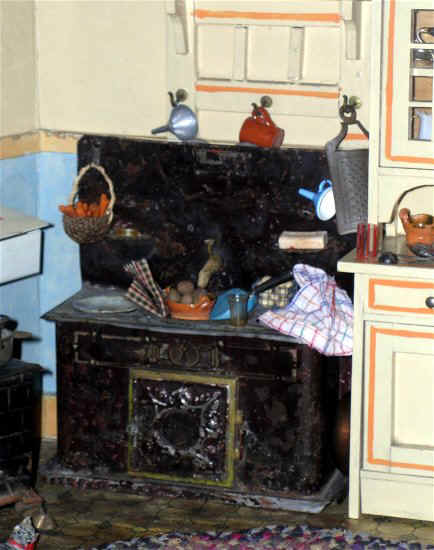
German, maker not identified, late 19th century; the tin stove and sink have
been added to the kitchen furnishings
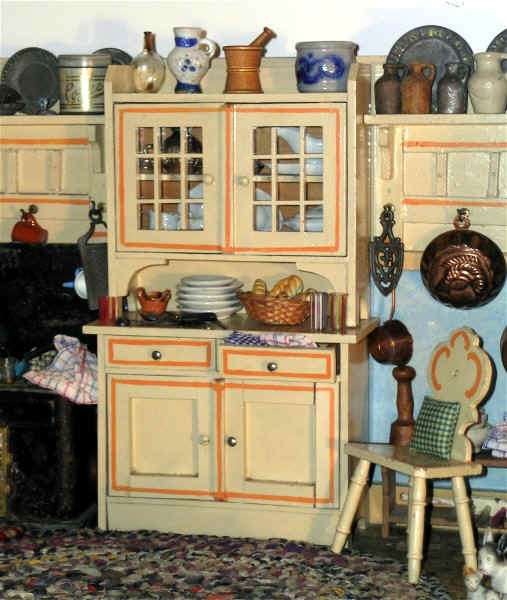
ABC tin plates, early crocks, copper
fish mould
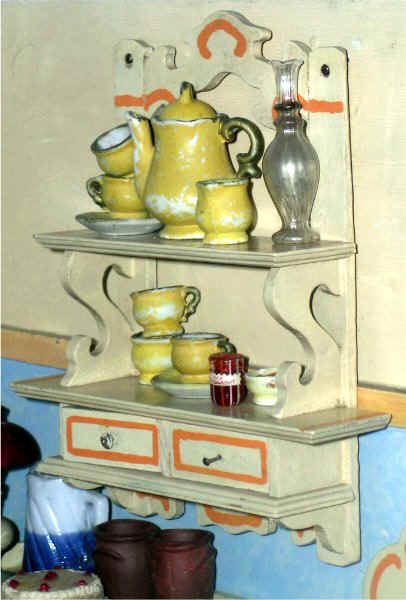
The scrolls and curves in the furnishings do not show the Art Nouveau influence of kitchens made in the early 20th century but resemble more closely the Rococo Revival style, which so strongly permeated dollhouse furnishings in the late 19th century Painted china teaset marked "Made in Germany"
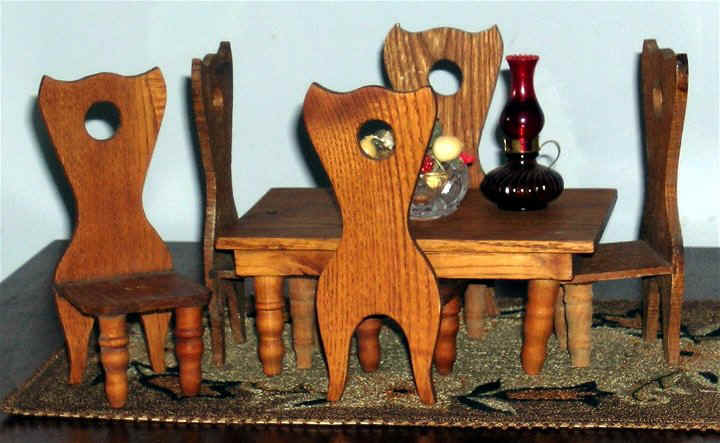
This table with a typical 3-sided gallery was a work table for preparing meals and baking; makers such as Gottschalk of Germany abandoned this style of cut-out solid chair backs in the 20th century, except for reviving it in the mid 1920s to evoke a German "peasant" style
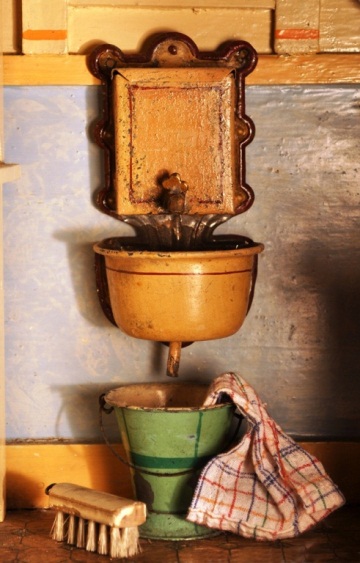
An interesting
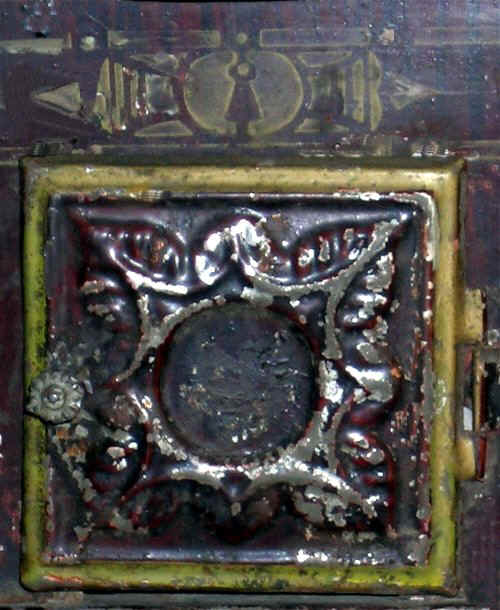
tin sink with false-grain painting and gold detailing; 7 inches high; the
embossed door with metal knob opens, there are hooks on the back plate, as
well as a pair of small fluted curved shelves for soap; a small reservoir is
hidden behind the back for placing water, which is released by a faucet into
a dishpan sitting in a hole in the gray counter; to each side of the dishpan
is a shallow removable plate; do they indicate a stove function in addition
to the sink? Above the faucet in a semi-circle are the stencilled words
"Patented ...1882";
the use of English (rather than German) suggests American or British origins
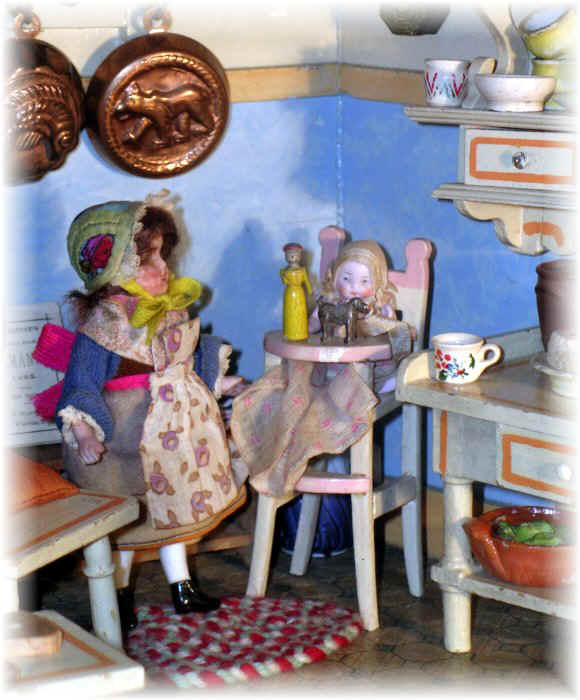
mother's helper (both in original clothes, German, early 20th century)
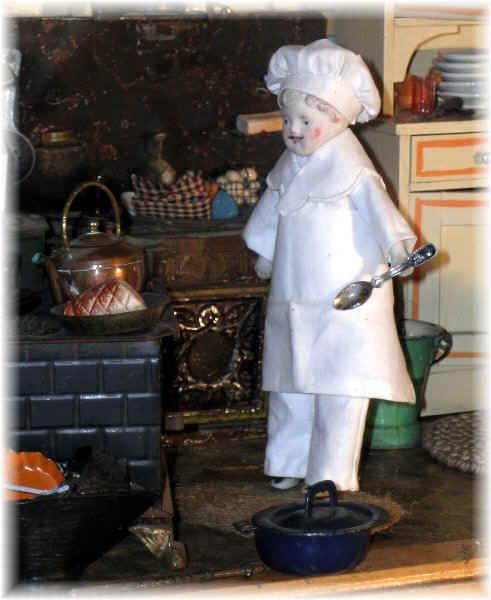
the cook (German, bisque, early 20th century, uniform made in
2009)
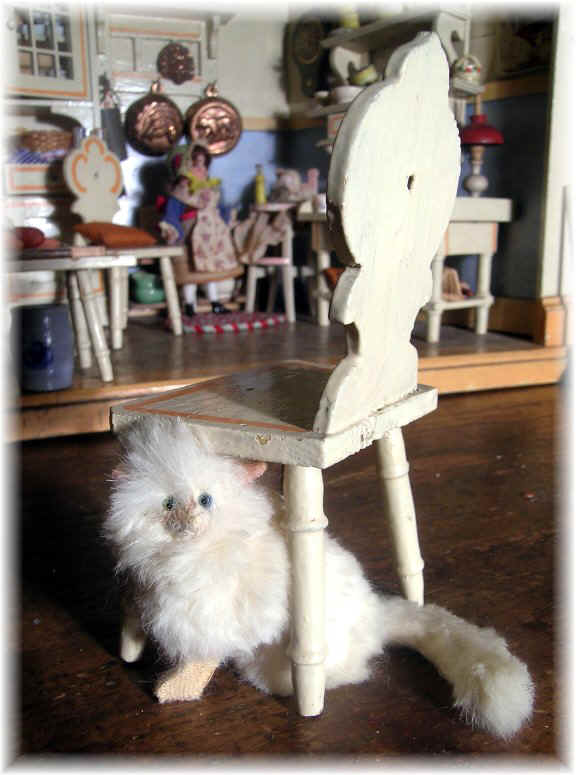
guard cat
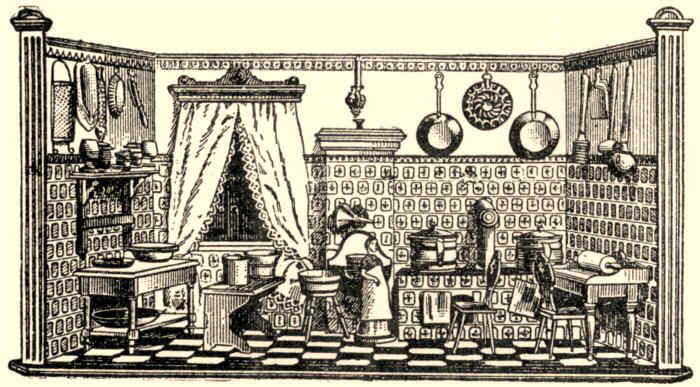
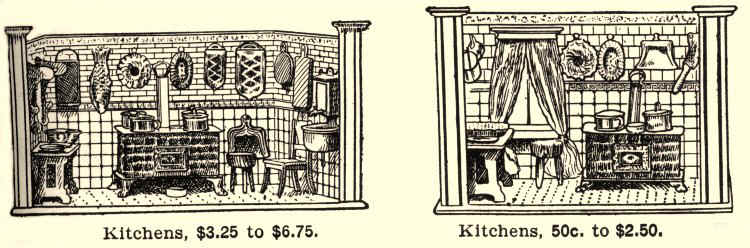
1893 "New style this
season", a wooden kitchen with a curtained window and the lower 2/3 of
the walls lined by imitation tiles, as is the stove, which has a chimney,
oven and two stew pots; in the centre of the back wall is a water basin; the
larger sized kitchens came with a cook and wooden furniture; a chopping block
was a customary accessory; the metal moulds, grater and pans are very large
in comparision to the cook and furniture; made by
Gottschalk of Germany (see 1893 catalogue below # 2274/4); sold by Carl Stirn in his catalogue of 1893, New York
For readers interested in the products of the Gottschalk company, see Marianne Cieslik, Moritz Gottschalk 1892-1931, 2000.
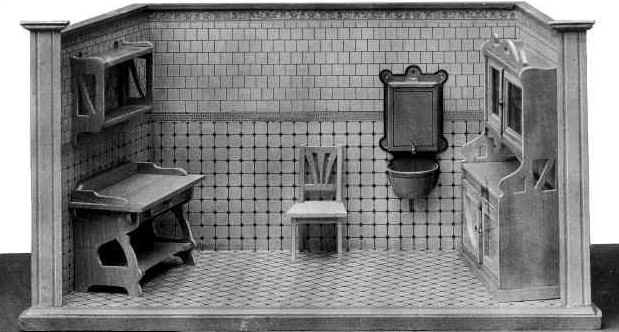
1903 German Gottschalk catalogue showing kitchen furnishings -- 5 shelves, work table, bench, glazed cupboard, sidechair; the curves and scrolls have taken on an Art Nouveau quality; the sidechair has a pierced back; # 3349/1
1905 likely German Gottschalk kitchens (compare
wallpaper, pilasters with two vertical lines, sink, etc. with Gottschalk
catalogue below); shown in the Wanamaker catalogue, USA
1902 Gottschalk # 3482/3, kitchens ranged from
small and plain with no windows to large and complex; the wall sink is an
attractive feature
1908 Gottschalk, a metal Märklin cookstove is shown;
displayed with certain furnished kitchens from at least the early 1890s
to about 1915; they featured a stove pipe, some had double doors while others
had a single door; the accessories were often inconsistent in scale
1917 likely a German Märklin stove in the John Smyth catalogue, USA
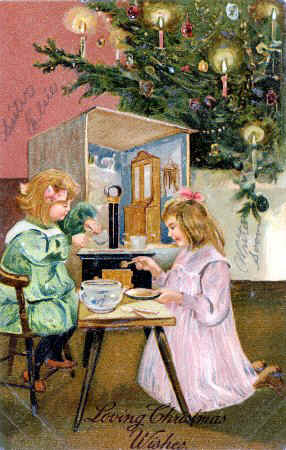
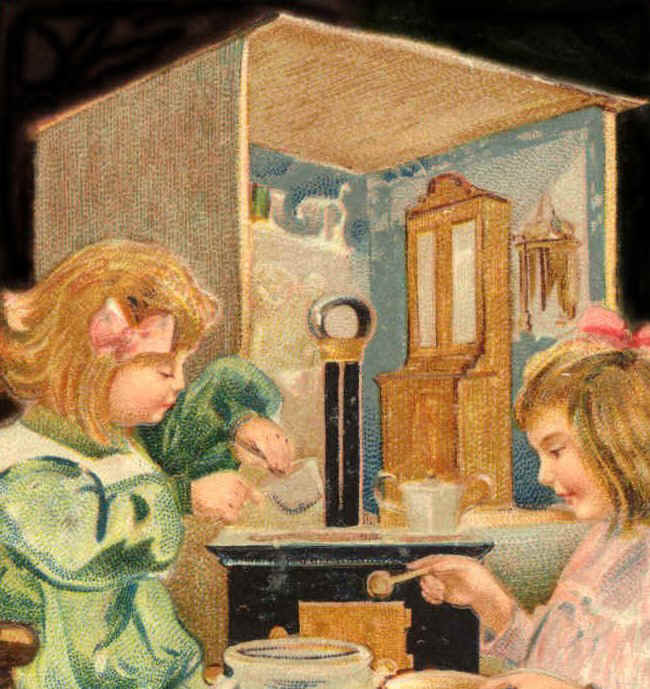
Undated postcard with children cooking on
their Märklin stove; in the background is a wooden
kitchen with a cupboard and hanging shelf; c1915-20
eating: THE DINING ROOM
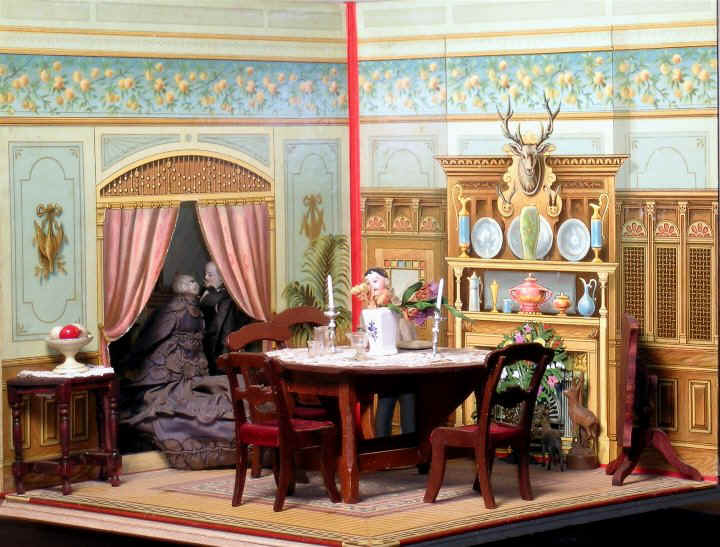
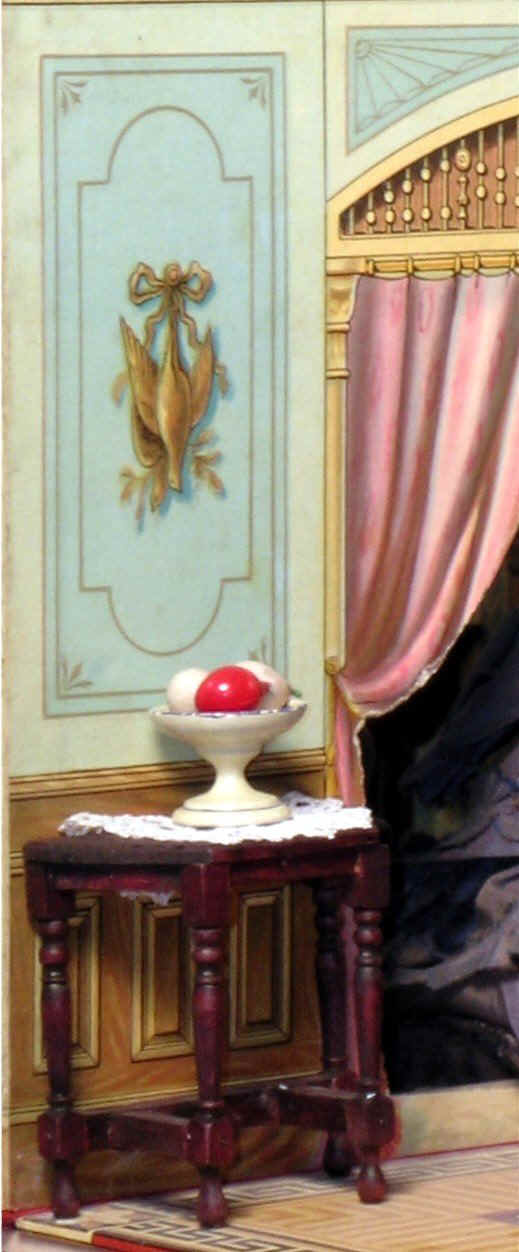
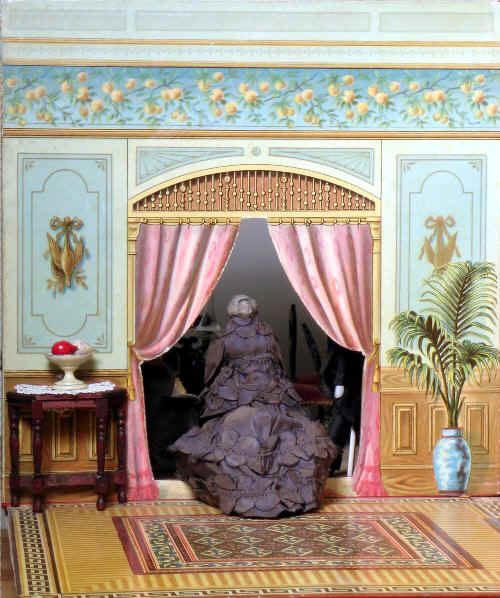
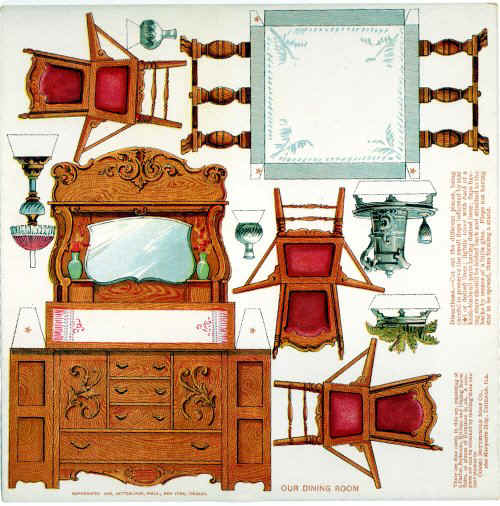
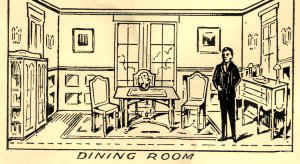
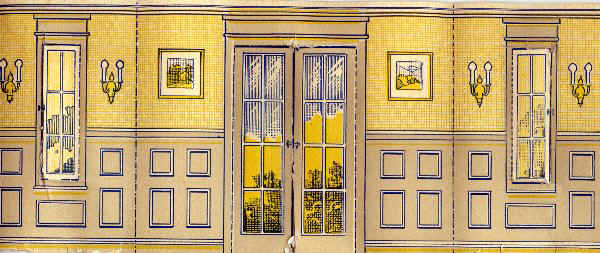
1894 the American firm McLoughlin produced a set of 4 rooms with lithographed walls showing the furnishings and decor enjoyed by the urban upper classes; this is the dining room with blue panelling (on which carved dead game hangs) over natural wood, panelled wainscoting; a band of wallpaper with oranges and branches runs around the upper part of the room; there is a parquetry floor with an Oriental rug in the centre
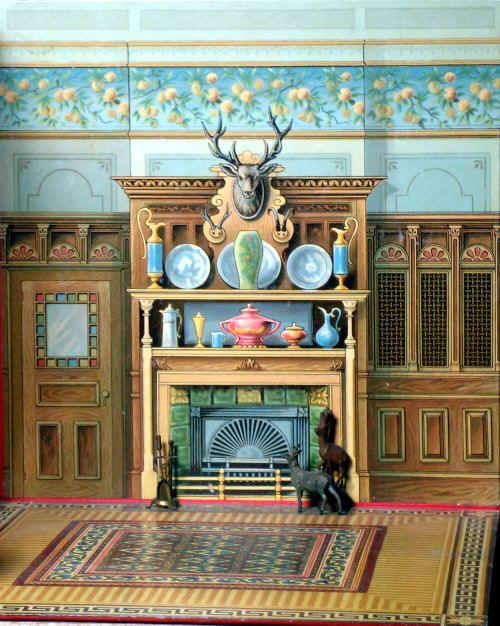
The fireplace wall features natural woodwork surrounding the tiled fireplace box surmounted by an overmantel with shelves laden with ornamental china; towering over all is a mounted stag head with sets of smaller horns below; on one side a passageway door leads to the kitchen while on the other, there may be a dish-storage area shielded by screening; the effect is rich and colourful
Grandmother, with her silk gown trailing, enters the parlour through rose curtains hung below an arched screen of spindles; large green palms are in a blue and white floor vase; a German "red stain" table, which bears a painted and turned wood compote, sits against the wainscoting
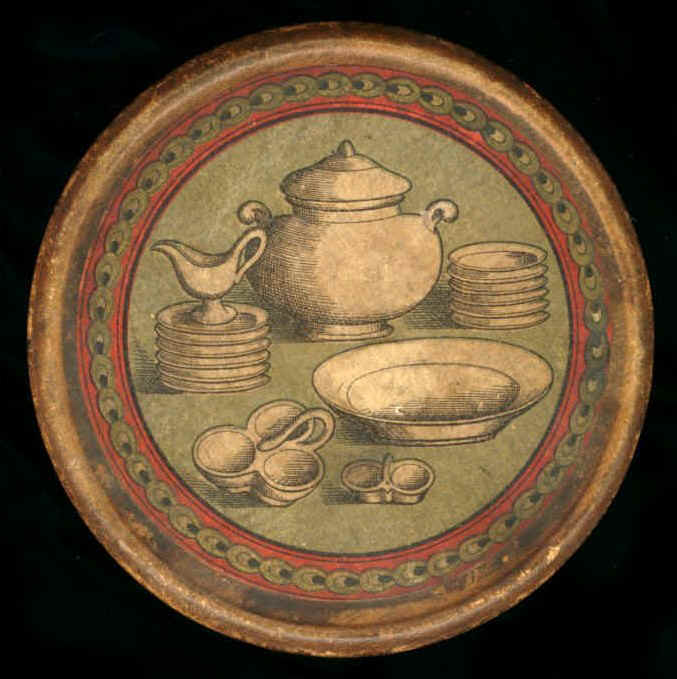
lid of a box holding a set of dollhouse blue onion dishes, 3 in. dia., German, late 19th century, impressed on reverse is MECHANISCHE FABRIK FRIEDR CHRISTIAN BAD SODEN AT PATENT NO. 33982 3 414
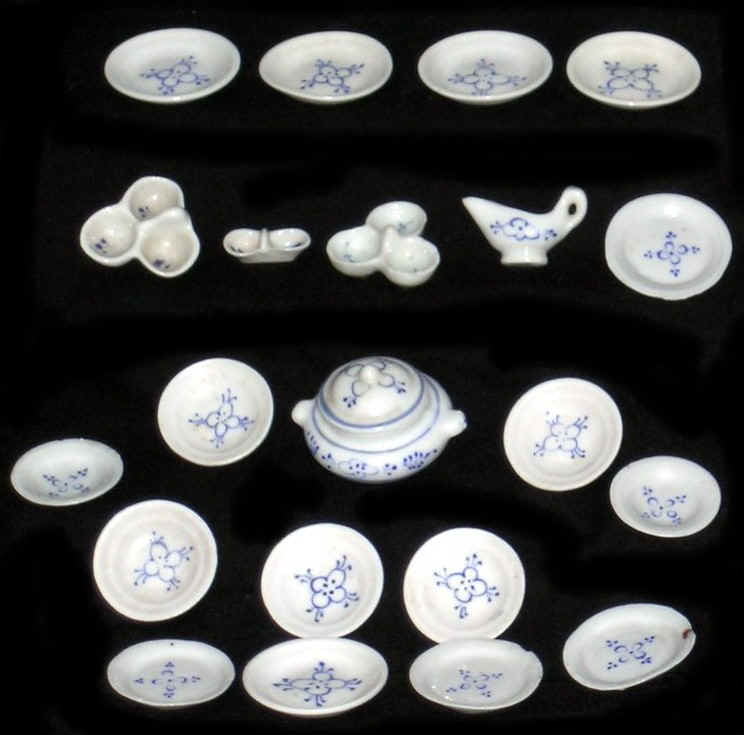
c1880
set of blue and white, onion pattern china for the dining room, German, hand
painted, plates 1½" diameter
c1890
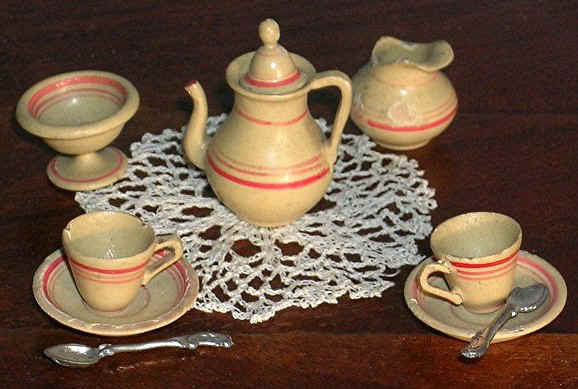
painted treen coffee set, likely German, coffee pot
just over 1¼" high
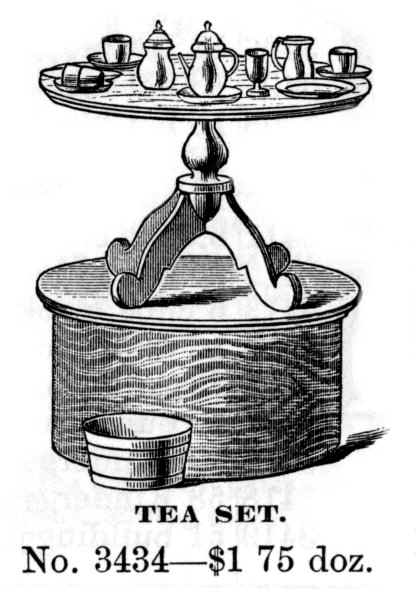
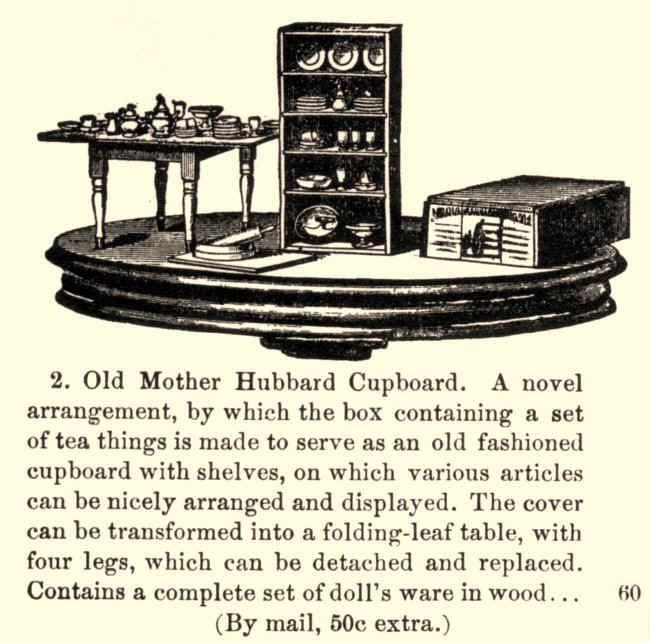
1879-1880 Davis Brothers Catalogue, San Francisco, California Likely treen (not specified in catalogue) and German; tall elegant lids usually characterize these early teapots; the sets are normally painted in a solid colour with lines as accents; some sets are embellished with flowers and/or birds with flowers; the delicate handles often have been broken off after useage at too many tea parties
1881 Ehrich's Fashion Quarterly Catalogue
Treen teaset
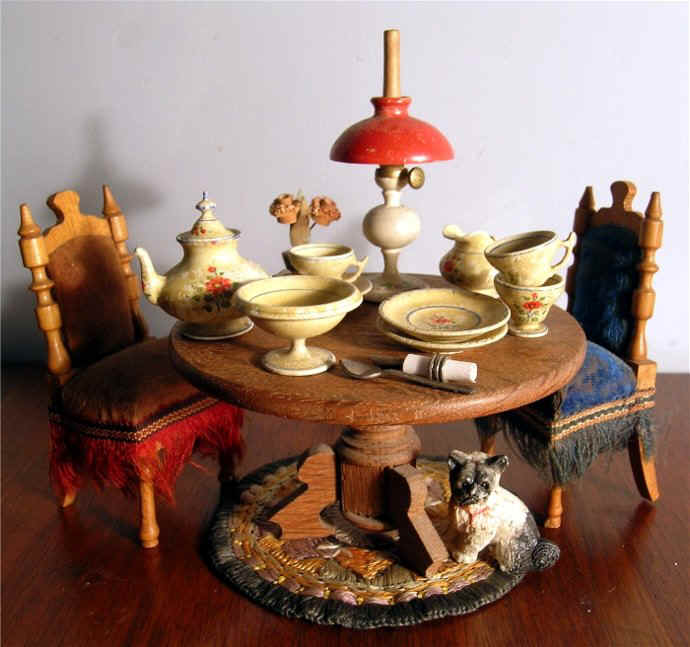
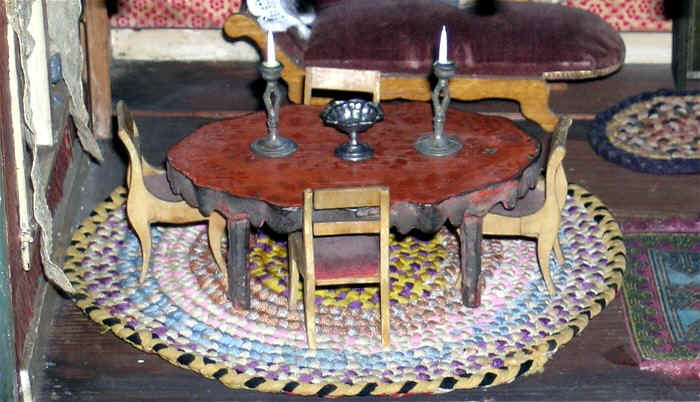
and oil lamp, likely German (as are the chairs and table) c1890; teapot 1½"
high
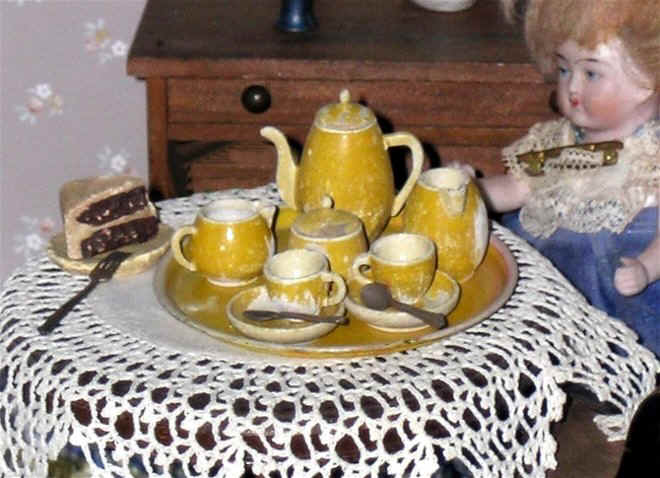
Treen teaset, c1910-c1930, painted a strong mustard colour and sitting on a matching tin round tray, stamped "Germany"; the piece of cake and set of cutlery came from the same American dollhouse. The teaspoons are just under 1".
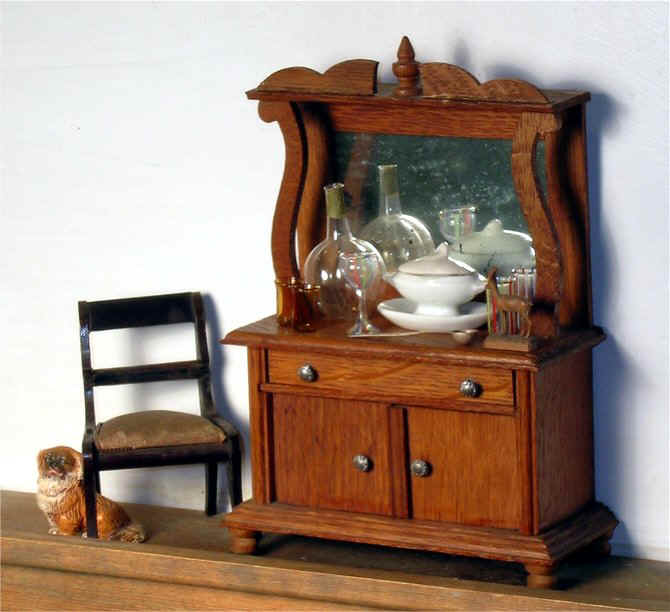
c1905 -1917 sideboard
in natural oak with cut-out curved supports on each side of the mirror, bun
feet, broken pediment on top with a finial in the shape of an urn, metal
hardware, likely German in origin, 8¼" high
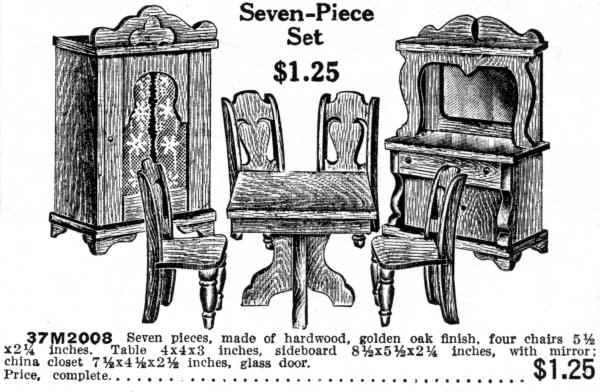
1905 described as a parlour set selling for $1
in the Wanamaker Catalogue, USA, it looks more like a dining room set;
compare sideboard above, although shown here without the broken pediment and
finial
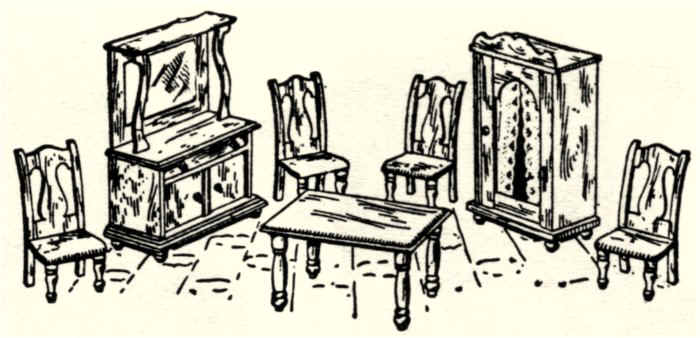
11917 dining set in "golden oak finish" in the John Smyth catalogue; generically similar to the 1905 set in the Wanamaker catalogue and the oak sideboard above, which as a central finial not shown in either illustration
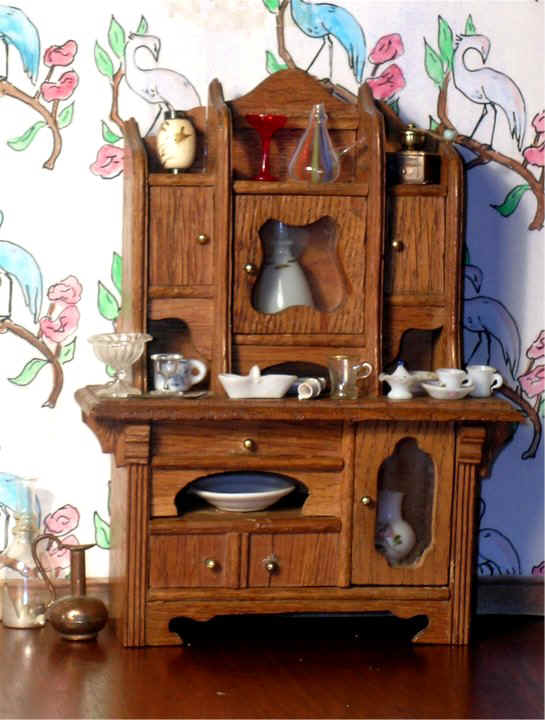
c1890 sideboard, oak, 6.75 in. high, likely German
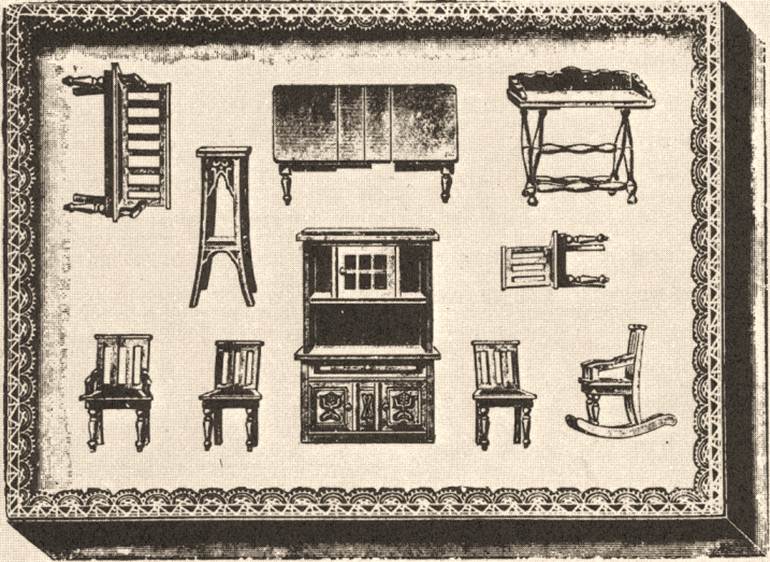
1914 Schneegas
catalogue, Walterhausen, Germany – dining-room
furniture (see Gallery 1 for the table and chairs)
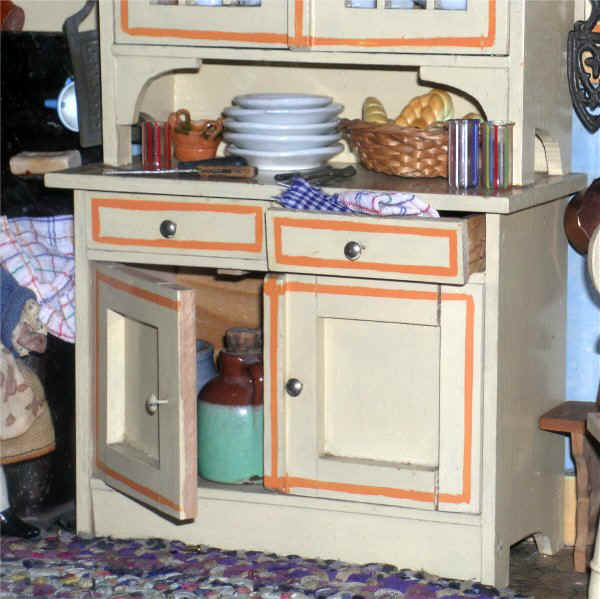
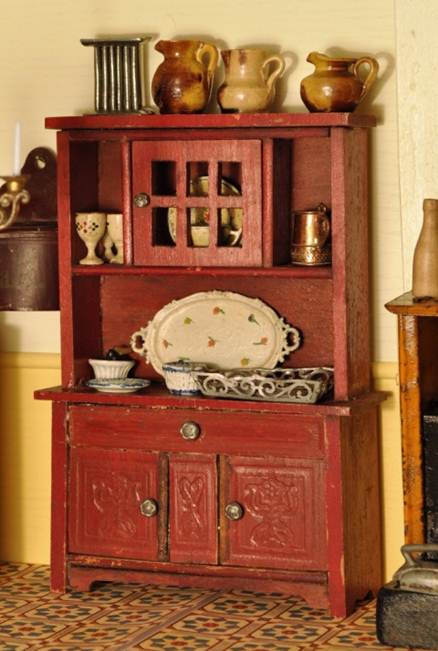
Shown here in a kitchen, this Schneegas back-to-the-wall cupboard belongs to a
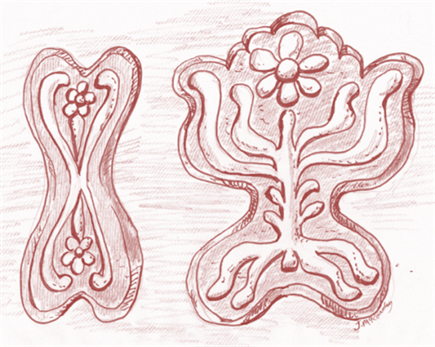
dining-room set, as seen in the 1914 catalogue; the impressed wood designs on
the cupboard’s bottom half are pleasing Art Nouveau renditions of flowers
with undulating leaves and roots
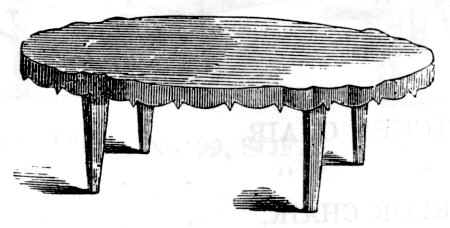
1872 cast-iron dining table by Stevens & Brown, Cromwell, Conn., USA; detail from their catalogue of 1872 and below a small version with remnants of the once brilliant hand-painting and floral stencilwork; the sharp scalloping of the apron is easier to achieve in metal than in wood
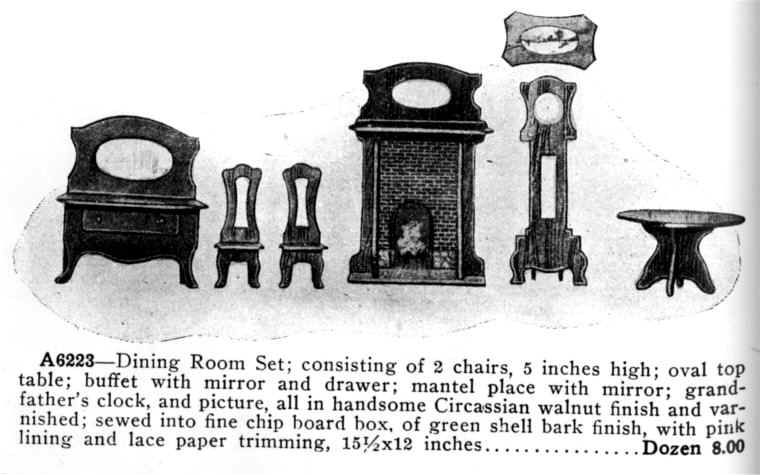
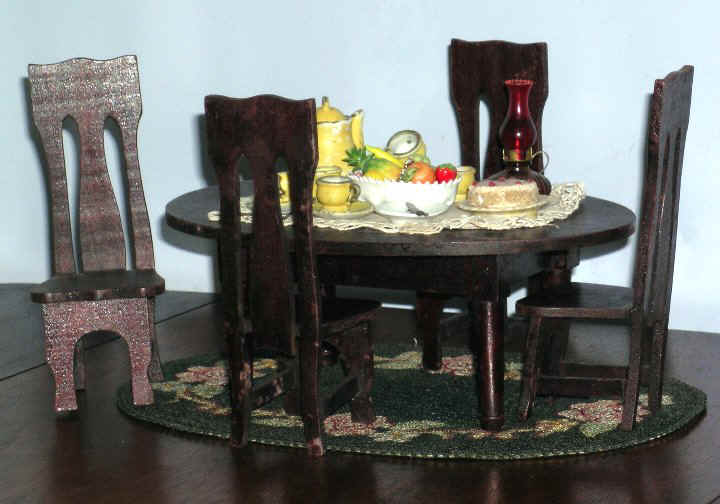
dining room set from Montgomery Ward catalogue of 1914 (still appearing in the Sears Roebuck catalogue of 1921) showing furniture in dark varnish sawn in stylized curves out of flat thin pieces of wood; tables are formed by piecing together two supports, which appear as four scrolled legs; the chairs in the catalogue are 5" high (too large a scale for most dollhouses) but the oval table on the left is only 2¾" high (this leg construction appears in the late 19th century and continues into the 1920s); the set below is in a large scale: the chairs are 7" high and demonstrate the method of sawing out a flat piece for the front legs; the general impression of this type of furniture is Art Nouveau because of the stylized curves
c1915 set by N.D. Cass Company of Athol, Massachusetts; chairs 5" high, the table seems strangely low in comparison to the high-back sidechairs, which have an odd combination of turned front legs and flat cut-out back
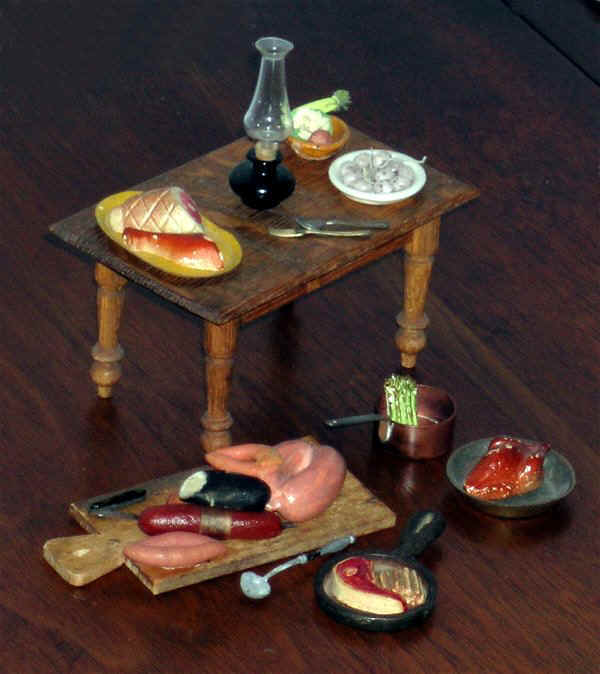
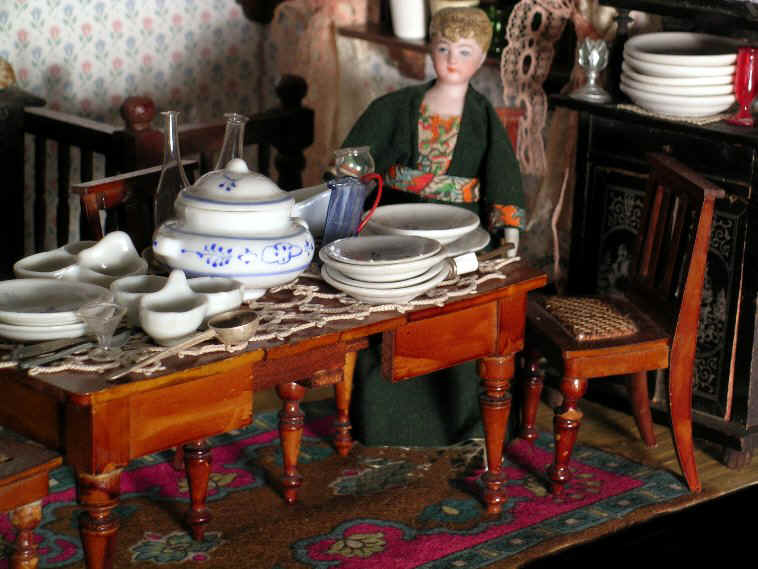
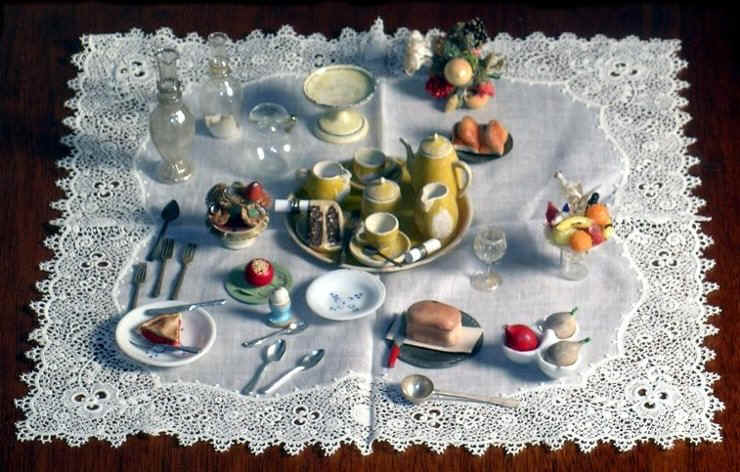
c1900 - 1930s an array of German dishes and food
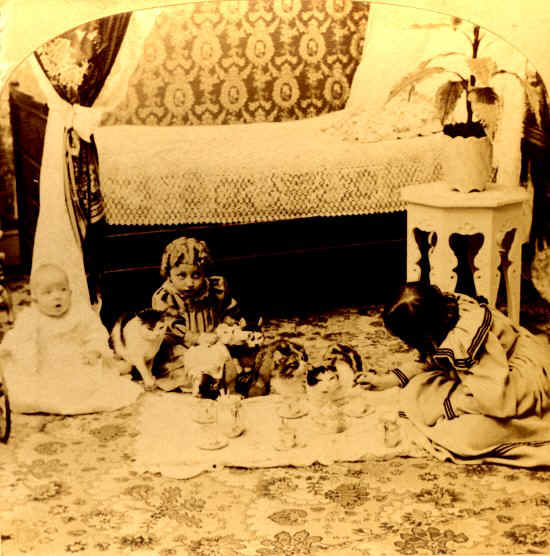
1899 although the toy tea set is difficult to distinguish in this American stereocard (by Kilburn), two young girls and a baby are pouring tea for four co-operative cats; the bed has a lace coverlet and draped curtains; there is an exotic looking plant stand and a floral woven carpet
PLEASE CLICK HERE TO CONTINUE TO THE NEXT SECTION (ON PARLOURS)! top of page home page history of dollhouses GALLERY of IMAGES 1 GALLERY OF IMAGES 2 GALLERY OF IMAGES 3 |