Content-Language"
content="en-us">
|
section 3: farm buildings & animals, shops and misc. buildings, 1880s to 1920s images & photography: Jennifer McKendry © home page GALLERY of IMAGES 1 GALLERY OF IMAGES 2 GALLERY OF IMAGES 4 GALLERY OF IMAGES 5 GALLERY OF IMAGES 6 GALLERY_OF_IMAGES_7 GALLERY_OF_IMAGES_8
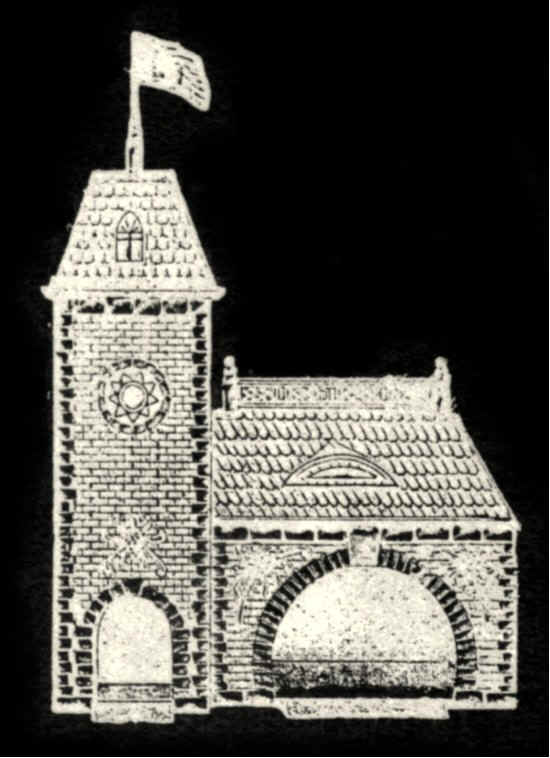
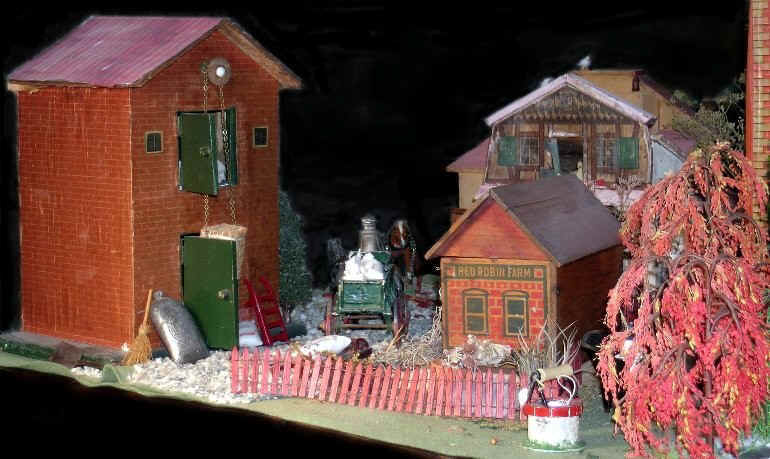
Warehouse, probably German, lithographed brick walls and roof tiles over wood, 14" high, c1900
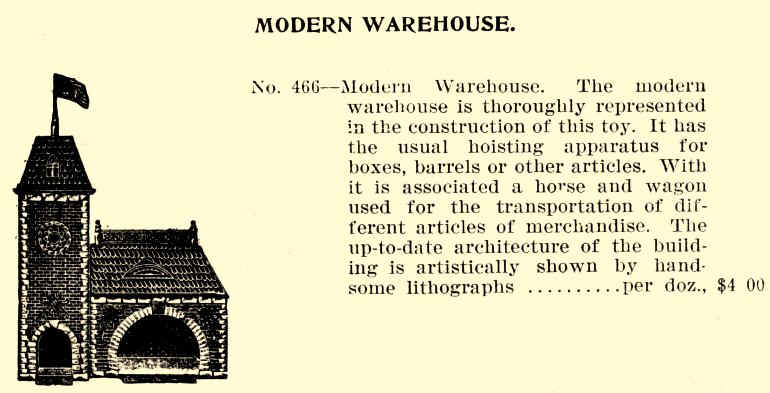
1905 "Modern Warehouse" in the Wiemann & Muench catalogue, Milwaukee, Wisconsin
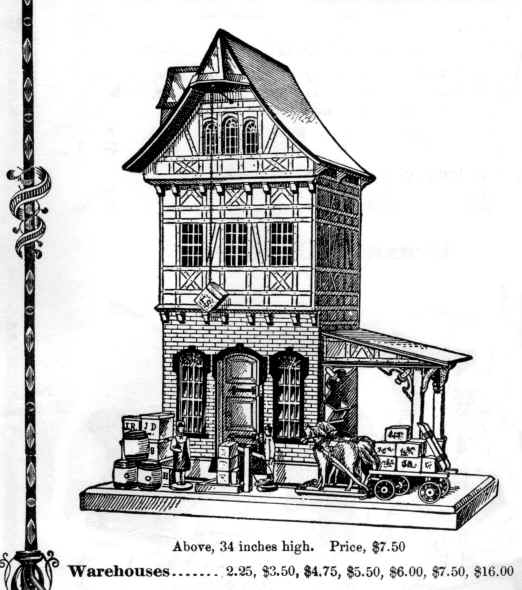
1897 F.A.O. Schwarz catalogue, New York, likely made in Germany
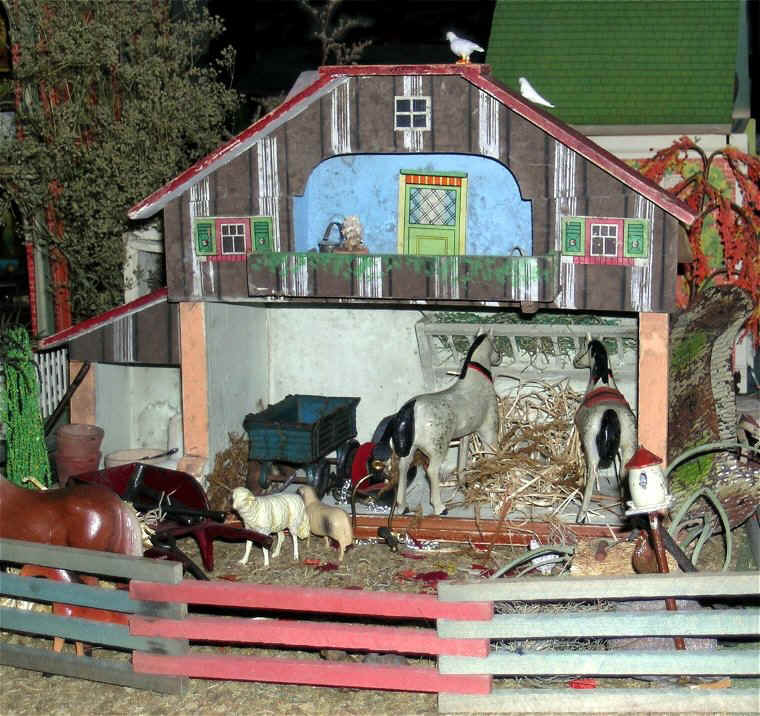
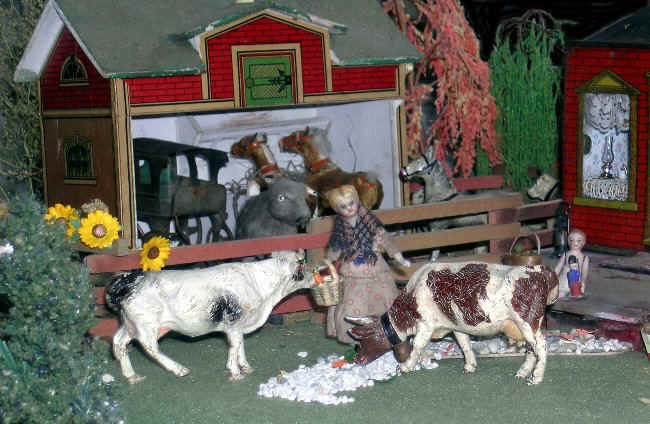
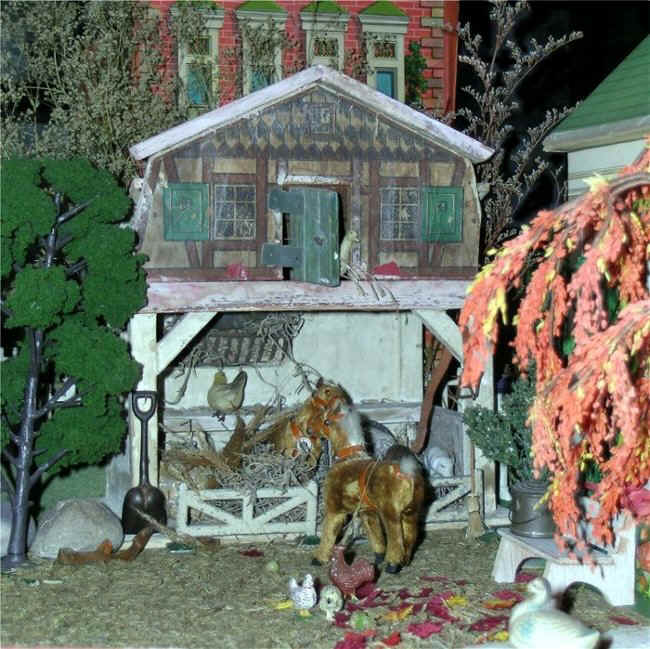
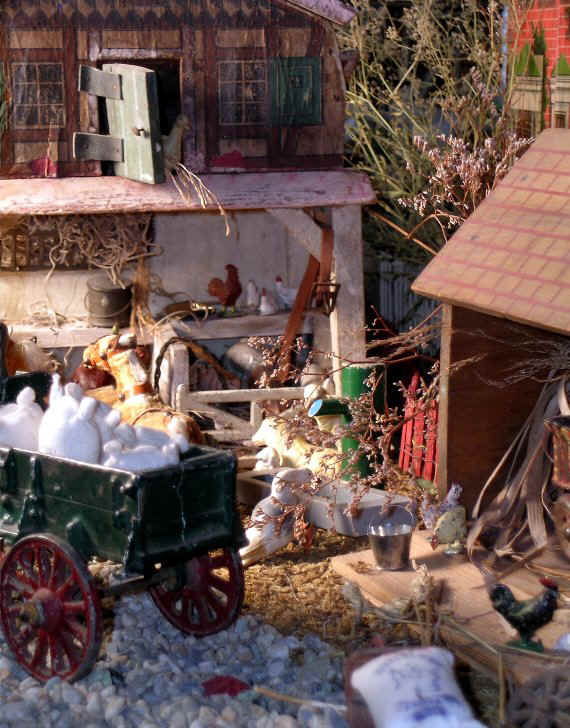
Stable, likely German c1900, almost 12" high, with housing for farm workers in the upper level; iron wagon and wheelbarrow; painted composition horses (one retaining its original felt blanket and leather girdle), 4½" long; painted tin canoe (leaning at right)
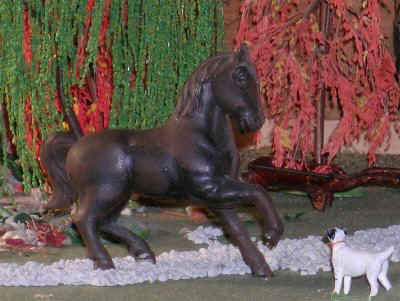
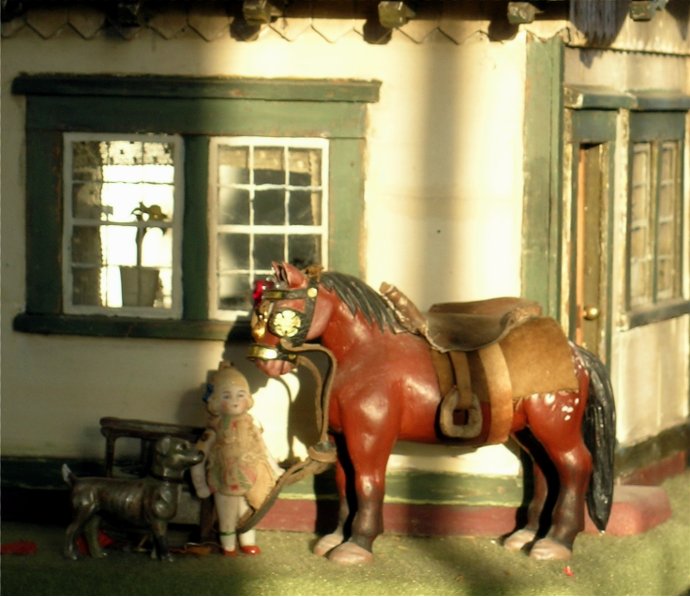
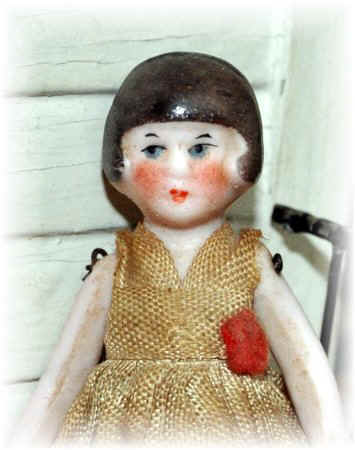
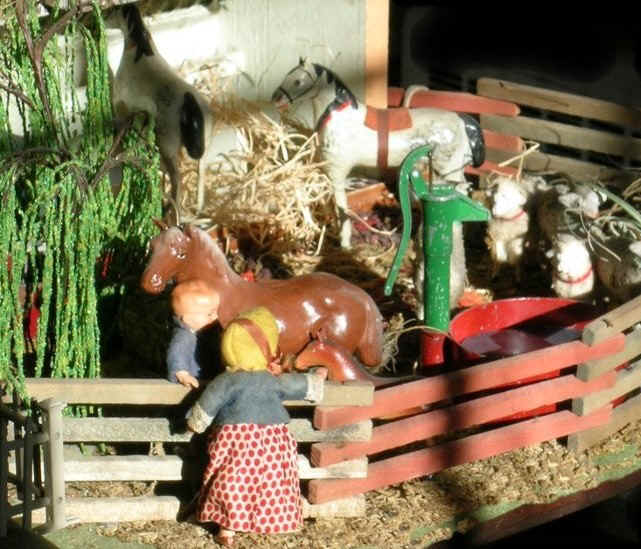
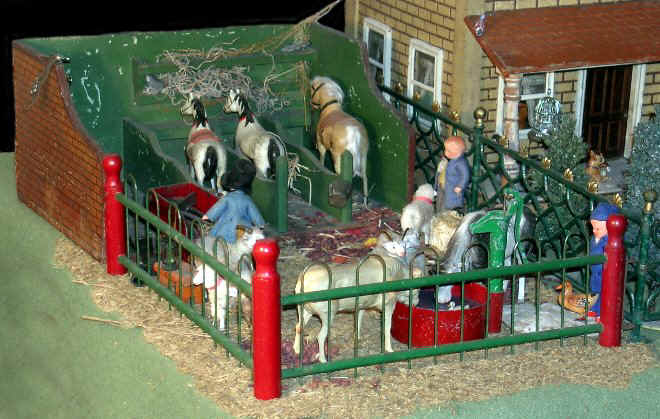
Horses in painted composition (papier mâché) with wood legs, foal marked Germany, brown mare 5" high, c1915-20; dolls marked Germany in original clothing c1930; painted metal pump, 5" high, c1915
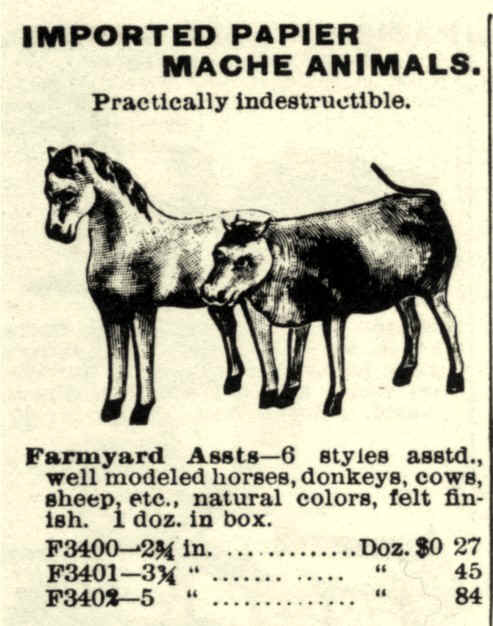
1914 horse and cow, papier mâché, imported [from Germany], free-standing; Butler Brothers catalogue
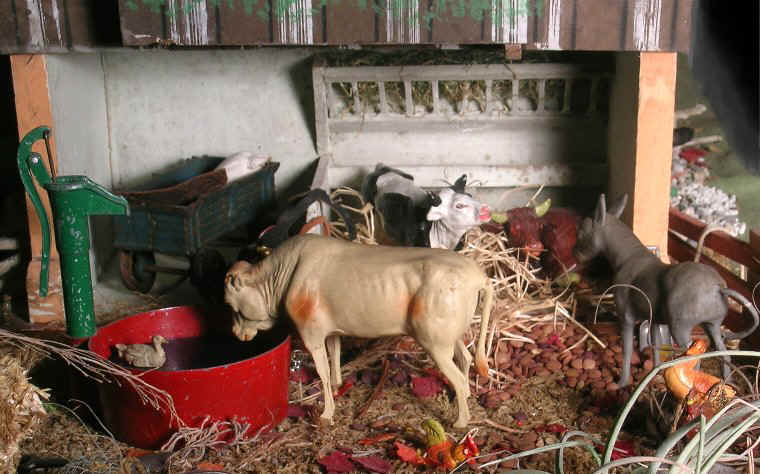
c1910 cattle and donkey, painted composition with wooden legs, steer 4½" long and marked Germany
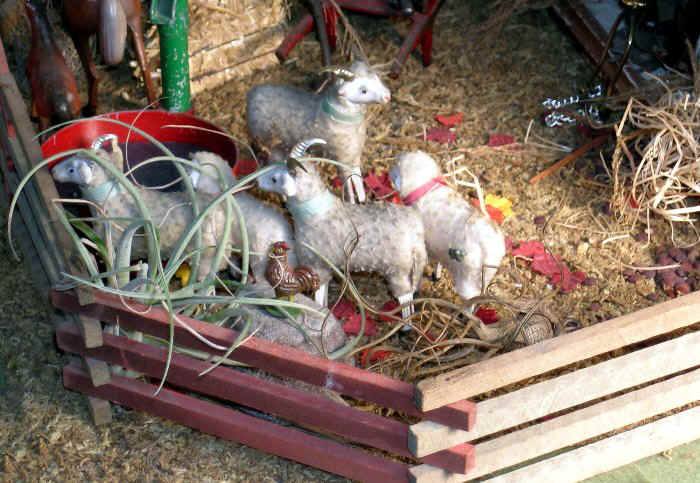
Flock of sheep, likely German, ram 3" high, early 20th century
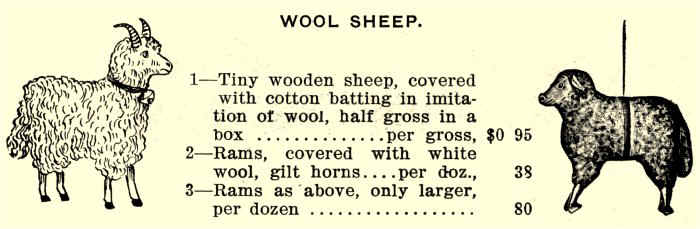
1905 Weimann & Muench catalogue, Milwaukee, Wisconsin
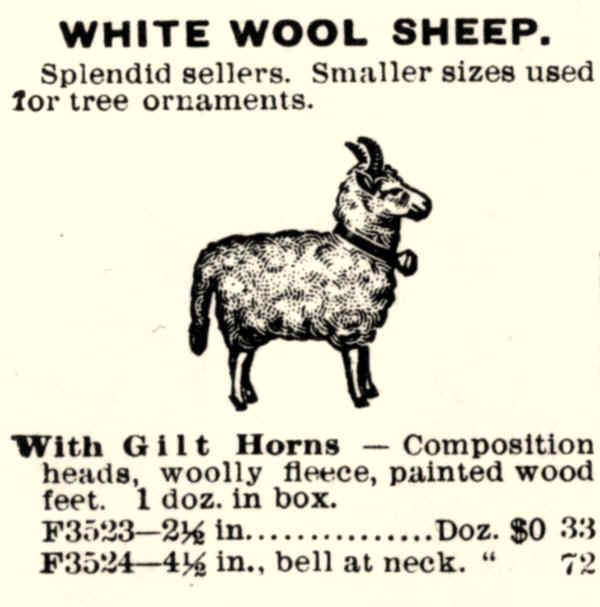
1914 ad by Butler Brothers
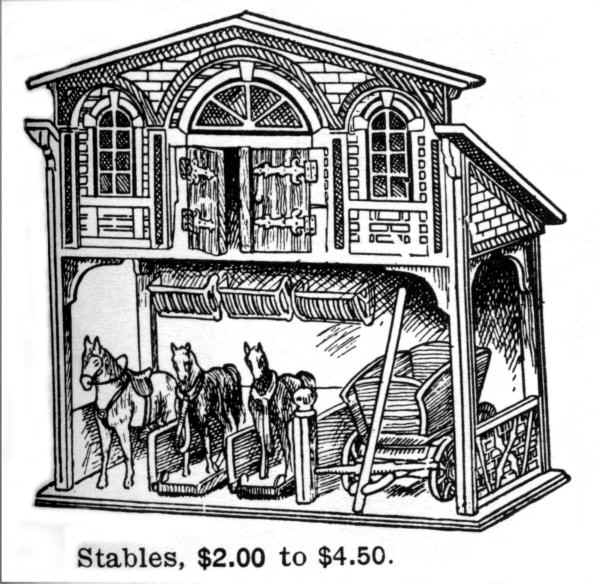
1905 blue-roof stable by the German maker Gottschalk ,model # 3256, ad in the Wanamaker catalogue, USA
above Stable, 11½" high, with hinged upper door and metal hay crib; similar to model 5544 by the Moritz Gottschalk toy factory of Germany
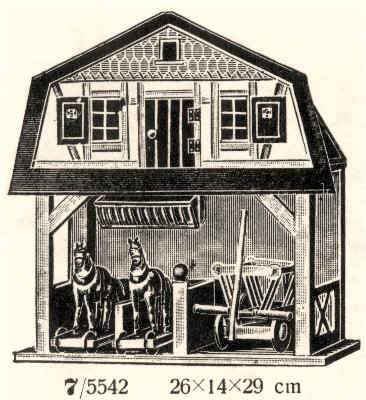
Above Toy stable in the Der Universal-Spielwaren-Katalog 1924 mit Neuheiten-Nachtrag 1926; this is an old fashioned toy by these years -- mechanized vehicles and equipment were taking over farm work from horse power
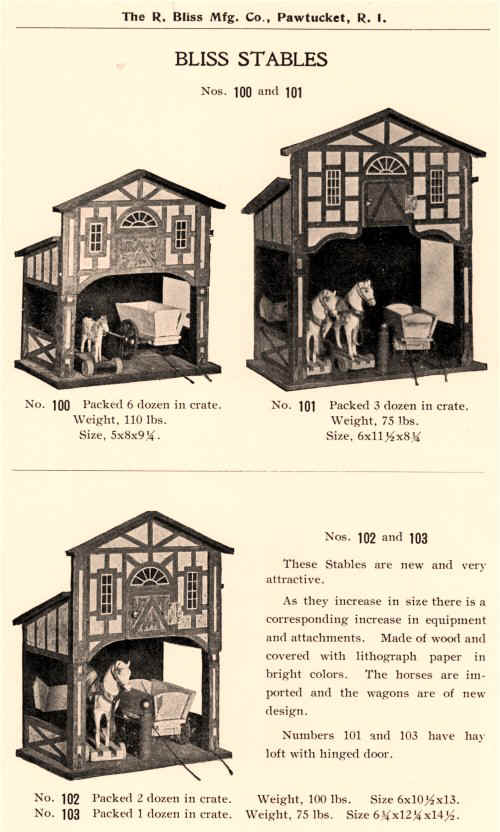
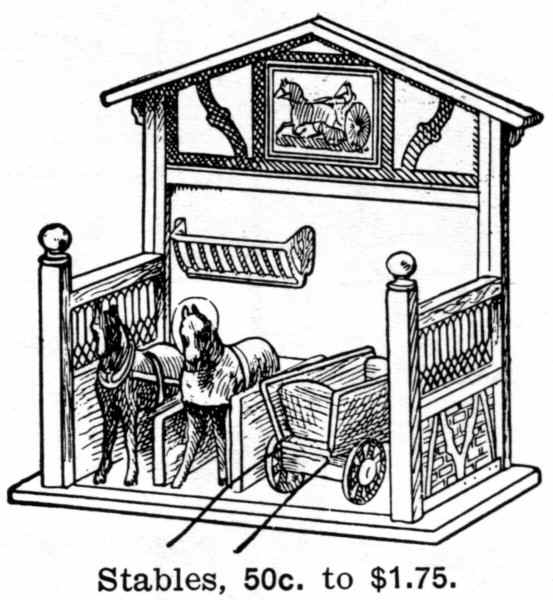
1911 Bliss stable with horses on wheeled platforms and a wagon; the upper fronts have a half timber design printed on paper glued to wood, as in the stable shown below
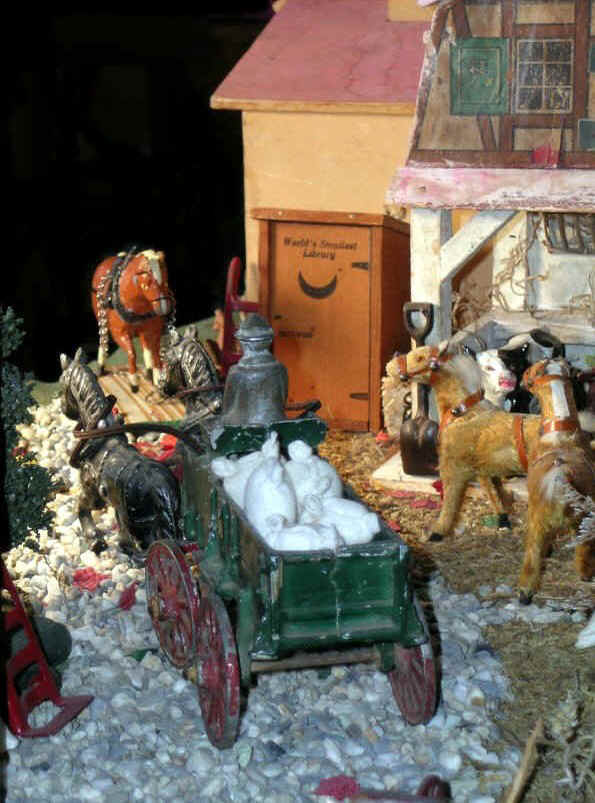
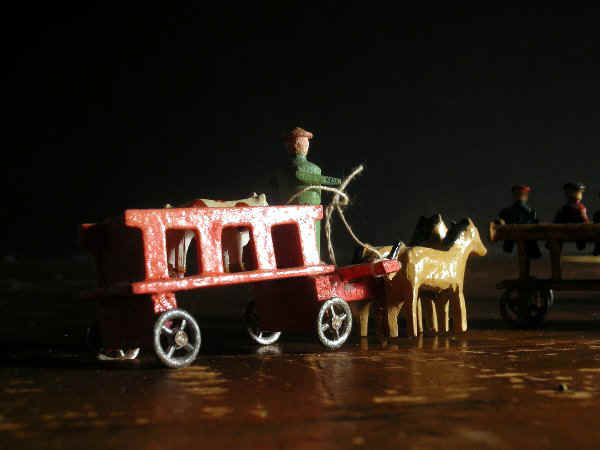
A painted metal wagon pulled by a pair of black horses and
directed by a driver, shaft marked "MADE IN U.S.A.", attached is a
hand-written note "bought by Dad in 1944" (but similar to examples
made much earlier), overall length 11"; an outhouse ("World's
Smallest Library") dated 1938
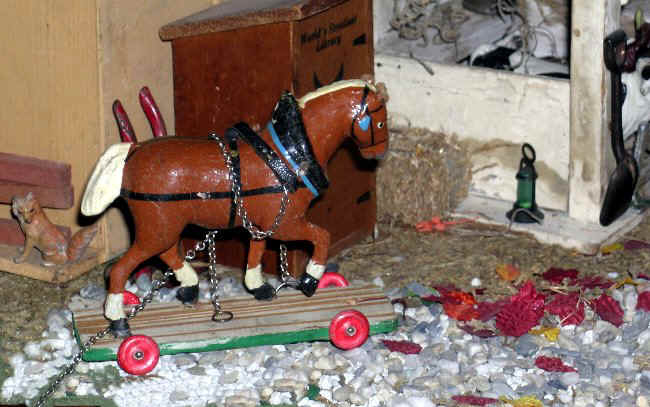
Painted papier mâché horse, 4" high,
with original harness and chains, on platform with wheels, likely German and
meant to pull a wagon
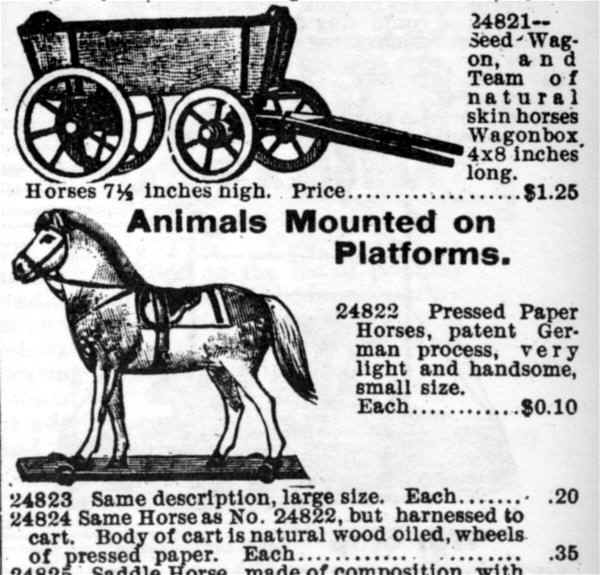
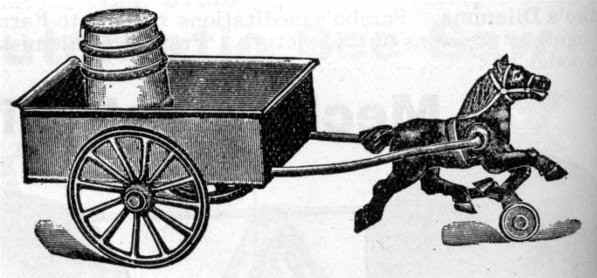
1894 Montgomery Ward catalogue showing a papier mâché German horse on a platform with wheels, some are independant with saddles while others are meant to pull wagons
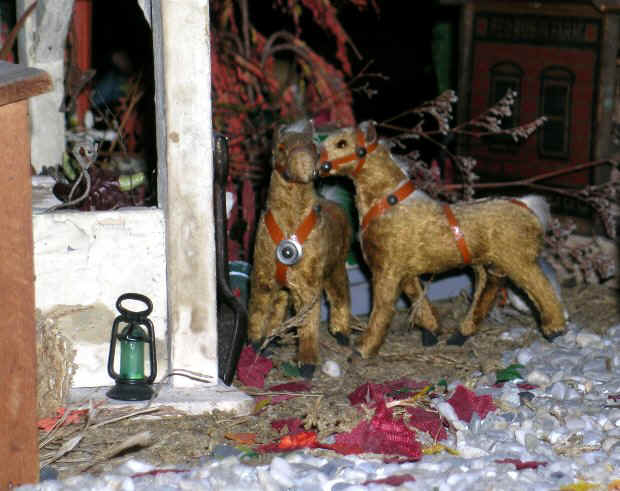
Pair of horses, covered with imitation horse-hair, and retaining
their original tails, manes and glass eyes, as well as (imitation) leather
and metal harnesses, 5" long, likely German in origin; metal and
celluloid lantern, just under 1½" high, by the American firm Tootsietoy c1930s
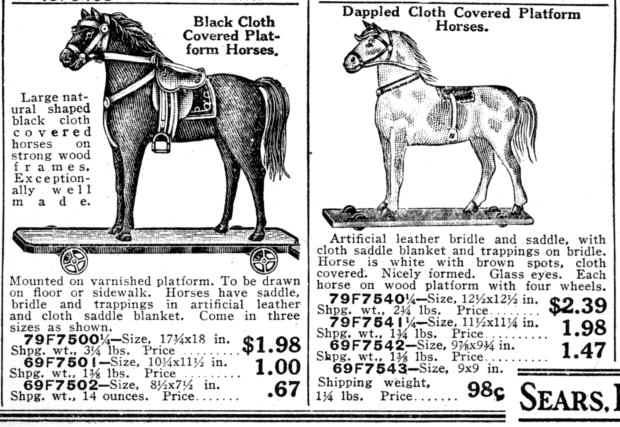
1921 covered horses on platforms with wheels, Sears Roebuck catalogue
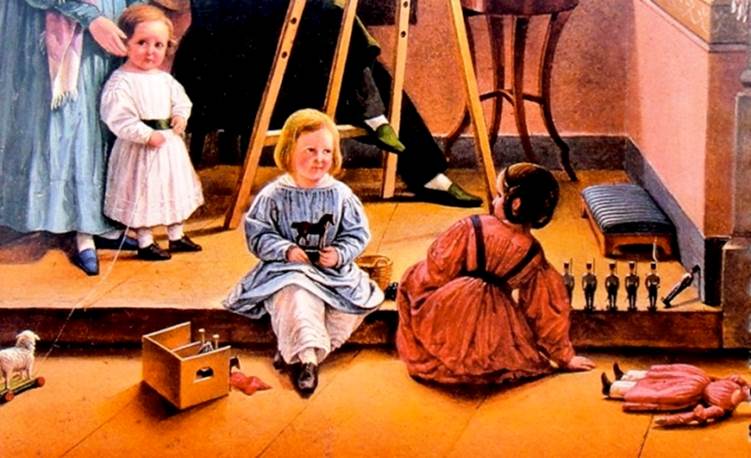
1838 the tradition of playing with animals on wheeled platforms and horse stables has spanned a long time in Germany; note also the toy soldiers and doll (detail from 1838 painting by Wilheim von Harnier)
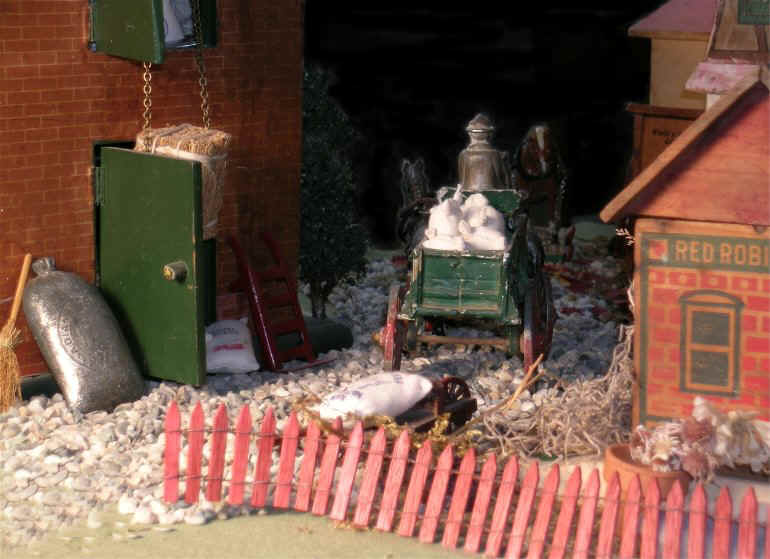
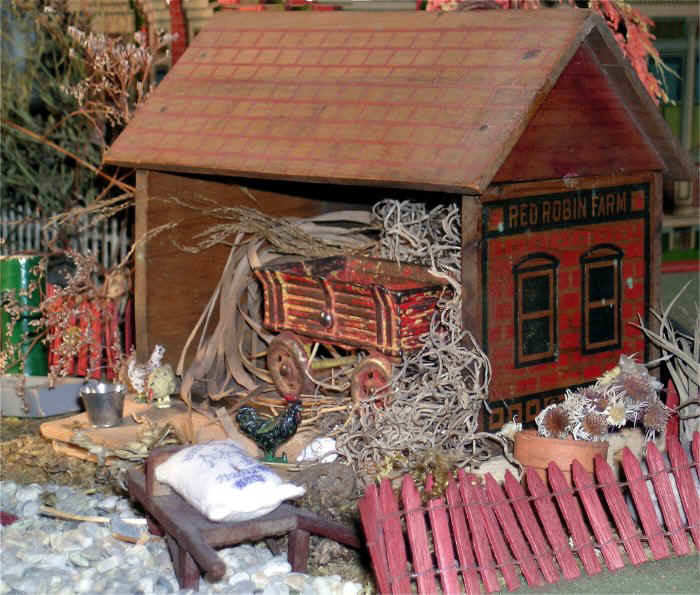
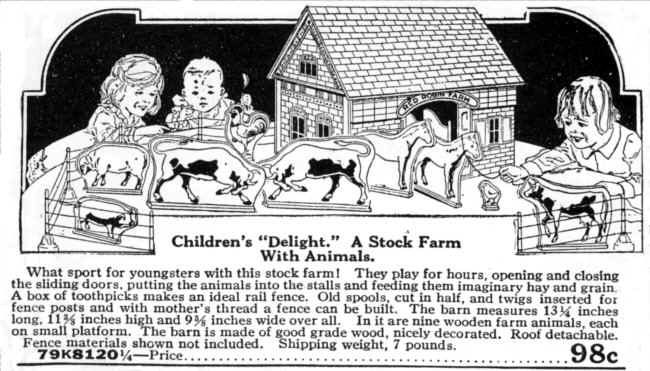
one of the smallest and plainest of the Red Robin Farm buildings by the American manufacturer Converse; 6½" high, early 20th century
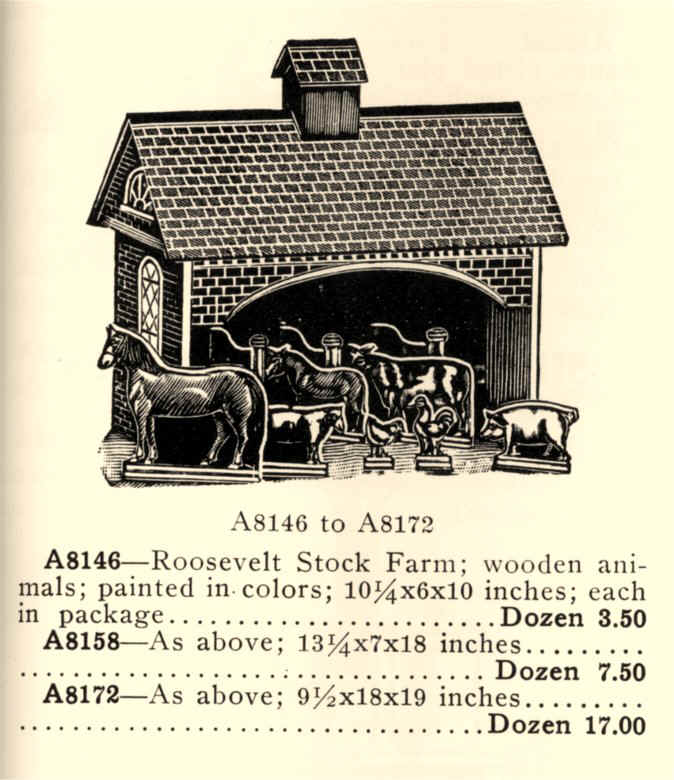
1914 Roosevelt Stock Farm by Converse of
Massachusetts, Marshall Field catalogue; the main doorway is arched ; the
colours and patterns are printed directly on the wood; some models have a roof
ventilator, sliding doors and porthole openings on the back wall to ventilate
the horse stalls; note the animals cut out of thin pieces of wood supported
on wood bases
1922 Red Robin stock farm by Converse, Sear Roebuck catalogue
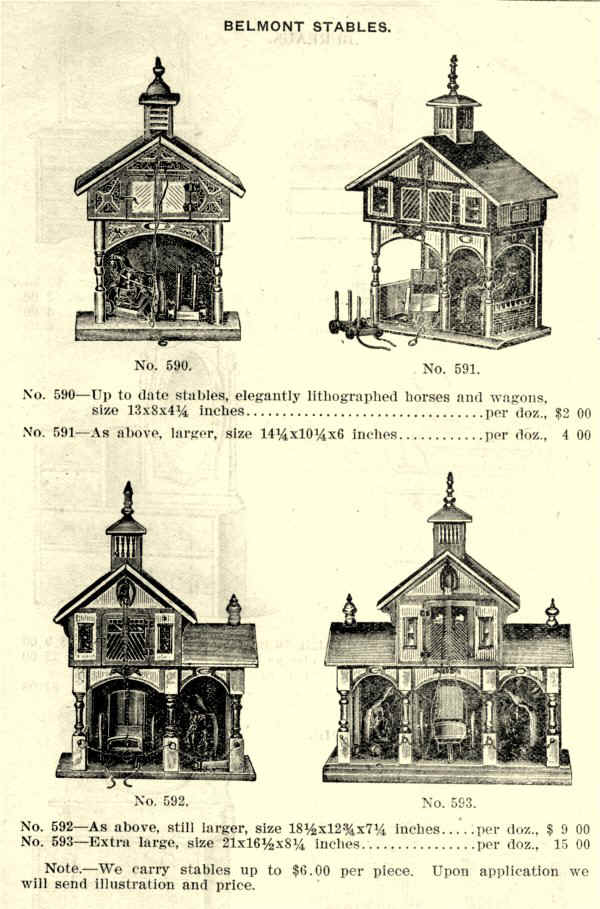
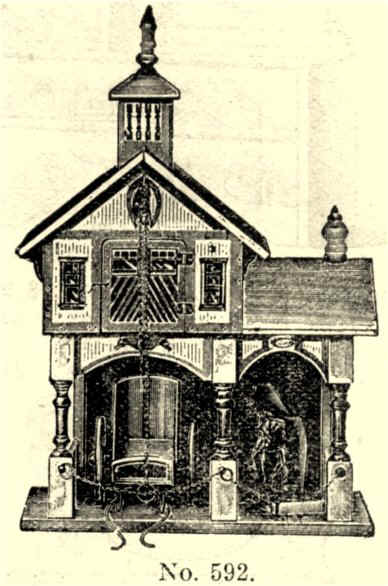
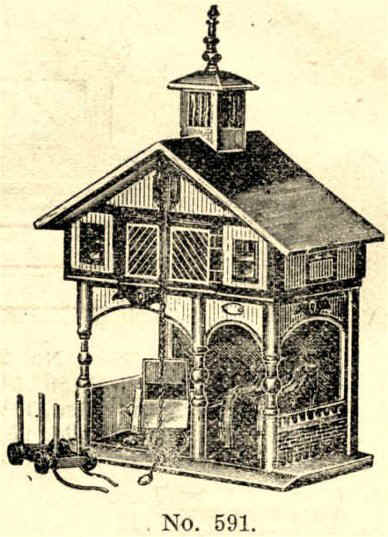
1905 four stables in the Wiemann
& Muench catalogue, Milwaukee, Wisconsin;
lithographed paper over wood; below: two are Bliss examples
made in Rhode Island
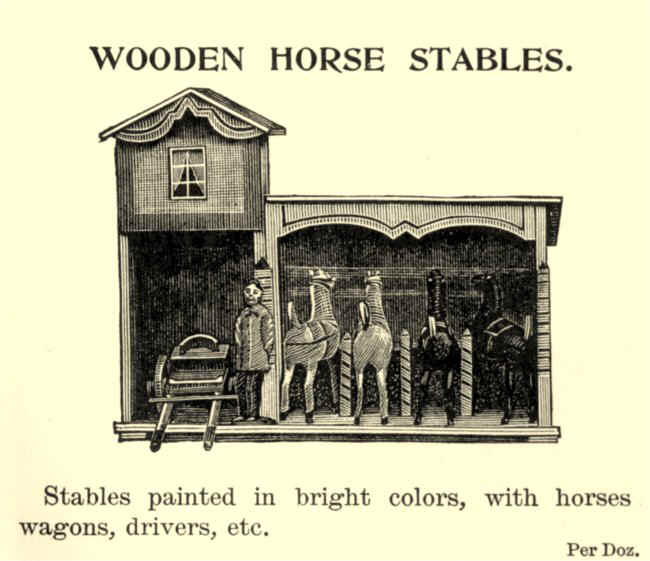
1893 Carl Stirn of New York catalogue, stable probably imported from Germany (although Stirn & Lyon also made toys in the 1870s and '80s); its simple lines contrasts with the example below
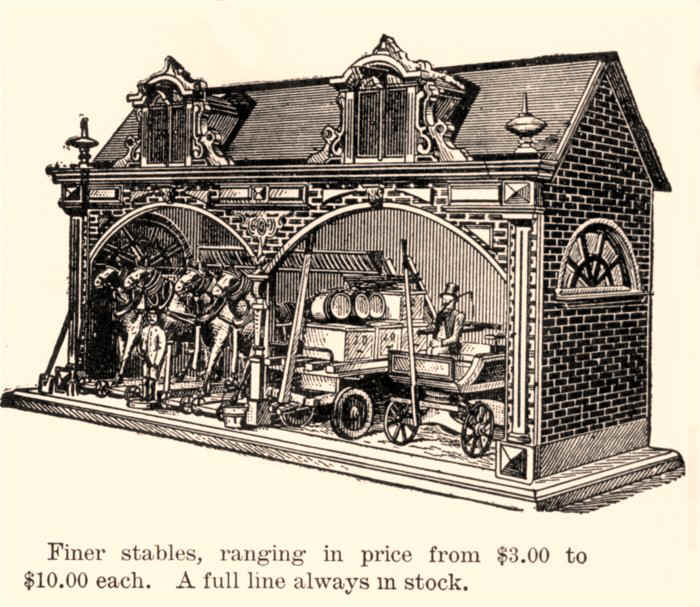
above: 1893 Carl Stirn of New York catalogue, stable probably imported from Germany (although Stirn & Lyon also made toys in the 1870s and '80s) and likely a product of the Gottschalk firm; "a finer stable", it came with a wonderful array of accessories including the coachman with his whip; also shown in the 1897 F.A.O Schwarz catalogue, New York
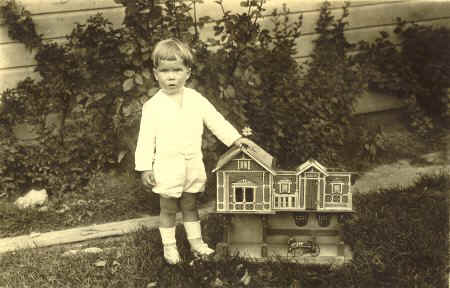
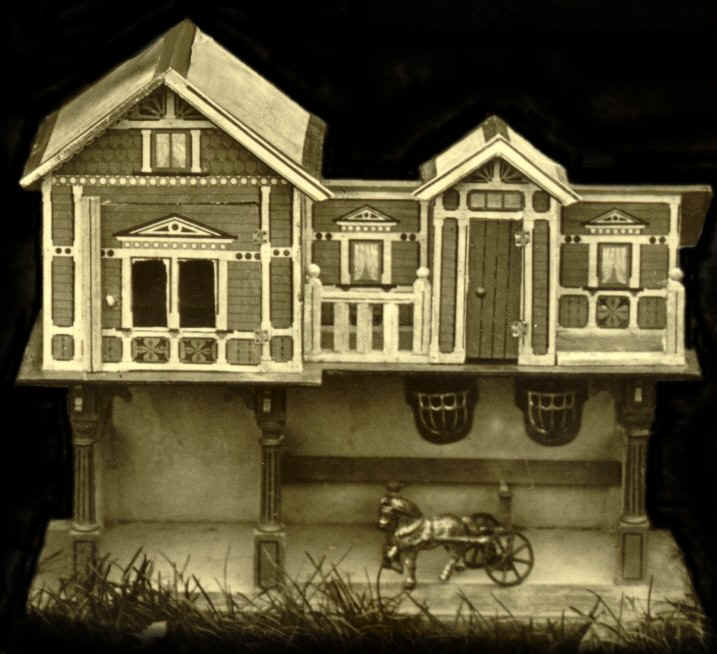
The young master stands proud with one possessive hand on his fine stable topped by quarters for the coachman and his assistants. Undated postcard likely showing a German-made stable c1900.
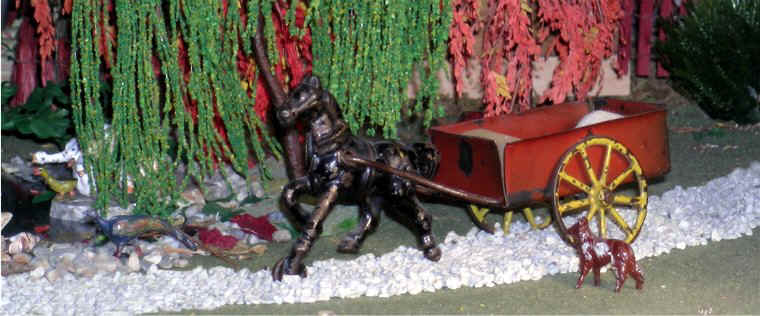
The horse in the stable above seems to be cast-iron of the sort shown on the left. (It has lost the wagon or cart it should be pulling.)
1905 open stable, the pair of horses with their plebian farm wagon must have been envious of the racing horse pulling a sulky portrayed in the picture over their heads; ad in the Wanamaker catalogue, USA
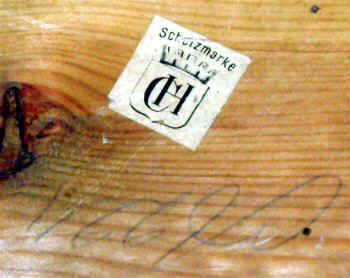
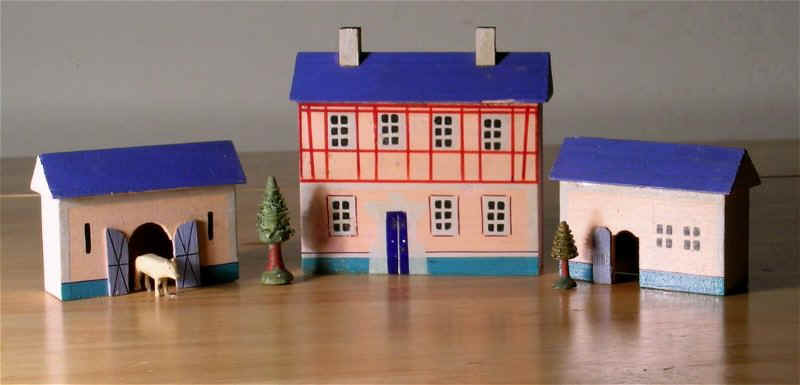
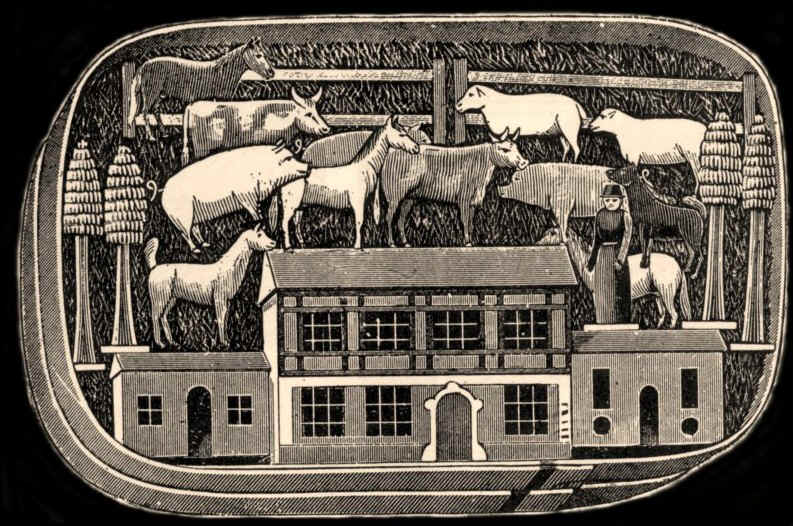
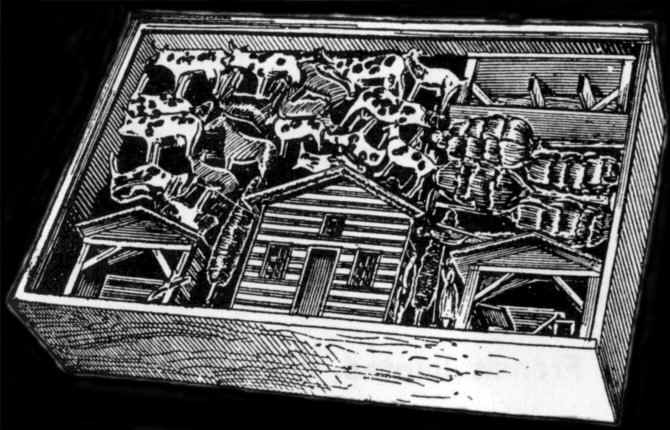
above & right: Open stable made by Christian Hacker, Nuremberg, Germany, working from the mid 19th century to 1914; marked on the bottom with a printed paper label showing CH entwined below a crown; exterior walls covered with brick paper, interior painted green, black and white "tile" floor; stalls for 3 horses and wider space for a wagon below: Tiny farm buildings made of thin wood in Germany, hand-painted with carved trees, animals and people, sometimes described as putz but the latter is associated with Christmas ornament and these were farms to play with year-round; the house is 4 inches wide; the painted lines represent traditional half-timber construction; the doorway surround is elaborate and easier to see in the drawing below of a farm, displayed in an oval wooden box and composed of a house, two outbuildings, fence, four trees, farm woman and a dozen animals from the Carl Stirn catalgue, New York, 1893; the scale was usually inconsistent; the original prices were inexpensive
1914 Marshall Fields catalogue the people and animals tower over the buildings
above: 1893
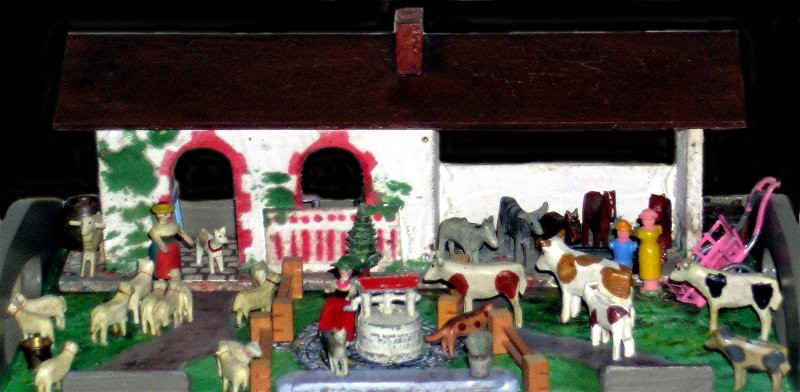
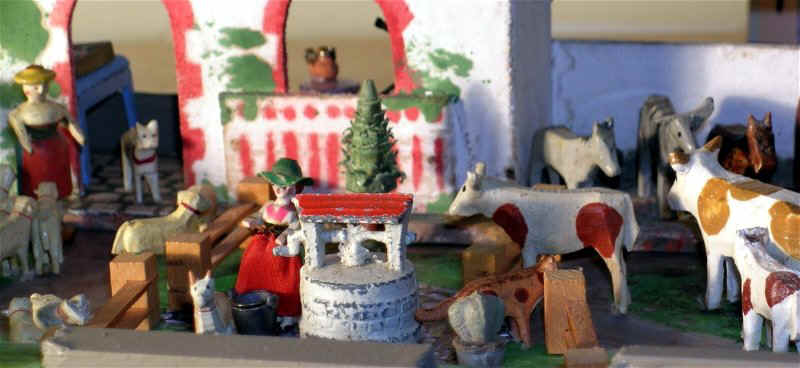
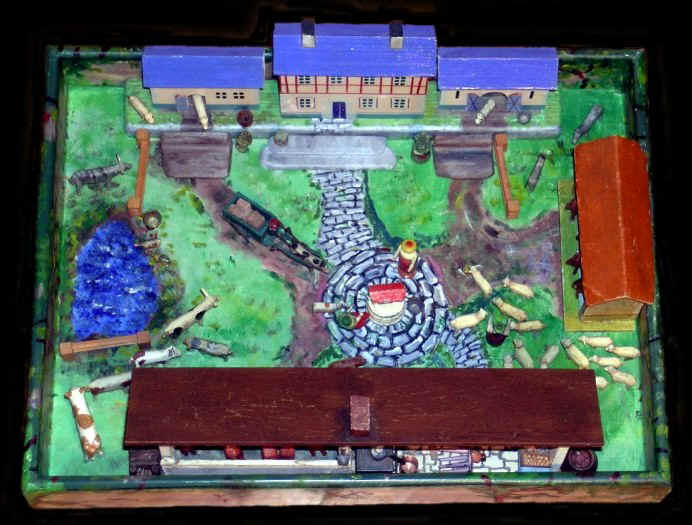
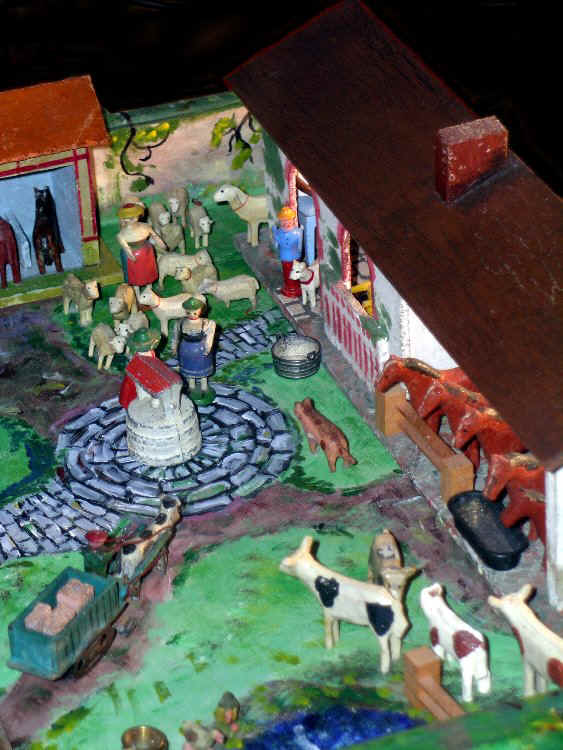
The painted wood farm building (the lean-to roof is 11 inches
long) has a room for housing the farmer or his workers (indicated by the
chimney, tiled floor and window), as well as an open shelter for animals;
while all the animals are simple in their forms, some are more detailed, for
example certain sheep have three-dimensional ears; the well is painted metal;
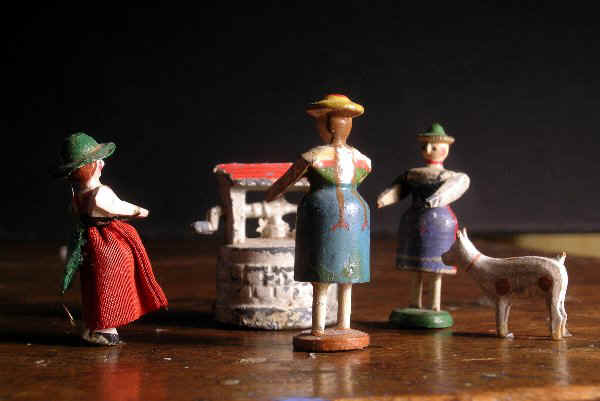
the woman at the well is painted wood, hinged at the shoulders and hips and
with a skirt made from real fabric ; she is 1½ inches high; the all-wood
woman on the left has long painted braids; the wagon, made in France, is
painted metal; the farm is displayed on a modern wood tray, painted to
represent the surface of a barn yard; tacky wax helps support the individual
pieces
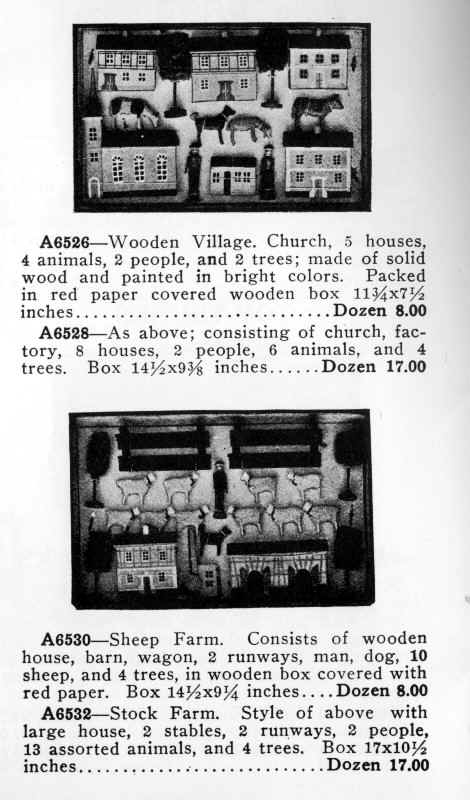
1897 F.A.O. Schwarz catalogue, New York, "wooden box toys", farms $1 to $3
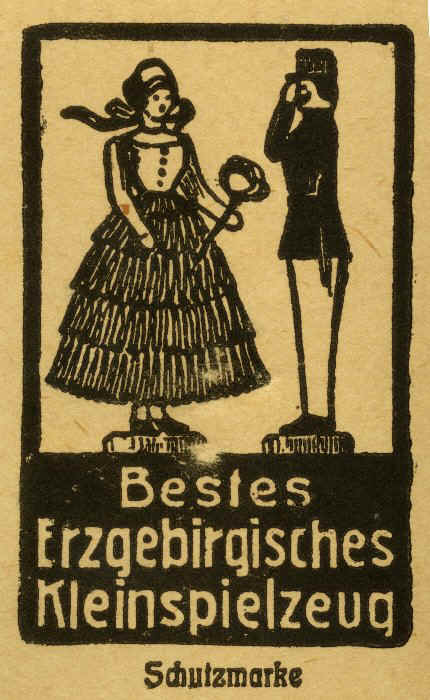
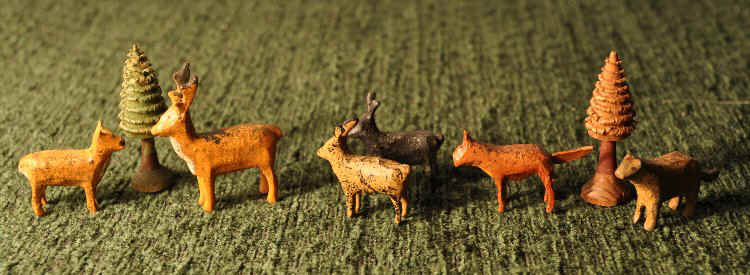
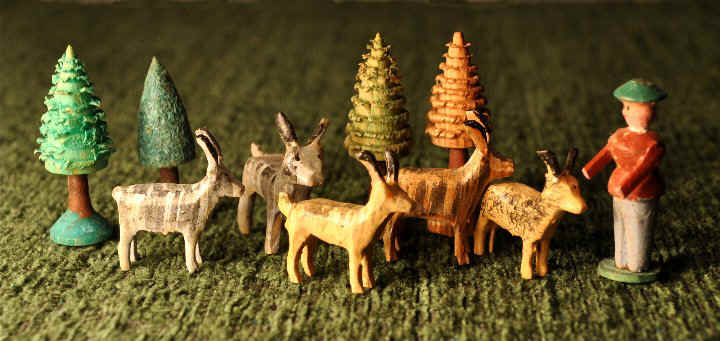
Many of these tiny painted wood items were made in the Erzgebirge area, in the eastern part of Germany. This the trademark for the "best Erzgebirge-made little playthings" (printed on a small cardboard box holding items portraying a hunting scene).
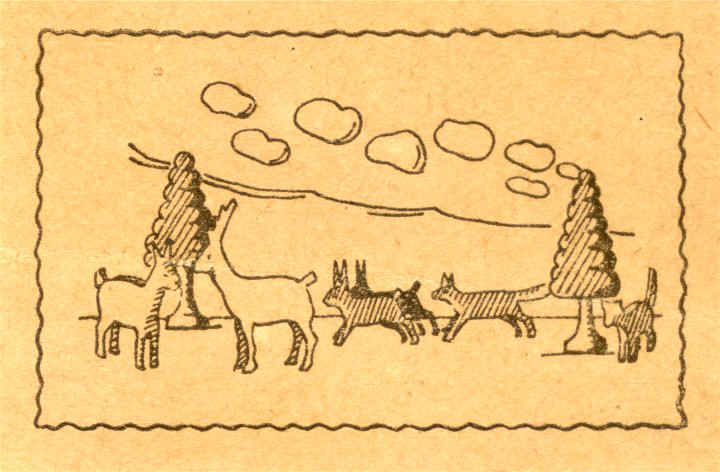
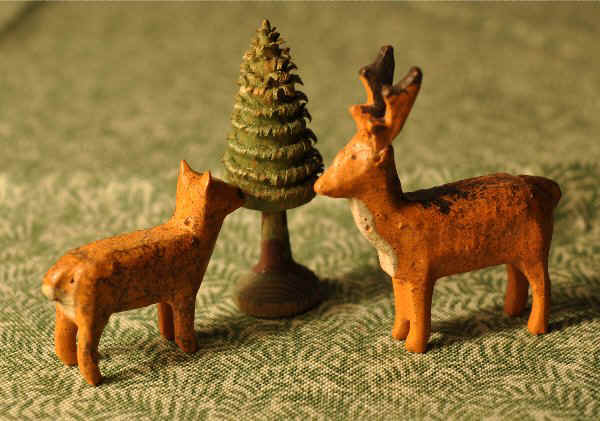
A fox is pursuing two rabbits (which admittedly look like the goats in another set). The stag is 1½ inches high.
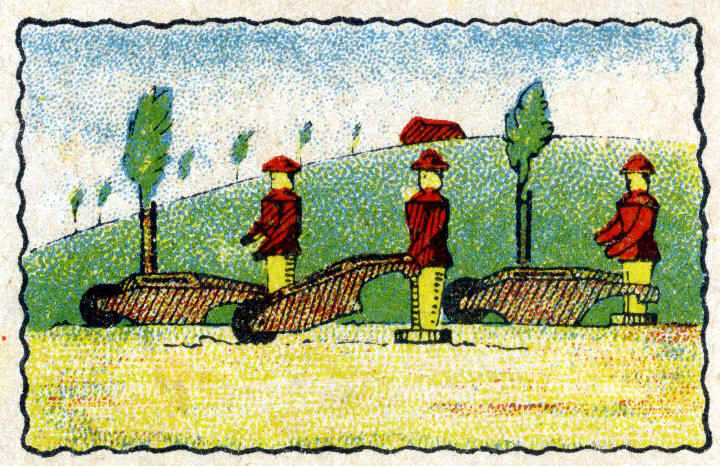
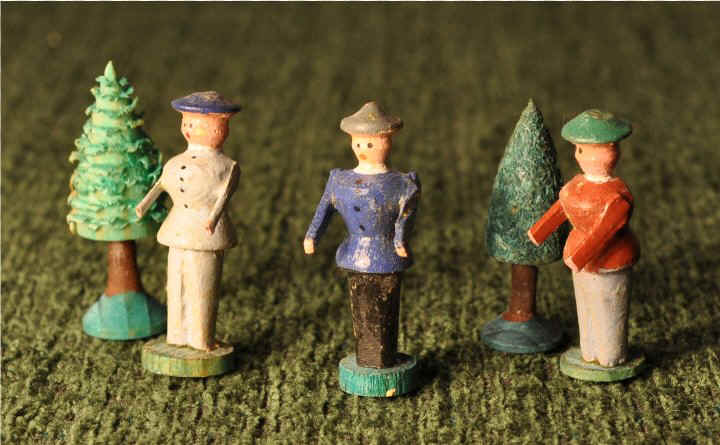
Farmers ploughing (printed on the top of a carboard
box, 1.5 in. wide x 2.25 in. long x ¾ in. deep, holding the set below; men
each 1¼ in. high) "The best wooden Miniature Toys"
Goats and goat-herder
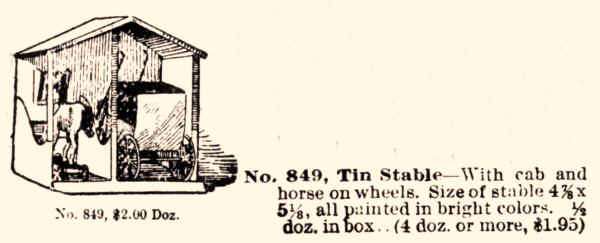
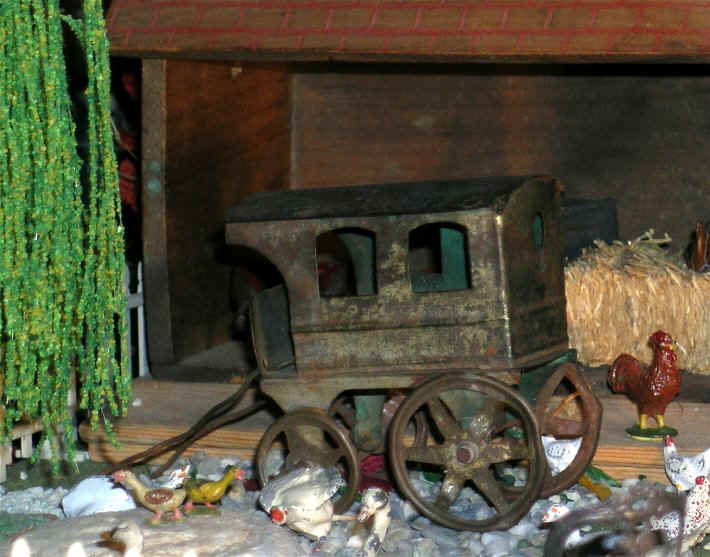
right Butler Brothers, tin stable with horse and cab below tin cab, painted green, 3¾ in. high
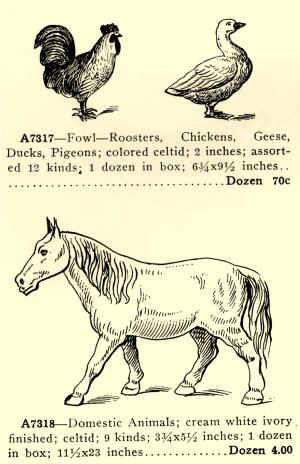
1914 celluloid (thin, brittle, moulded early form of plastic) horse, Marshall Field catalogue
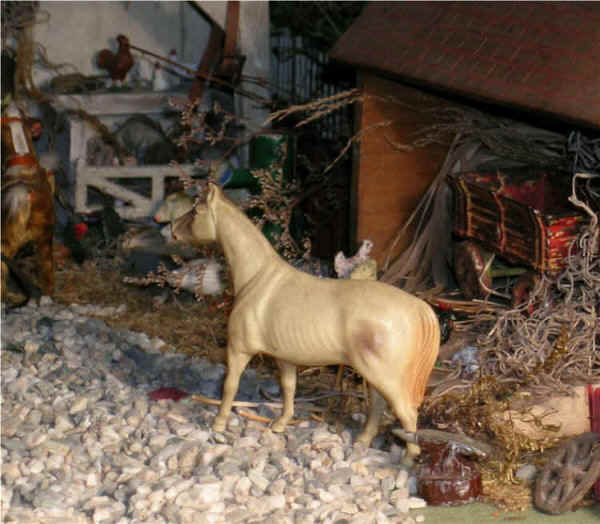
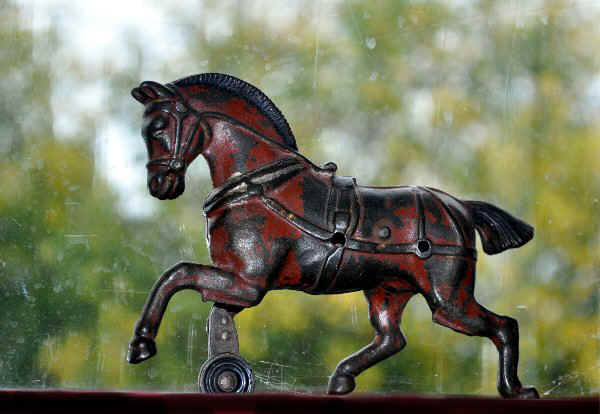
c1914 cast iron horse, made as a bank, given to a boy born in Ontario in 1919
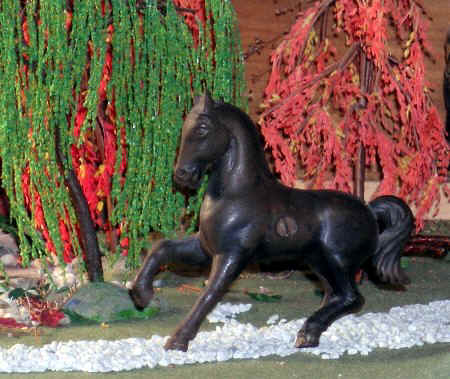
1996 Canadian hand-painted and hand-carved wood horse wearing vintage blanket, saddle and harness
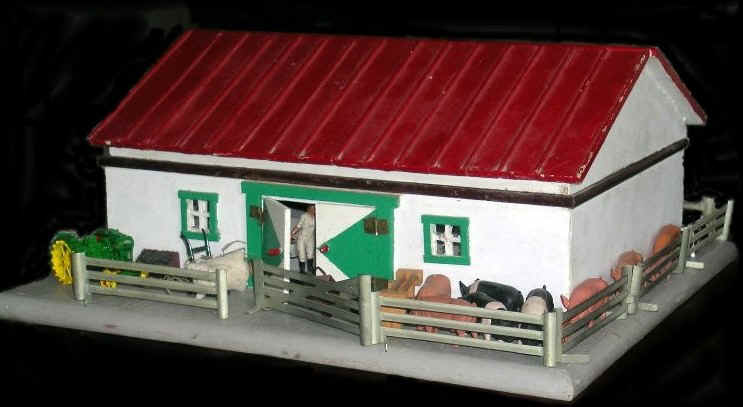
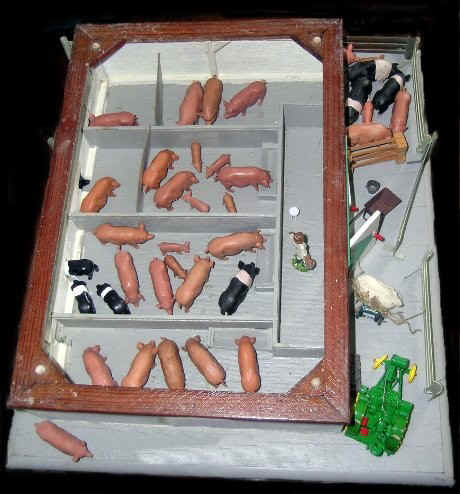
Pig barn home-made in Quebec, Canada, with removable roof, smaller scale than usual, 6½" high, typical painted pattern on the doors of farm buildings in French Canada, date unknown, possibly 1930s (accessories manufactured recently)
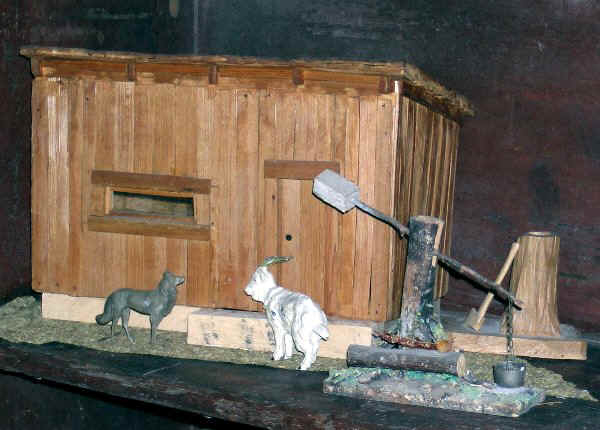
Farm outbuilding with lean-to roof, home-made in south-eastern
Ontario, Canada, probably based on an existing farm, 13" long, date
unknown, possibly 1940s; stump and axe carved in Quebec; model of a well,
found in Ontario, c1900; painted metal goat (3½" high) and
composition-wood dog, probably made in Germany
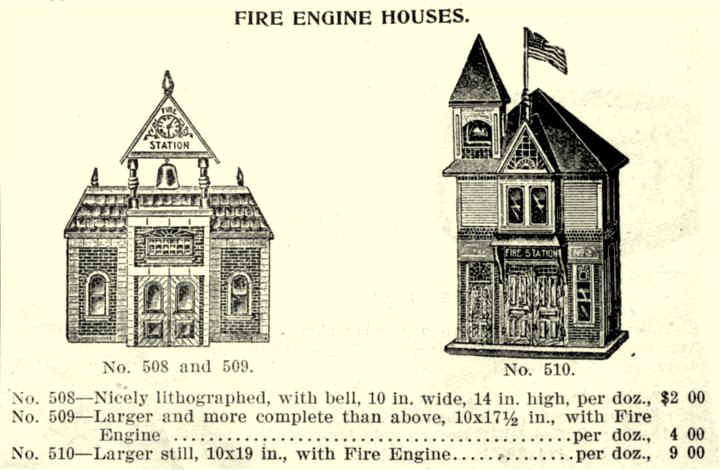
1905 Wiemann &Muench catalogue, Milwaukee, Wisconsin; both fire stations are by the American Bliss firm
1893 Carl Stirn
catalogue, New York, perhaps a German import (although Stirn
& Lyon also made toys in the 1870s and '80s)
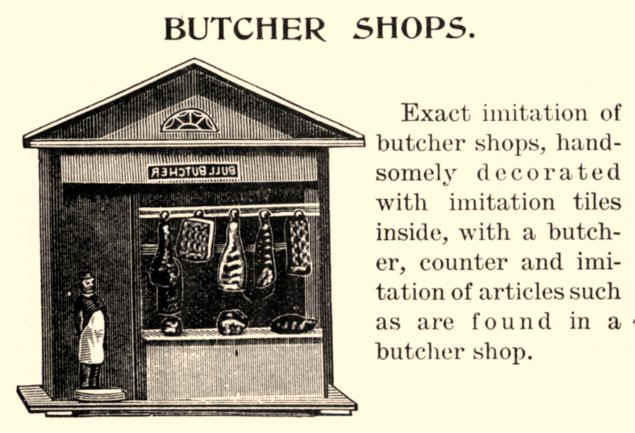
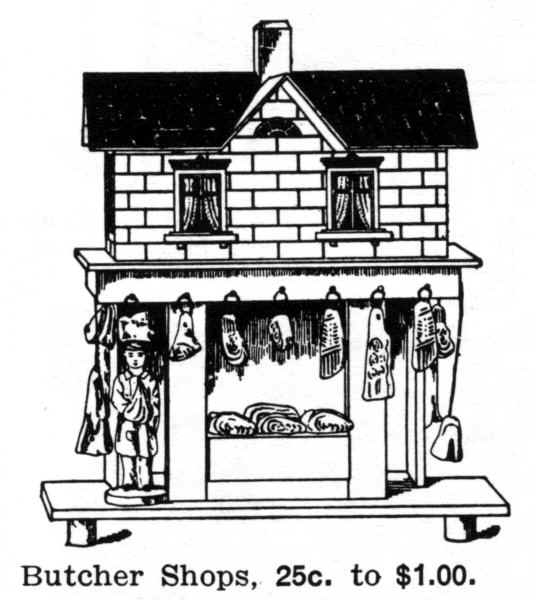
1905 butcher shop attributed to Gottschalk, ad in the Wanamaker catalogue, USA
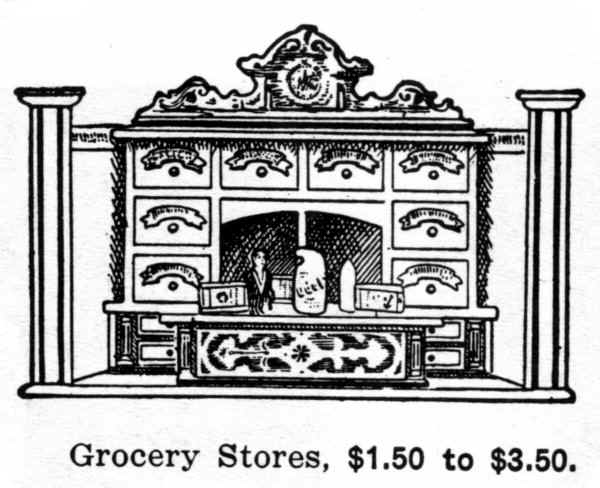
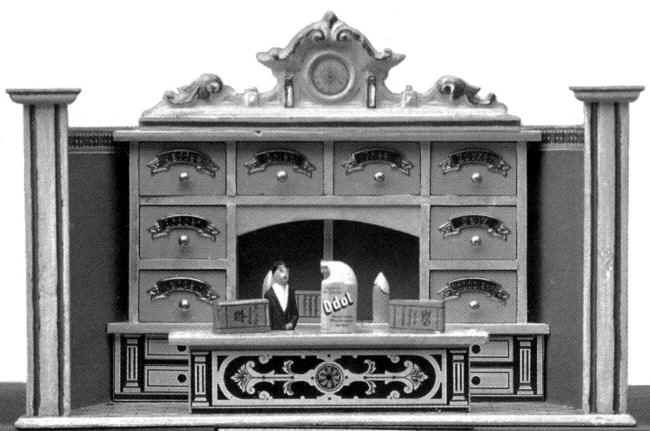
1902 grocery shop made by
Gottschalk # 3510 (see below), ad in the 1905 Wanamaker catalogue, USA
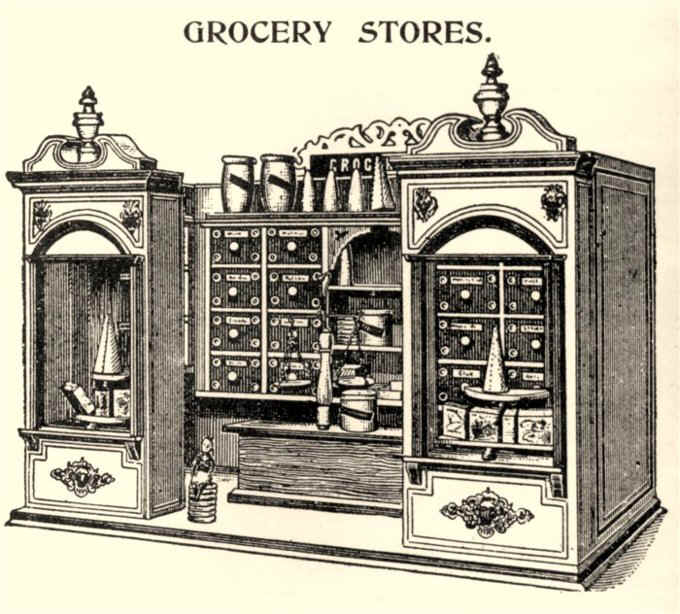
1893 Carl Stirn
catalogue, New York, likely a German import (although Stirn
& Lyon also made toys in the 1870s and '80s) possibly Gottschalk; also
shown in the 1897
F.A.O. Schwarz catalogue, New York
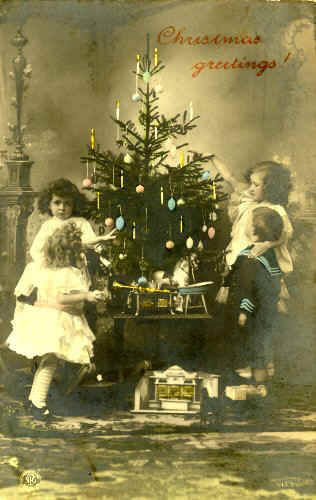
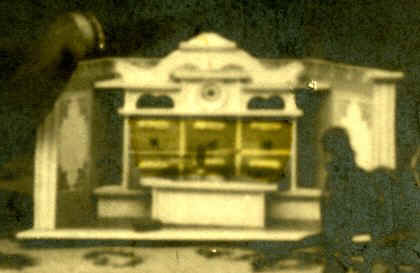
1908 postcard showing a general store, perhaps by Gottschalk
It has similarities to the German
sweet shop illustrated below.
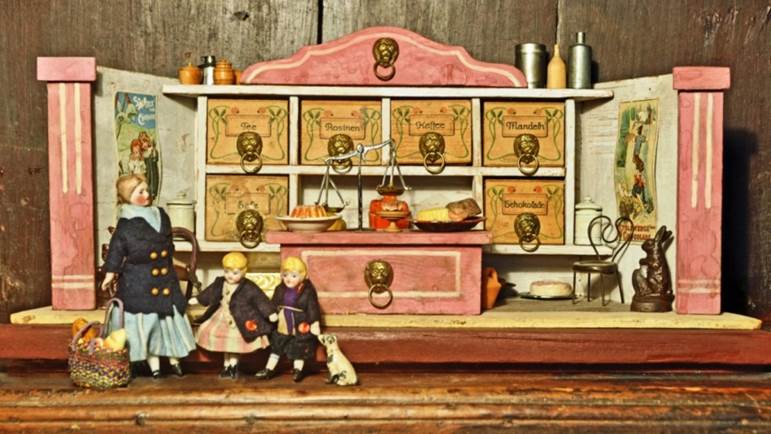
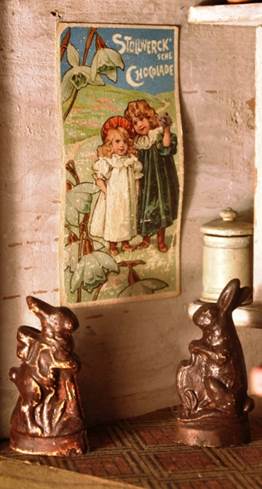
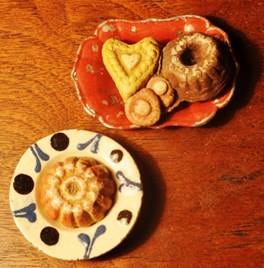
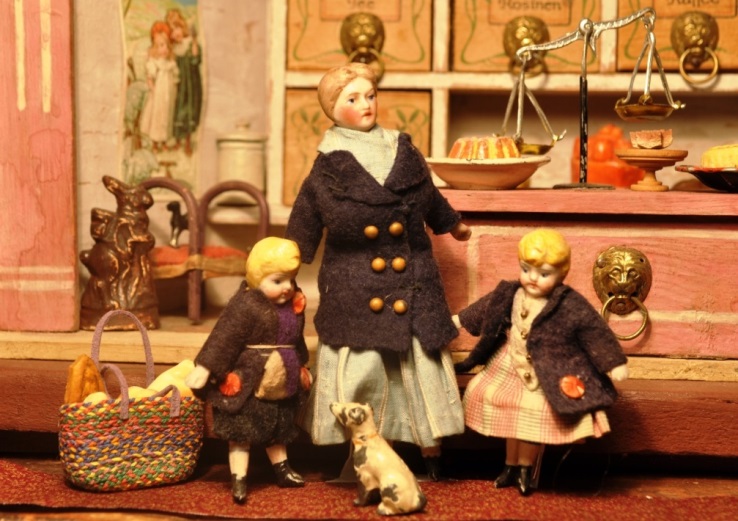
German sweet shop with original decoration, cakes, lion face
drawer pulls, scales, mother and twins (in original clothing), posters and
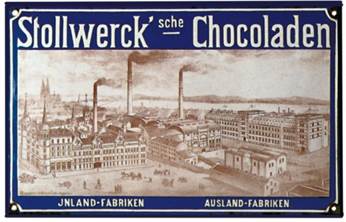
“chocolate” rabbits; the shop’s base is 17 inches wide. The “posters” or
cards date from 1900 labelled Stollwerck ‘sche Chocolade, a company headed
from 1883 to 1922 by Ludwig Stollwerck (1857-1922)
in Cologne.
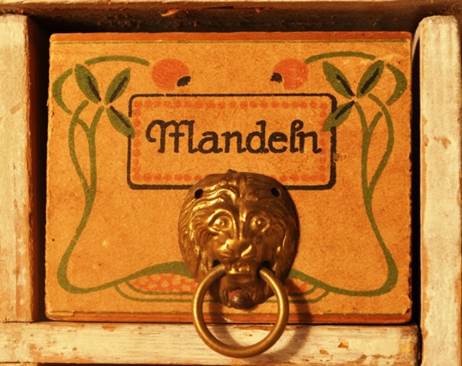
Almonds The floral decoration is in Art
Nouveau style
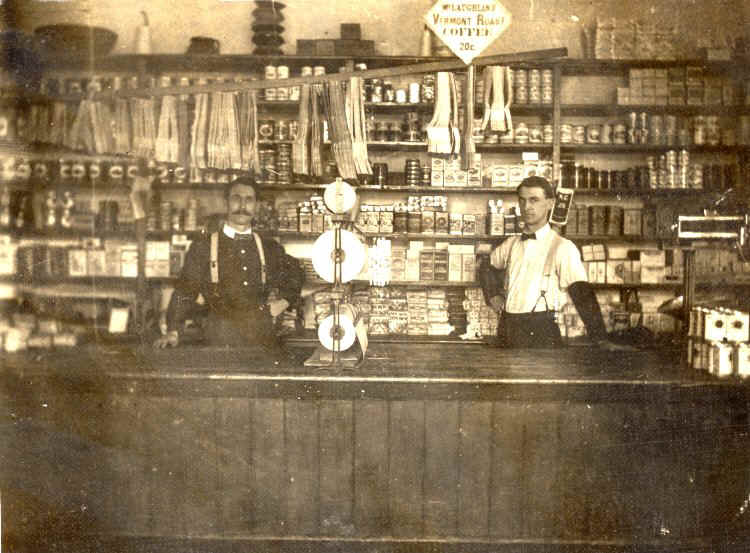
A real store interior from the early 20th century, Canadian or
American, undated postcard.
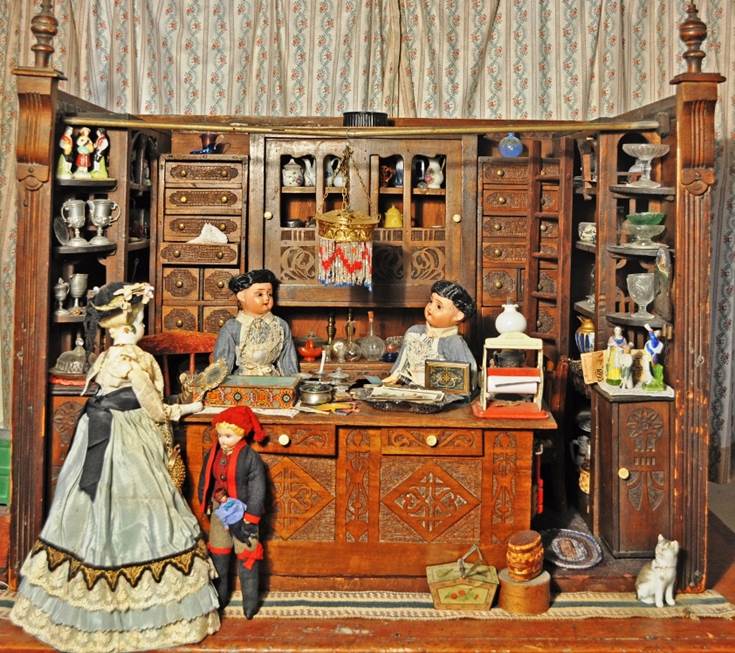
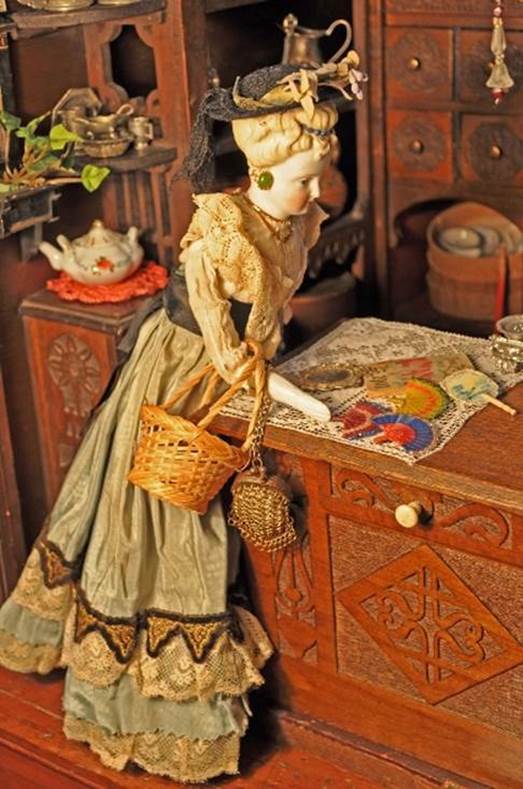
German fancy goods shop attributed to
J.F. Schreiber, c1910; finials and brass rod added; modern ladder; a customer
and her son chat with two sales clerks (the latter made in Vichy, France);
all in their original clothes
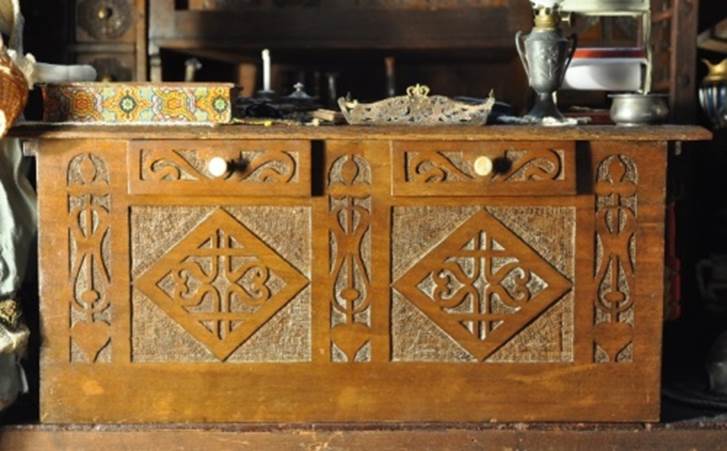
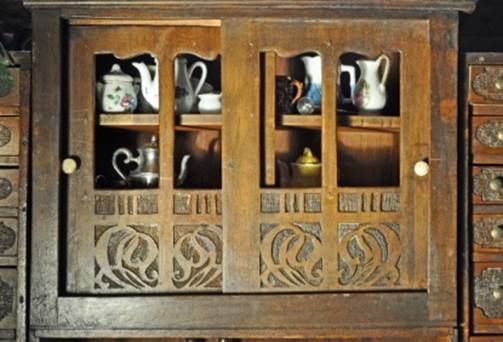
The style is Art Nouveau with
elegant, curvilinear patterns in relief and fretwork; the drawers open
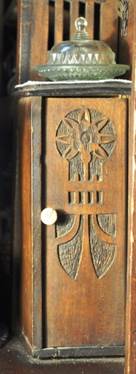
Sunflowers (left) were an important
motif at the turn of the 20th century; the doors (above) slide;
the knobs are original
Cardboard and glass display box
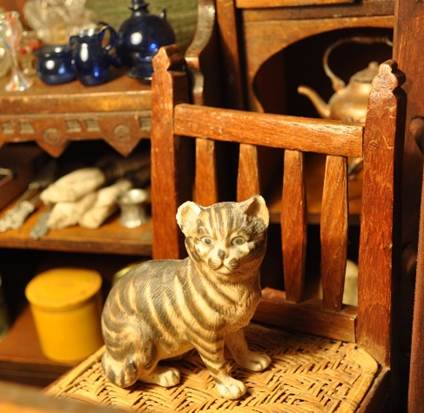
Shop tabby cat
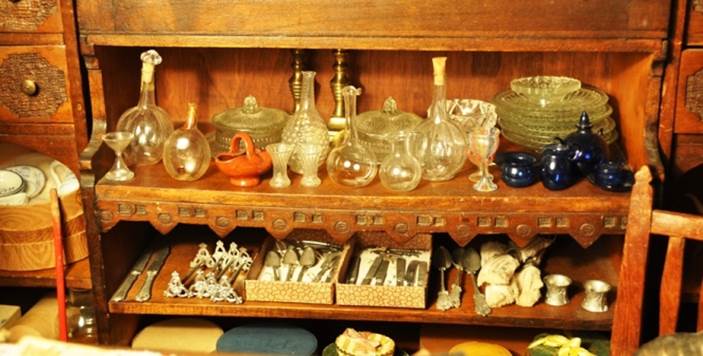
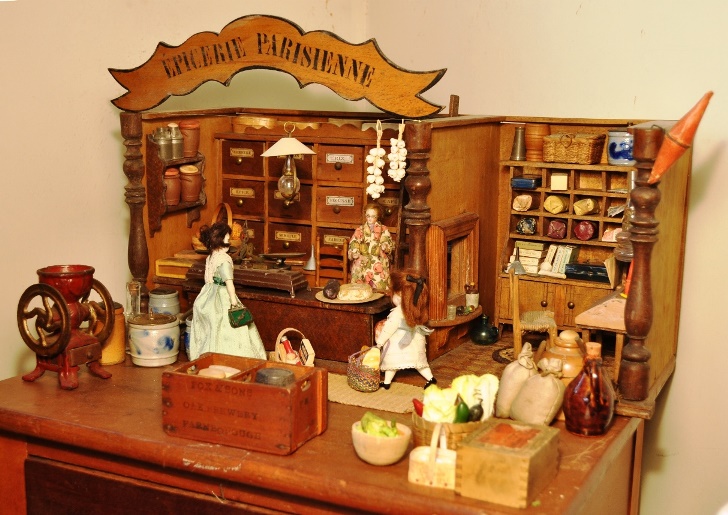
Epicerie
Parisienne, French, early 20th century;
2 rooms with a passageway opening; built-in and labelled drawers for
groceries; original hanging shelf and ladder
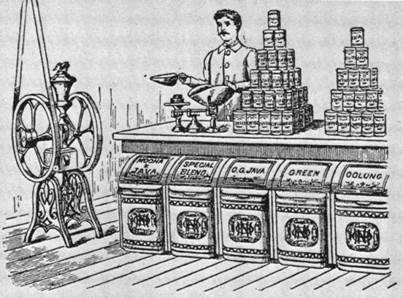
Above Coffee
shop with floor-model grinder, 1899, Eaton’s catalogue, Toronto, Canada
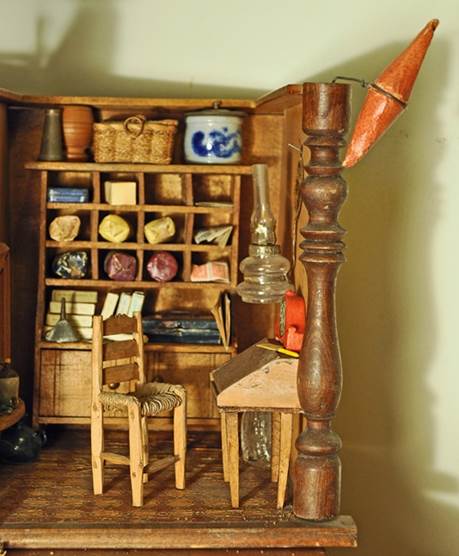
Original ladderback
sidechair with woven seat, slant-top desk and open
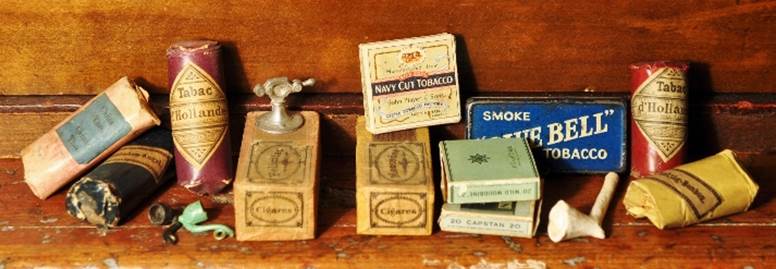
cupboard in the tobacco section, which is signified by the device fixed to
the top right corner; cigar boxes, rolled tobacco packages and cigarette
boxes
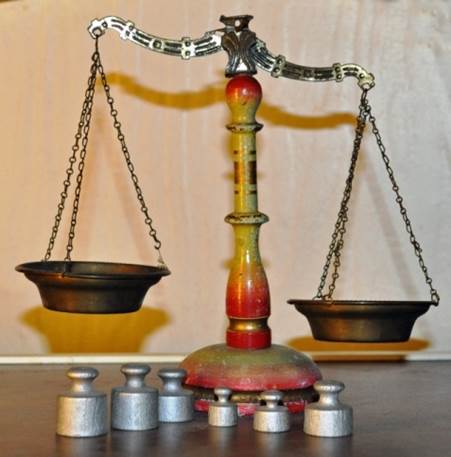
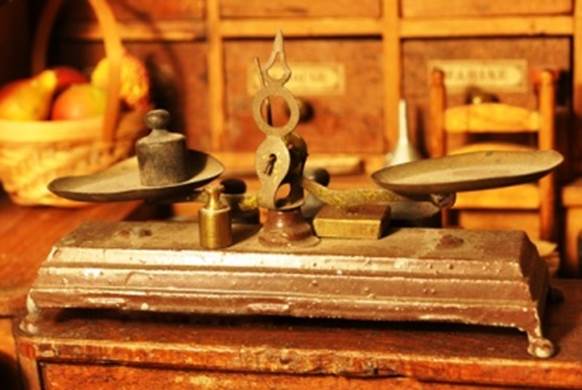
Original metal scales
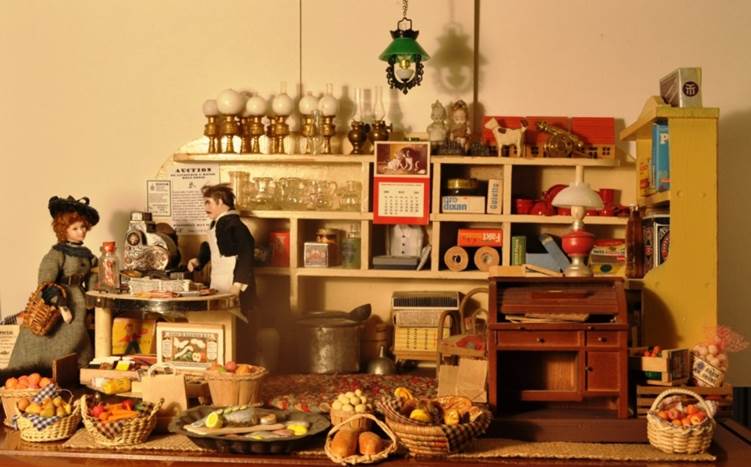
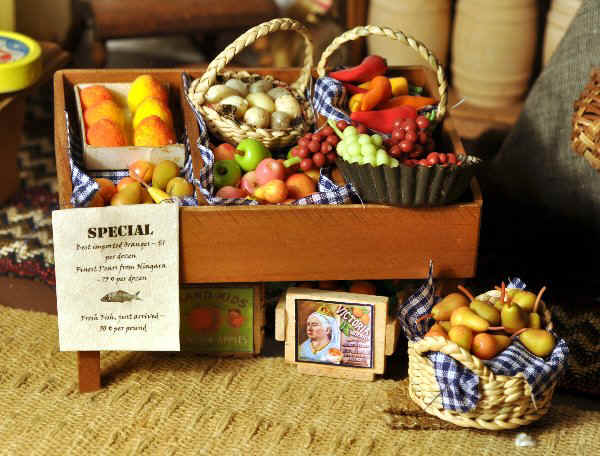
General store display with modern,
vintage and antique items; shop counter & shelving c1930s
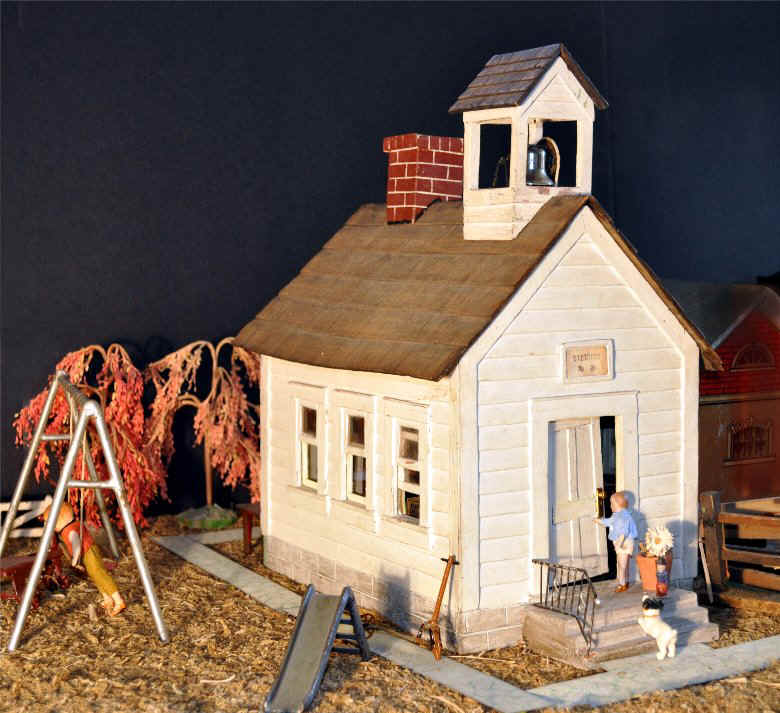
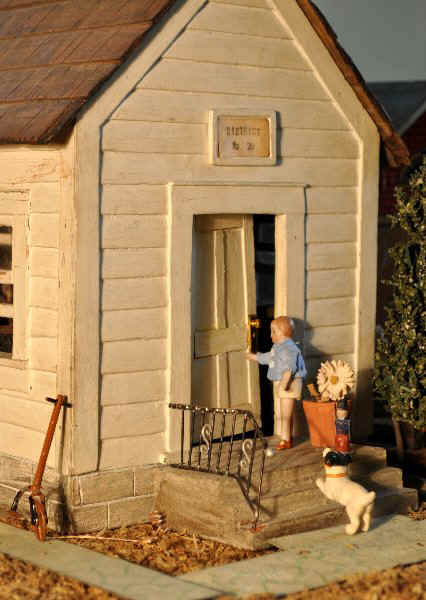
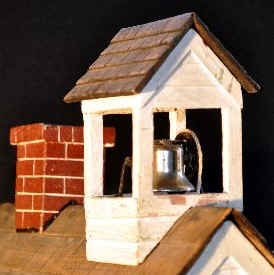
American one-room school house "District No. 29",
likely built in the second half of the 1940s but representative of such
schools from the 1920s & '30s, painted wood, double-hung sash, chimney,
belfry
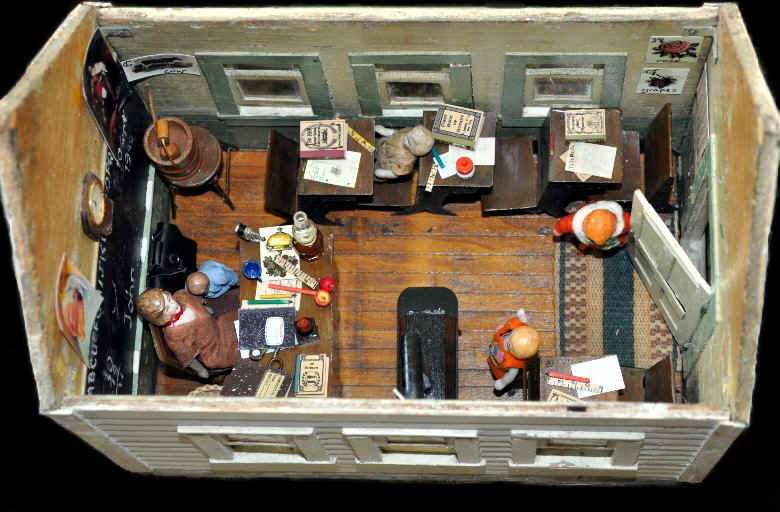
The roof lifts off to reveal the interior with its chalkboard;
the metal teacher's desk, swivel chair, student desks with folding seats and
stool are original to the building, as are some pieces of outside play
equipment
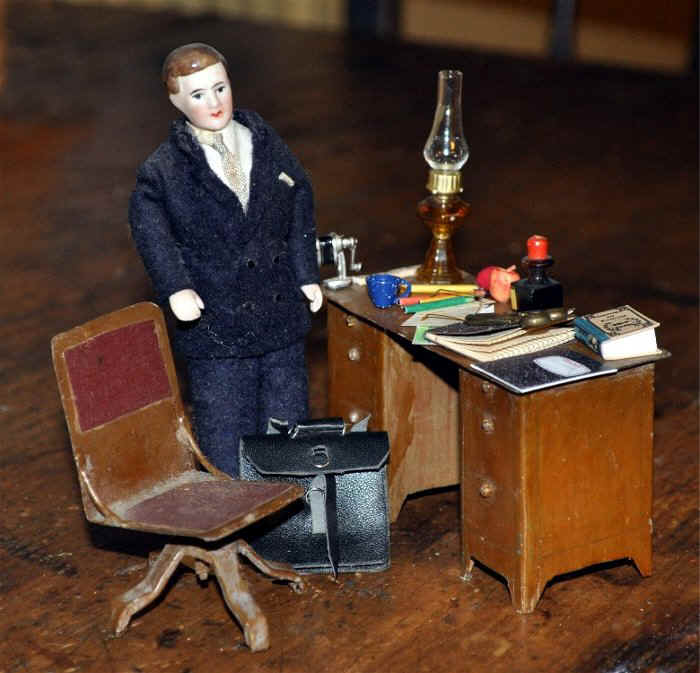
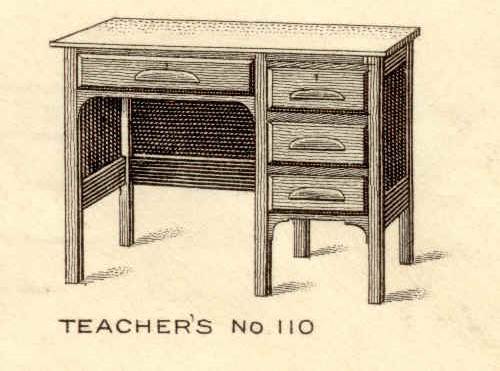
The teacher's metal desk and swivel chair came with the school house; the bisque teacher dates from the 1920s, including his clothing; the school supplies are modern. Real wooden teacher's desk made by the F.E. Osborne Company in Calgary, Alberta, Canada in 1927
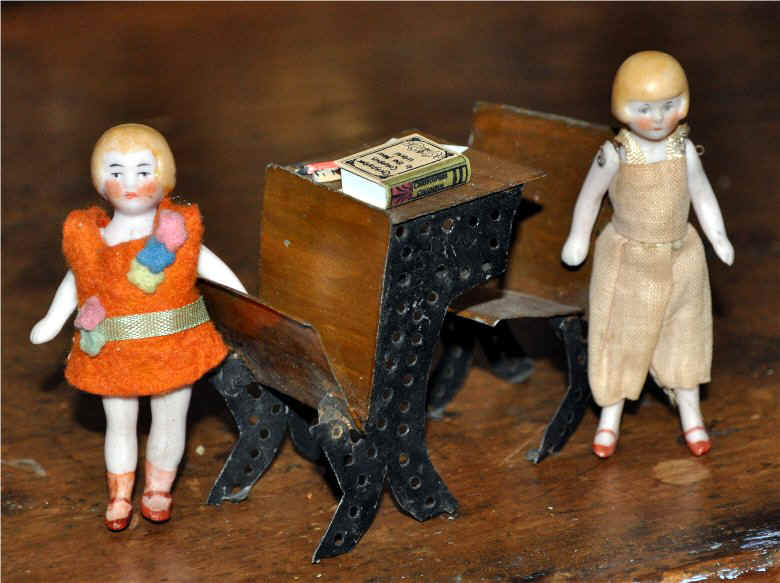
The students date from the 1920s, including their clothing; the school supplies are modern; the metal desks came with the school house.
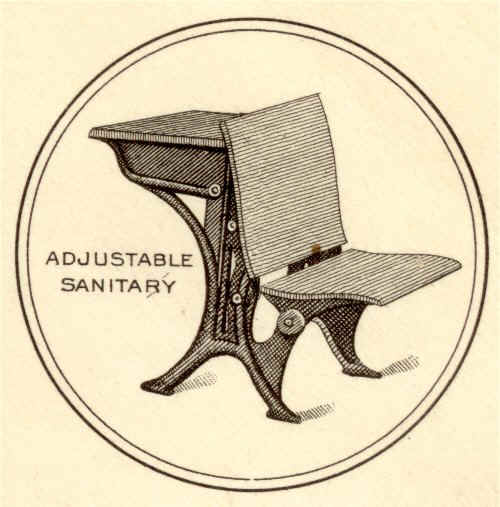
Real metal & wood student desk made by F.E. Osborne Company
of Calgary, Alberta, in 1927;
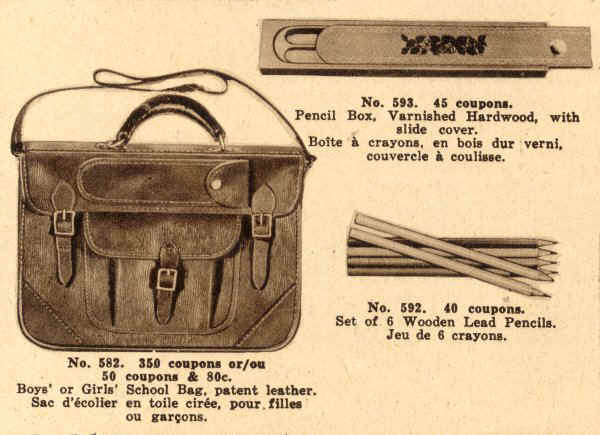
real school supplies from
c1930 catalogue published in Montreal, Canada
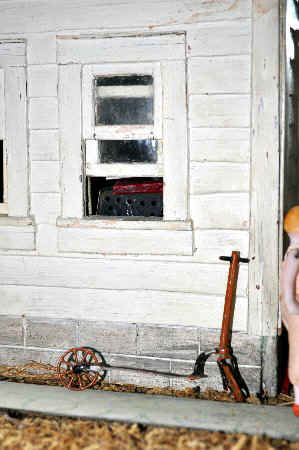
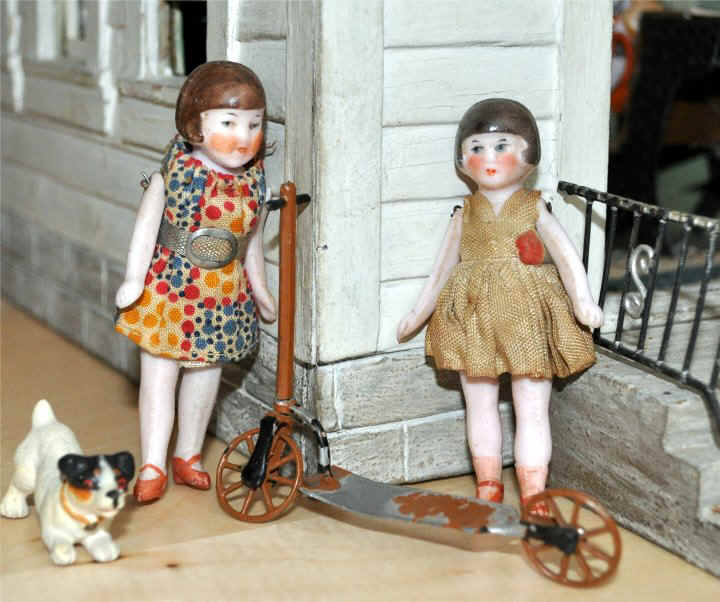
metal scooter, 3 inches long; china girl on right, 3 inches
high; both girls are in original dresses
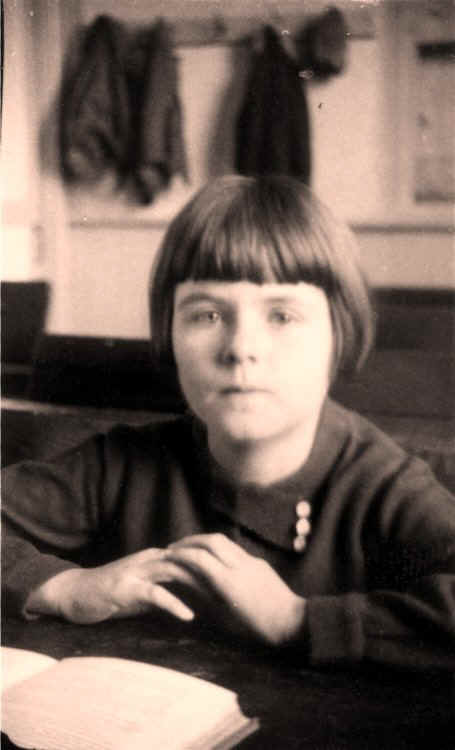
Ruth McLeod, born 1920, at public school in Ontario, Canada; note the bobbed haircut seen also in the dolls, the desks and the pegstrip on which coats and hats are hanging. PLEASE CLICK HERE TO CONTINUE THE GALLERY OF IMAGES! top top of page home page history of dollhouses a a GALLERY of IMAGES 1 GALLERY OF IMAGES 2 GALLERY OF IMAGES 4 |
 1
1