MARKERS

SAMPLES 21 JANUARY 2009  

(TEMPORARY ADDITION TO WWW.MCKENDRY.NET)

home page

N.B. You can search this page to find a specific word or words such as John Stuart

 by using the Find command in the top tool bar under "Edit." 


Portsmouth Village

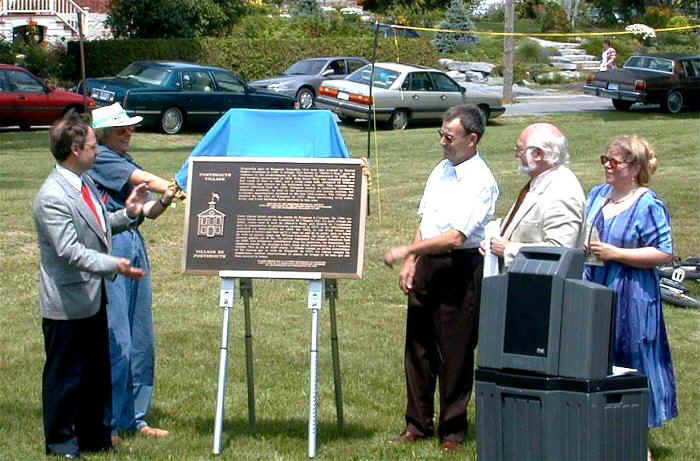
Originally part of Kingston Township, this area was granted to United Empire Loyalists in 1784. A village, first known as “Hatter’s Bay,” grew in response to the establishment of the Provincial Penitentiary in 1833, and was formally incorporated in 1858. King Street West was extended across a bay south of here in 1845, and a stone town hall, designed by William Coverdale, was erected on the reclaimed land in 1865. This common was named Aberdeen Park by 1900. Villagers worked in tanneries, breweries, shipyards, sawmills, as well as the penitentiary and nearby asylum, but economic opportunities declined in the late 19th-century. The village was annexed by the city of Kingston in 1952. Many interesting early stone, brick, and frame buildings have survived in this area.

Erected by the Kingston Historical Society with the assistance of the Ontario Heritage Foundation and the Portsmouth Villagers in 1999


markers2.jpg (108043 bytes)

                         Unveiling ceremony on 1 July 1999 with representatives from the City of Kingston, Portsmouth Village and the Kingston historical Society


Strange House

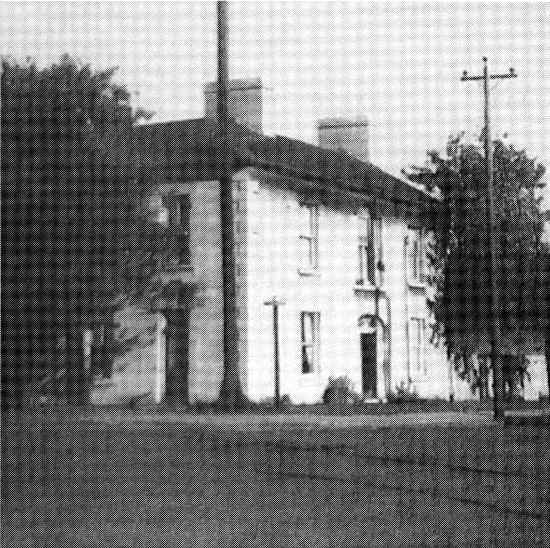
On this site stood a cut limestone house built 1824-26 by Captain John Strange 1788-1840, of the Frontenac Militia, father of Maxwell William Strange, M.L.A., 1820- 1880 and of Orlando Sampson Strange, M.D., 1826-1909.

                    Plaque located at 55 Barrack Street, Kingston, facing the parking lot

markers1.jpg (126673 bytes)

Strange House, front cover, Historic Kingston, vol. 6 (1957)


Skeleton Park

The Upper Burial Grounds

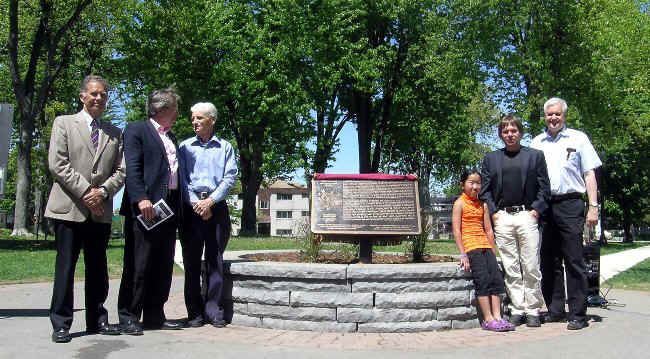
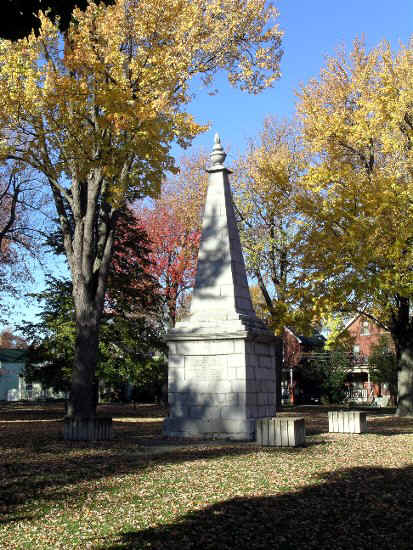
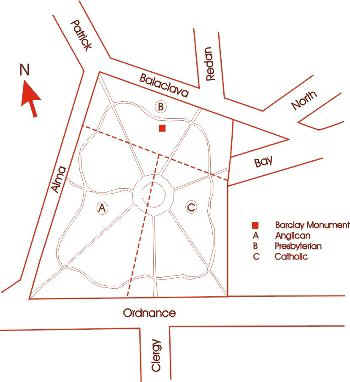
 A Garrison Burying Ground existed here by 1816 but, three years later, became a burial ground for Anglicans and Catholics. Known by 1825 as the Common or Upper Burial Grounds, it was expanded to four acres to accommodate a section for Presbyterians. Most Kingston families buried their dead here but, by the 1850s, it was at capacity. The city’s dead were being buried in a new non-denominational cemetery at Cataraqui and in St Mary’s Catholic Cemetery, Kingston. Closed in 1864 and increasingly neglected, the old burying grounds became a public disgrace and, in 1893, were converted into a city park. Many remains and markers were removed to St Mary’s and Cataraqui cemeteries, but the Barclay monument of 1826 was left in place. Landscaped with trees and walkways, it was named Frontenac and now McBurney Park, but its informal name, Skeleton Park, is still in use. 

Erected by the Kingston Historical Society in 2008 with the assistance of the City of Kingston and the Ontario Heritage Trust

markers4.jpg (105073 bytes)

Unveiling ceremony on 25 May 2008 with representatives from the City of Kingston, the Kingston Historical Society and the Neighbourhood

markers6.jpg (108818 bytes)markers5.jpg (26559 bytes)


The Reverend John Stuart

In sacred memory of the Reverend John Stuart D.D., 1740-1811, who came to this Province in 1784 as a United Empire Loyalist, and was known as "The Father of the Church in Upper Canada." He founded this cathedral (the first parish in the Province) and also the first school. He was Chaplain to the Garrison, and to the first Legislative Council, and for 27 years was Rector of Kingston. Associated with Tyendenaga (Chief Brant), he translated the Gospels and Book of Common Prayer into the Mohawk tongue. He was instrumental in founding many important missions throughout the province from Cornwall to York. Universally Beloved this Intrepid Herald of the Gospel Fell Asleep August 15th, 1811.W.L. Grant, Secretary. G.L. Starr, President.

Located in the nave of St George's Cathedral,

King Street East and Johnson Street, Kingston


.


         home page        top of page